03/05/24
By Rebecca Herman McBrayer
Please be sure to read our approach to Tasting Whiskey if you haven’t already.
With the long-awaited release of Hard Truth’s Sweet Mash Bourbons, Wayne and I were anxious to get the bottles locally and sit down to do a formal tasting.
Basic requirements of bourbon: Made in the U.S, distilled at <= 160 proof, barreled at <= 125 proof, aged in new, charred oak containers, free from additives (except water), and bottled at >= 80 proof. Straight bourbon means it is aged at least 2 years (and must have an age statement if less than 4). For additional information on bourbon requirements, please read this post – Bourbon Whiskey.
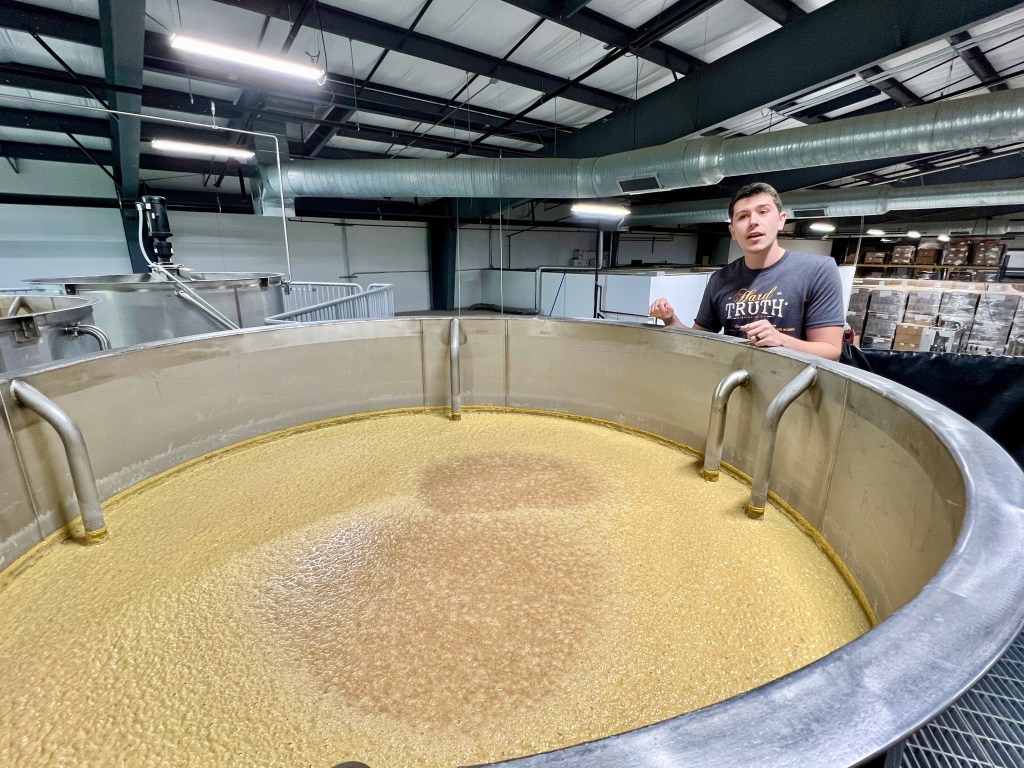
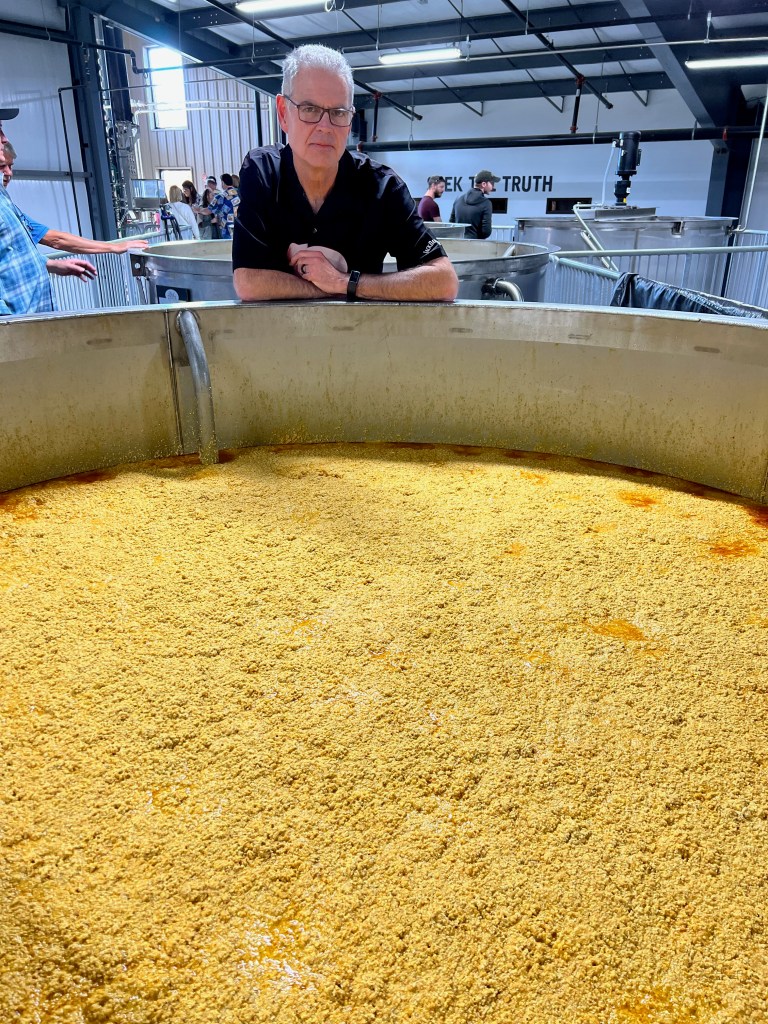
These selections are also labeled as Sweet Mash. Sweet mash is a process in distillation that does not use the sour mash as a starter for fermentation. Instead, only fresh yeast is used. Using sweet mash has the benefit of more control over specific ingredients and the ability to use lower temperatures for fermentation. However, it does require more maintenance and extreme cleanliness to avoid contamination. For more information, please read this post – Four Stages of Making Spirits.
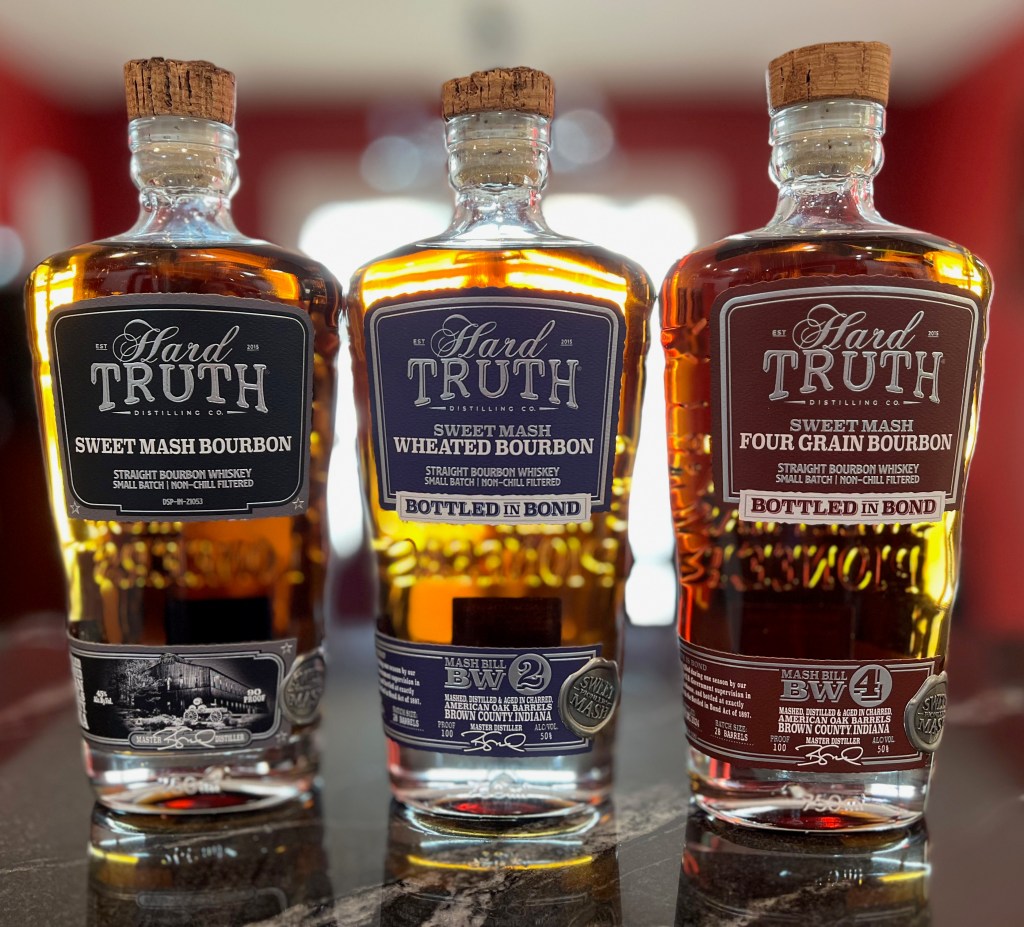
Hard Truth Sweet Mash Bourbon
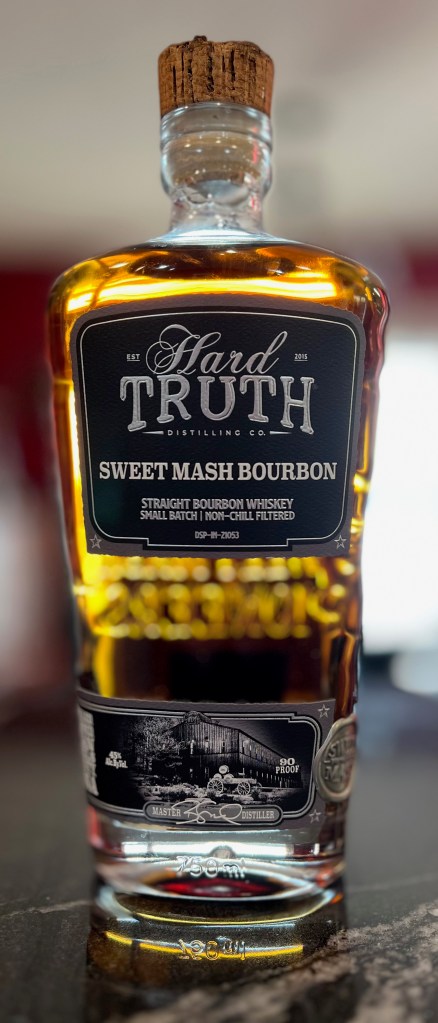
Mashbill – 73% Corn, 19% Rye, 8% Malted Barley
Age – At least 4 years old
Proof – 90
Specifics – Sweet Mash, Straight Bourbon Whiskey, Small Batch, Non-Chill Filtered
Price Paid – $44.99
Color – medium copper
Aroma – sweetness of caramel and vanilla with a hint of nutmeg and perhaps a fruit such as apple or berry.
Taste – less sweetness that on the nose but a very light hint of caramel; has a black pepper finish.
Tasted with dried cranberry – the berry and red apple from the nose is coming forward with the cranberry, the finish is greatly softened but still carries a note of pepper.
Tasted with a pecan – this brought the pepper forward, but it is more of a white pepper and a nice sweetness from caramel is present.
Tasted with dark chocolate – caramel and chocolate are strong as well as some baking spices and hints of oak.
Notes: A very good 90 proof bourbon for under $45.
Hard Truth Sweet Mash Wheated Bourbon – Bottled in Bond
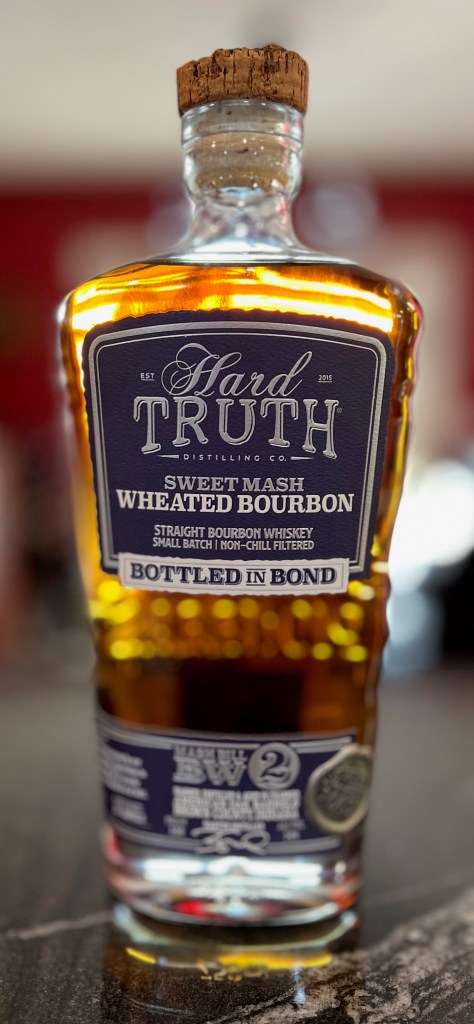
Mashbill – 69% Corn, 19% Wheat, 12% Malted Barley
Age – At least 4 years old
Proof – 100
Specifics – Sweet Mash, Wheated Bourbon, Straight Bourbon Whiskey, Small Batch, Non-Chill Filtered, Bottled in Bond
Price Paid – $54.99
Color – medium copper
Aroma – the sweetness of the wheat really comes through as well as honey and light baking spices, it is very inviting, much like a muffin right fresh from the oven and you can’t wait to taste it.
Taste – sweet wheat and honey, much like the nose, and a very nice finish of cinnamon and perhaps another baking spice.
Tasted with dried cranberry – brought forward a strong black pepper and the lovely wheat sweetness has faded.
Tasted with a pecan – a sweet caramel comes forward and the wheat is present, the finish is more of a light white pepper.
Tasted with dark chocolate – baking spices are really forward but not on the finish, the sweetness seems to have disappeared.
Notes: This is a fine wheated bourbon in the $50 price range. This is something that we will want to keep on our bourbon shelf.
Hard Truth Sweet Mash Four Grain Bourbon – Bottled in Bond
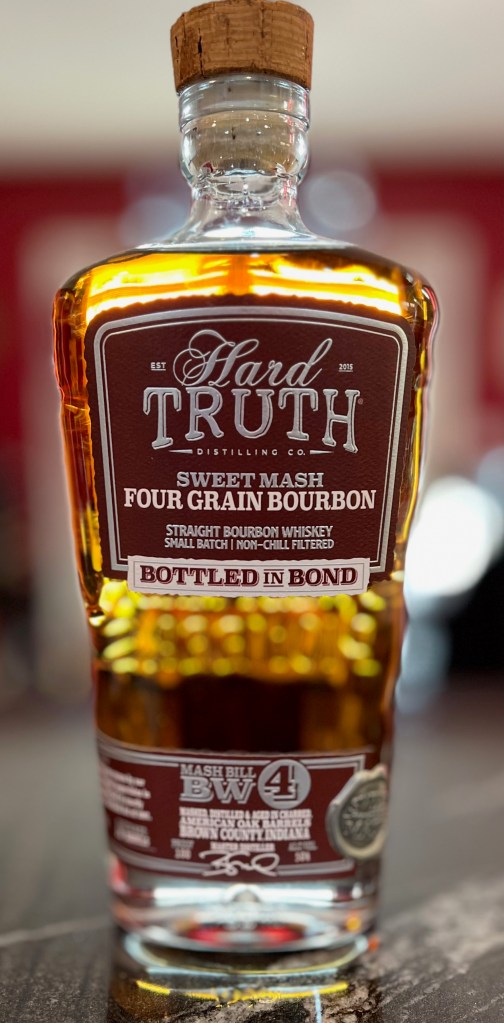
Mashbill – 78% Corn, 9% Rye, 9% Wheat, 4% Malted Barley
Age – At least 4 years old
Proof – 100
Specifics – Sweet Mash, Four Grain Bourbon, Straight Bourbon Whiskey, Small Batch, Non-Chill Filtered, Bottled in Bond
Price Paid – $59.99
Color – medium copper
Aroma – quite different from the other two, notes of sweet cherries. Interesting that there is 78% corn yet it isn’t on the nose.
Taste – cherry, baking spices, and a minimal finish, perhaps like a cinnamon wheat cereal, not as much grain as anticipated in a four grain bourbon.
Tasted with dried cranberry – brings the wheat forward, really warm and inviting.
Tasted with a pecan – now it has the sweetness of caramel and a cinnamon baking spice with a light finish.
Tasted with dark chocolate – very similar as with the pecan … light caramel and cinnamon.
Notes: It is a nice pour of a four grain although not what we were expecting. While equal percentages (9%) in the mashbill, the wheat is a bit more prevalent than the rye. It drinks much more like a “regular” bourbon than a four grain. Perhaps the 9% rye and 9% wheat are not enough of those grains to make a significant difference.
Comparison and Ranking
Aroma
Wayne: Wheated, Four Grain, Bourbon
Rebecca: Four Grain, Wheated, Bourbon
Taste
Wayne: Wheated, Four Grain, Bourbon
Rebecca: Wheated, Four Grain, Bourbon
Overall
Wayne: Wheated, Four Grain, Bourbon
Rebecca: Wheated, Four Grain, Bourbon
Discussion – Each of the new Sour Mash offerings from Hard Truth is very good and at a reasonable price point. The Sour Mash Bourbon is good and good value for the money. The Sour Mash Four Grain Bourbon offers a different taste profile even though the grains do not stand out like we have experienced in other four grains. That said, due to the price point and taste profile, we would certainly recommend it. If we could only buy one, it would be the Sour Mash Wheated.
We have loved Hard Truth Ryes for a few years and it is wonderful to see them release these new Sour Mash Bourbon varieties with a very approachable price point.
Cheers,
Rebecca
Photos by Rebecca Herman McBrayer
NOTE: The bourbons in this review were purchased by us. We were not compensated by the spirit producers for this review. This is simply our opinion based on what we tasted on this day. Please drink responsibly.

 Your Bourbon Journey