Pre-Solar Eclipse Trip to MB Roland, Casey Jones, and The Bard

By Rebecca & Wayne McBrayer

Saturday, April 6, 2024 we decided to enjoy the beautiful day and revisit some awesome stops on the Kentucky Bourbon Trail Craft Tour Western area. Besides loving these distilleries, there were some events and special Total Eclipse bottle releases happening as well that we didn’t want to miss.

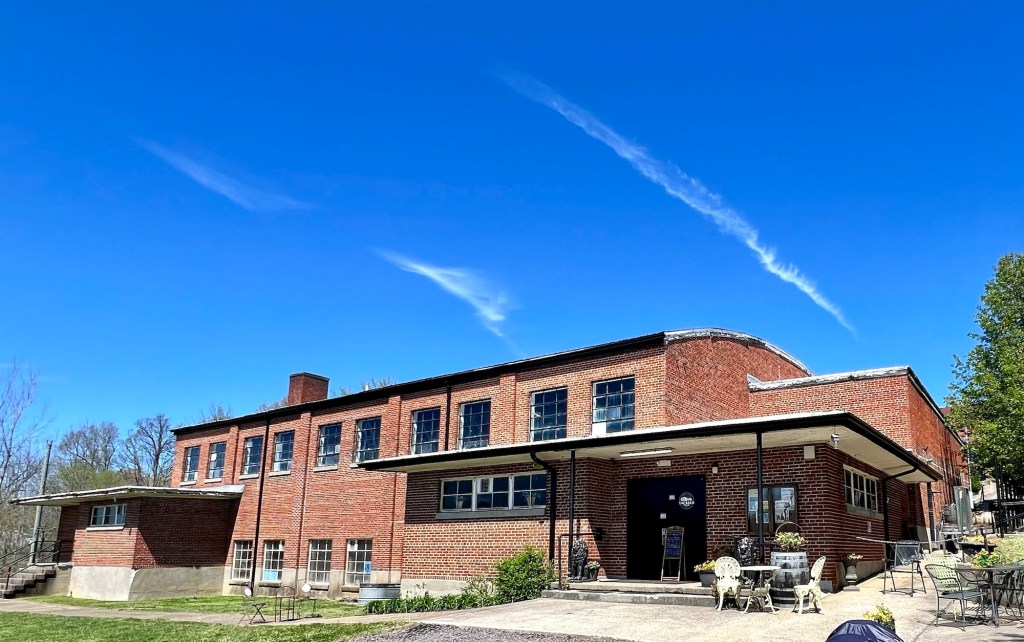
MB Roland Distillery in Pembroke, KY

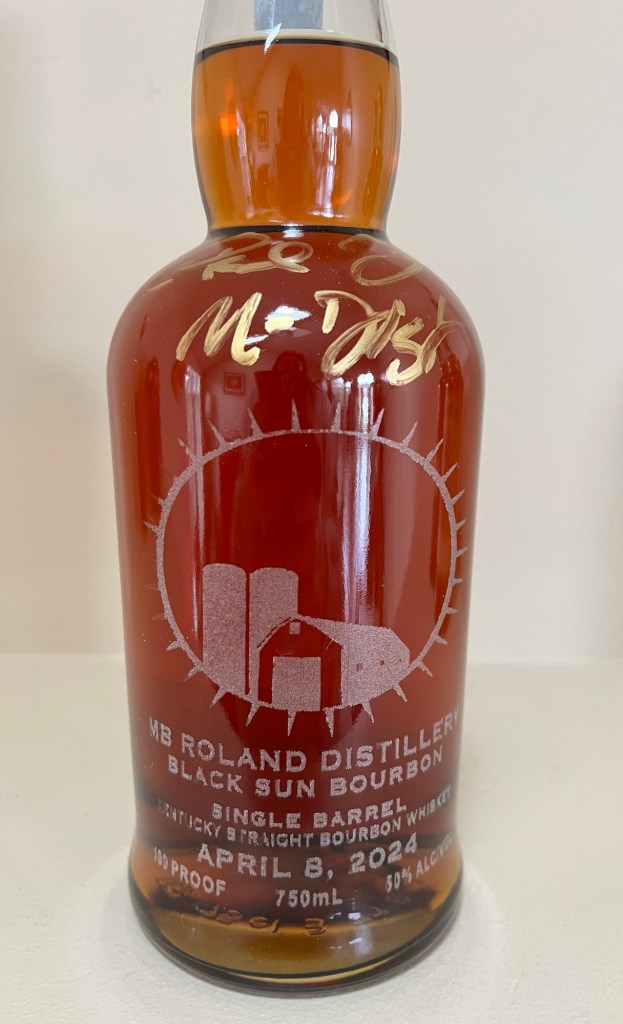
MB Roland Distillery is located on a lovely farm just south of Hopkinsville, which also means that they are just north of the Tennessee state line. Via their Facebook postings, we knew that they were releasing the MB Roland Single Barrel Kentucky Straight Bourbon and “Smallest Small Batch” hand selected and blended by Jackie Zykan. Bonus, she was to be there for bottle signings 11-3. In addition, we wanted to acquire a bottle of their total eclipse commemorative Black Sun Bourbon etched bottle.
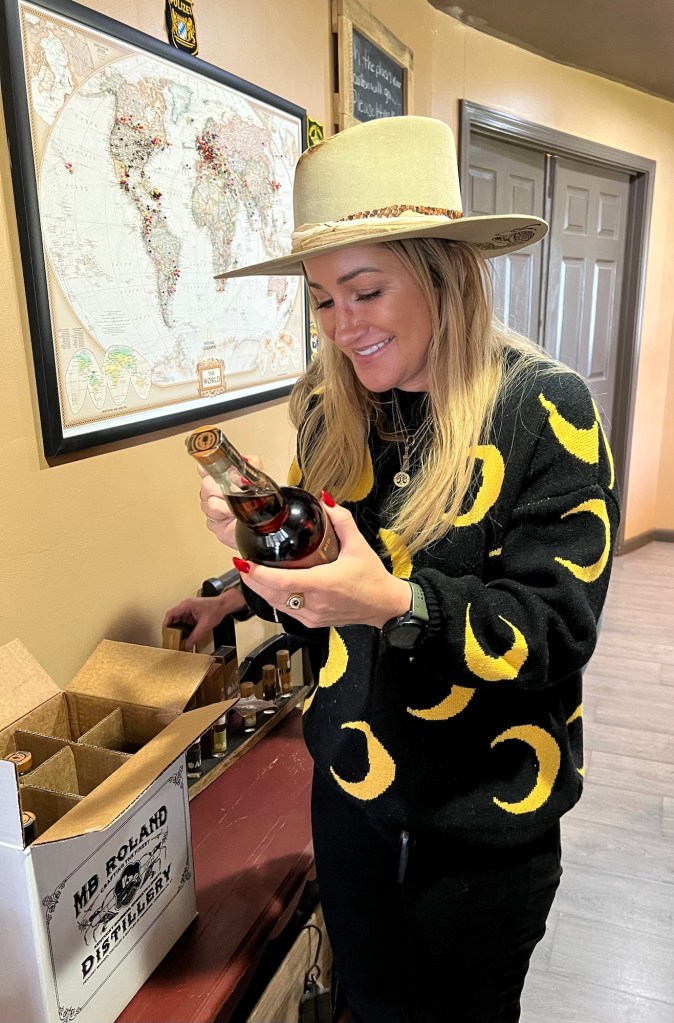

We were fortunate to arrive early and have an opportunity to talk with Jackie. She is not only incredibly knowledgeable and possesses an amazing palate, but she is super nice as well.


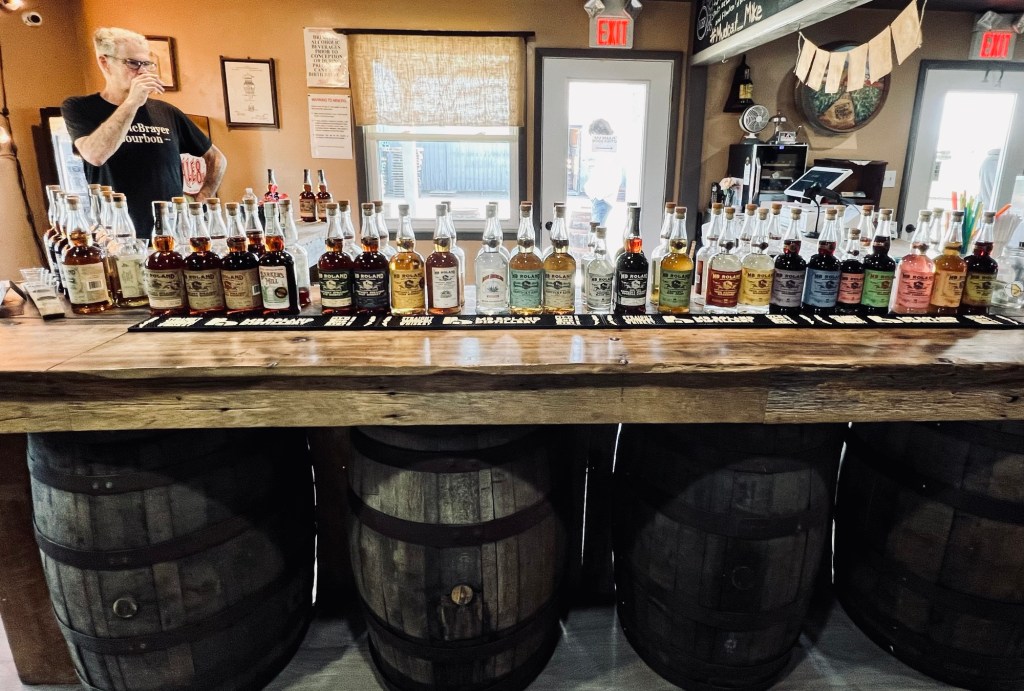
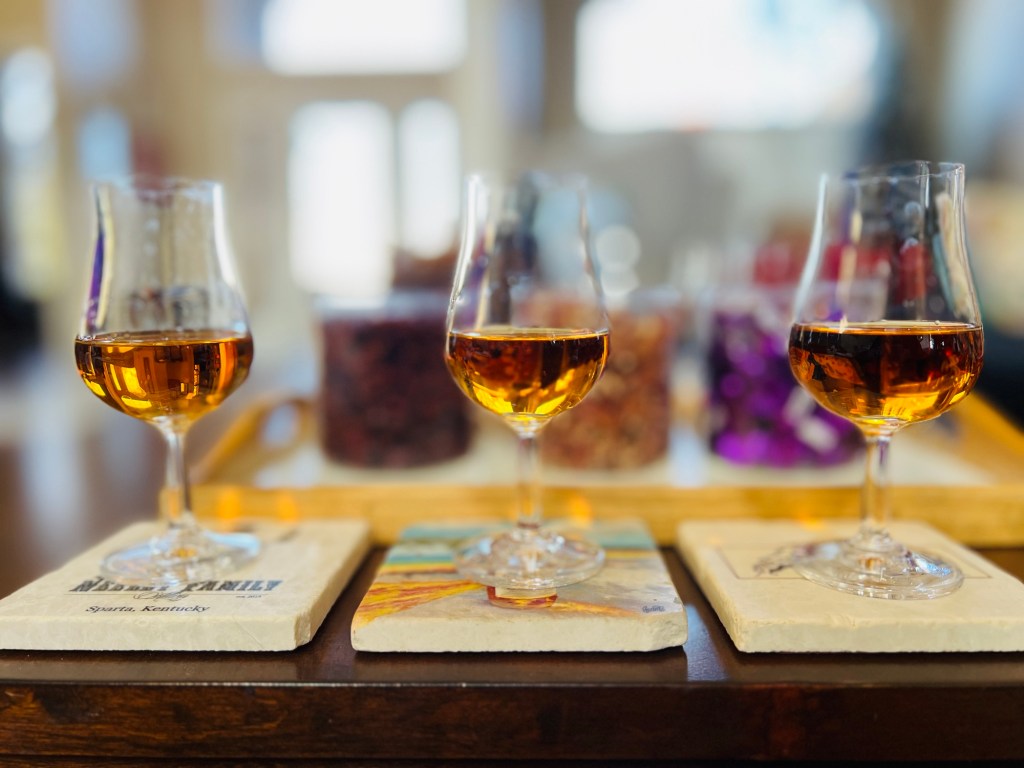
After our chat, we decided to do a small tasting to help us determine what other bottles we wanted to take home with us. They have endless options and you are sure to find one or two that hits the mark for your taste. In addition to the ones that Jackie signed and the Black Sun Bourbon, we also got one finished in brandy and a single barrel named “Butter and Biscuits” as it was very clear how it got its name!


Casey Jones Distillery in Hopkinsville, KY
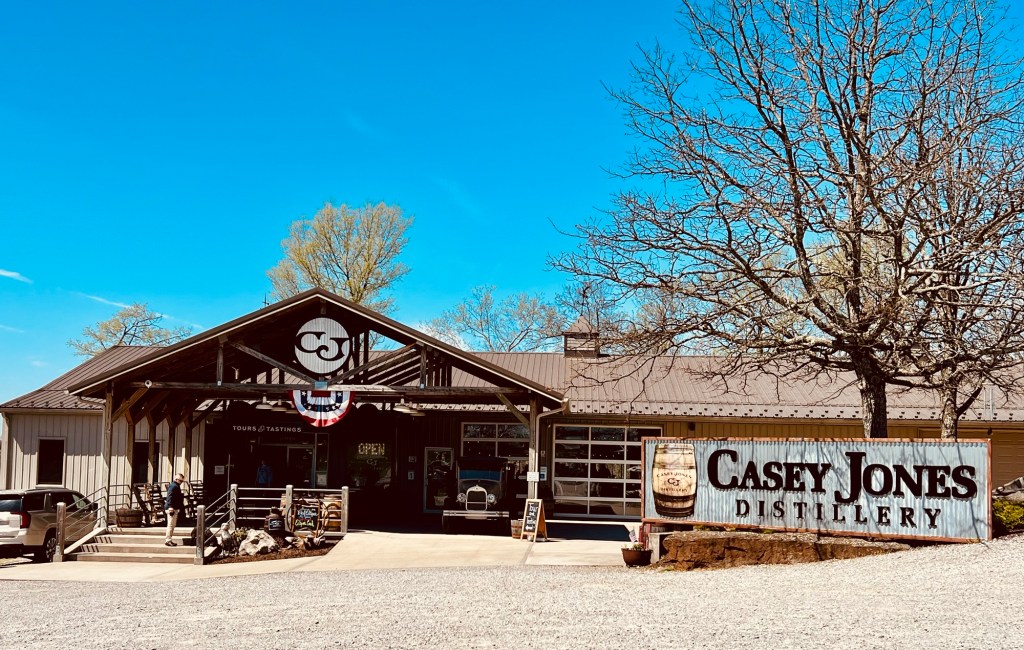
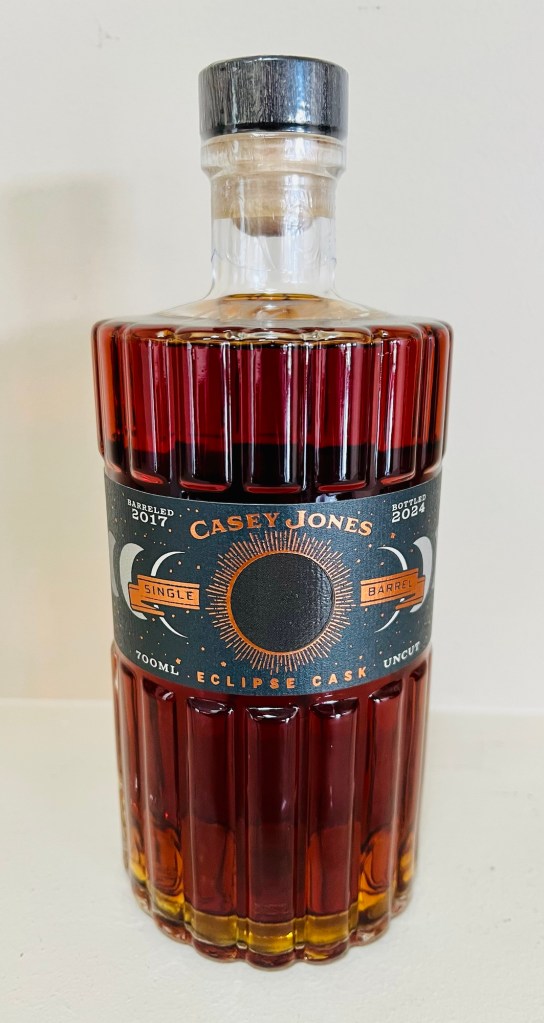
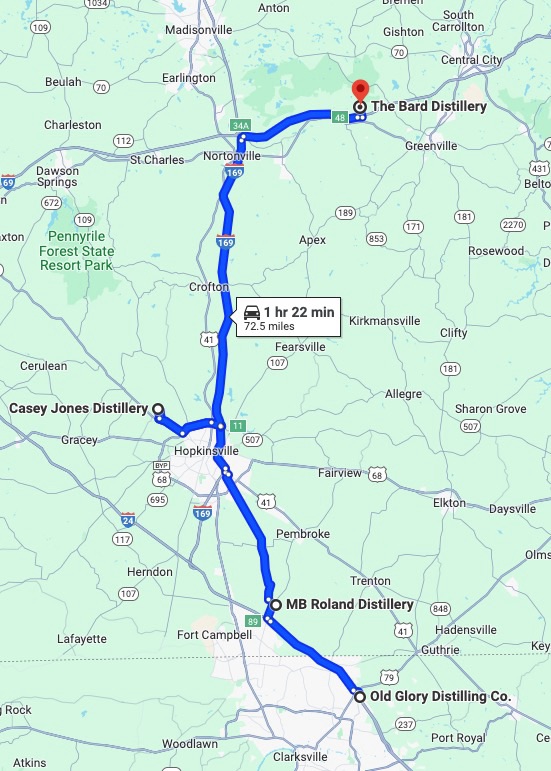
From MB Roland, it is a mere 22 mile drive north to the Casey Jones Distillery. We had a mission to collect as many eclipse specialty bottles as reasonable and we knew that Casey’s had a few options. We were able to sample several items and that helped us confirm that we would acquire the three eclipse options as well as an amazing single barrel four-grain.
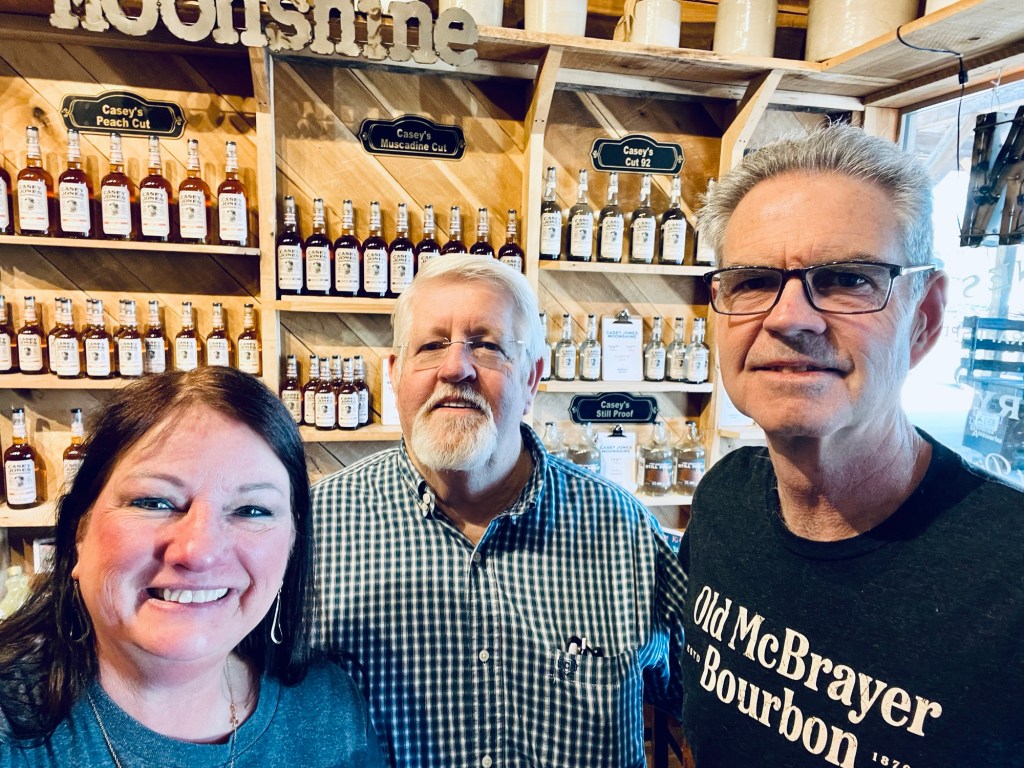
Rebecca, AJ, and Wayne

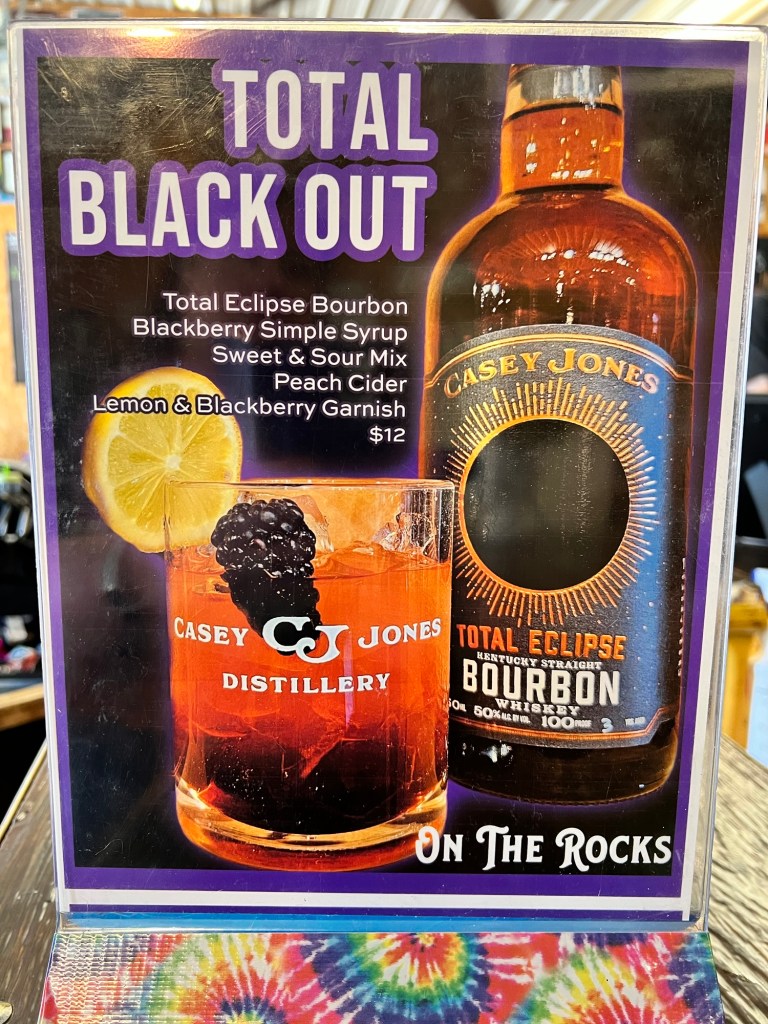
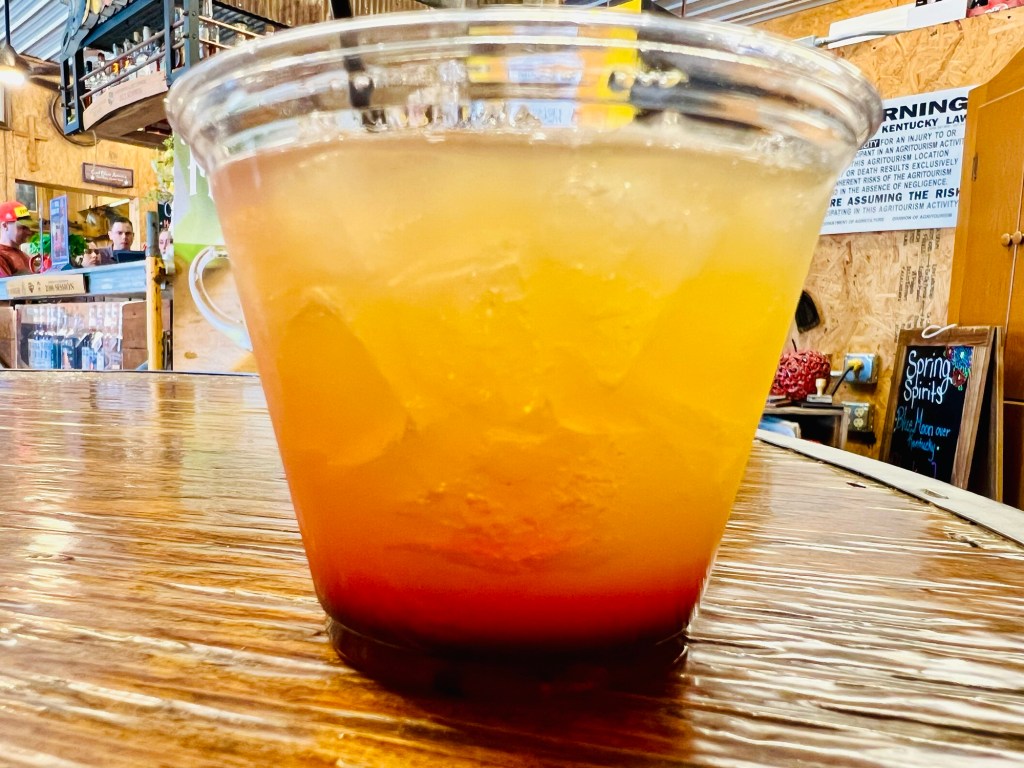
We had the opportunity to meet with their Master Distiller, AJ, and get a picture with him. He was thrilled that we loved their spirits and encouraged us to stop in their bar for a specialty cocktail before leaving. That was certainly on our agenda just as soon as we grabbed some of the BBQ that we had been smelling on the smoker! Smokin O’s BBQ had burgoo, BBQ nachos, pulled pork, chicken, brisket, and ribs – amazing! We enjoyed our food selections with a cocktail (Bloody Mary for Wayne and the Total Black Out for Rebecca).
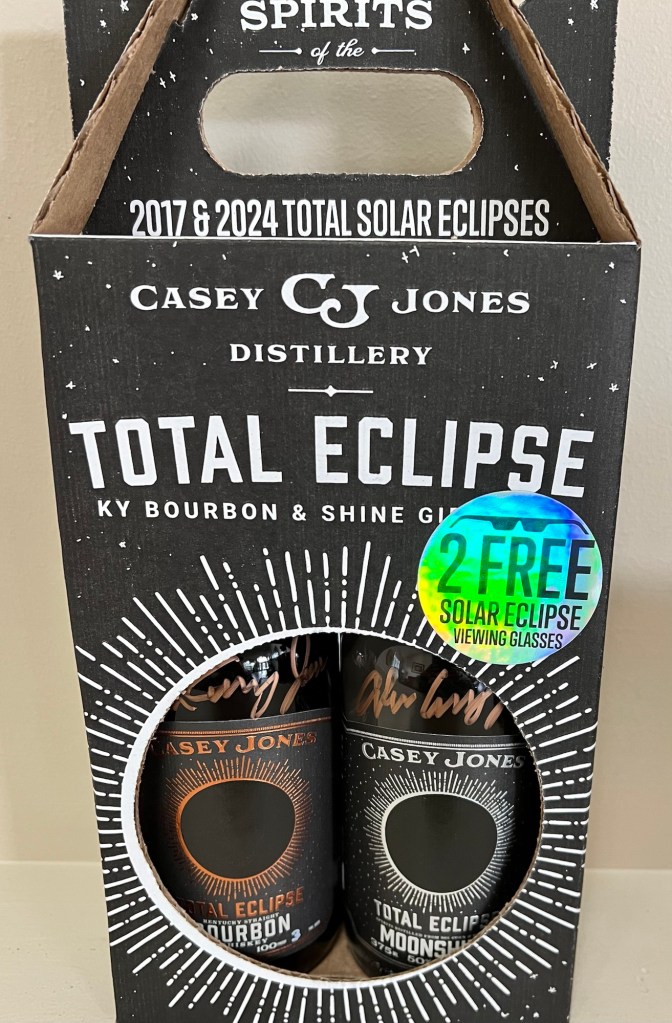
Casey Jones Single Barrel Eclipse Cask: Originally barreled for the 2017 Eclipse, it was now bottled for the 2024 Eclipse. The mashbill is 50% corn and 50% cane recipe. It was aged just shy of 7 years in a Kelvin Cooperage #4 char, medium toast cask, offered uncut at cask strength.

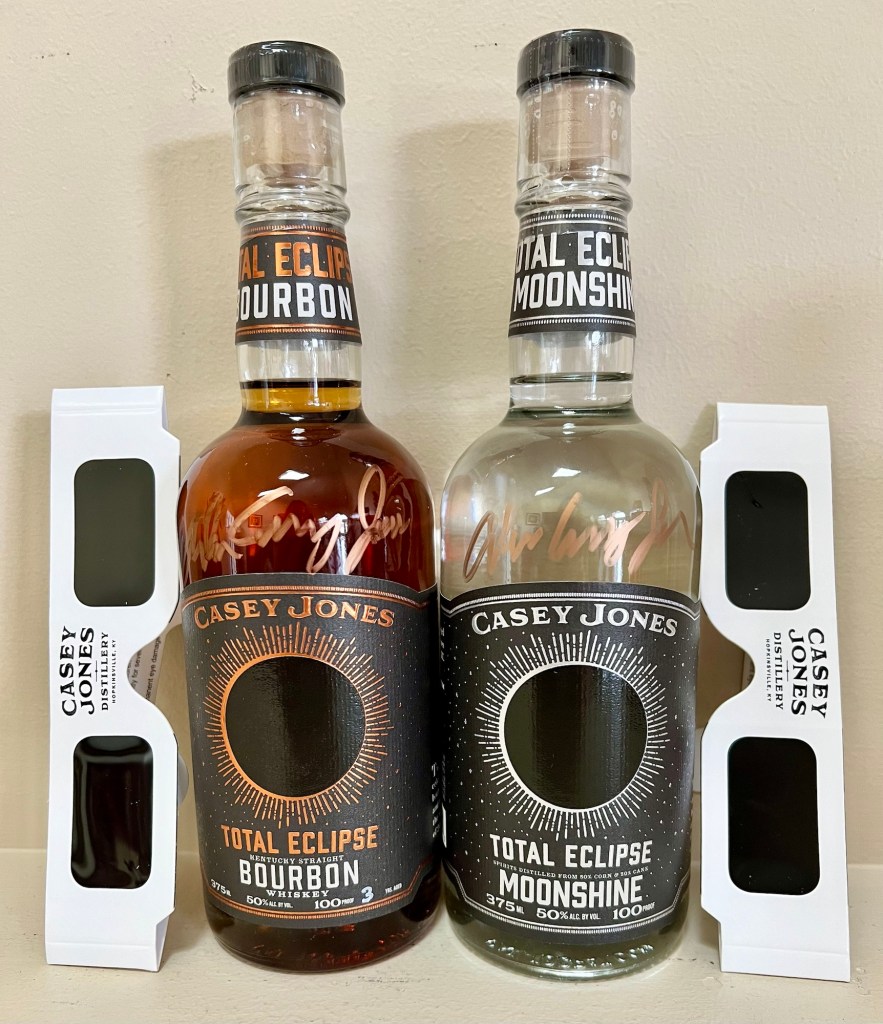
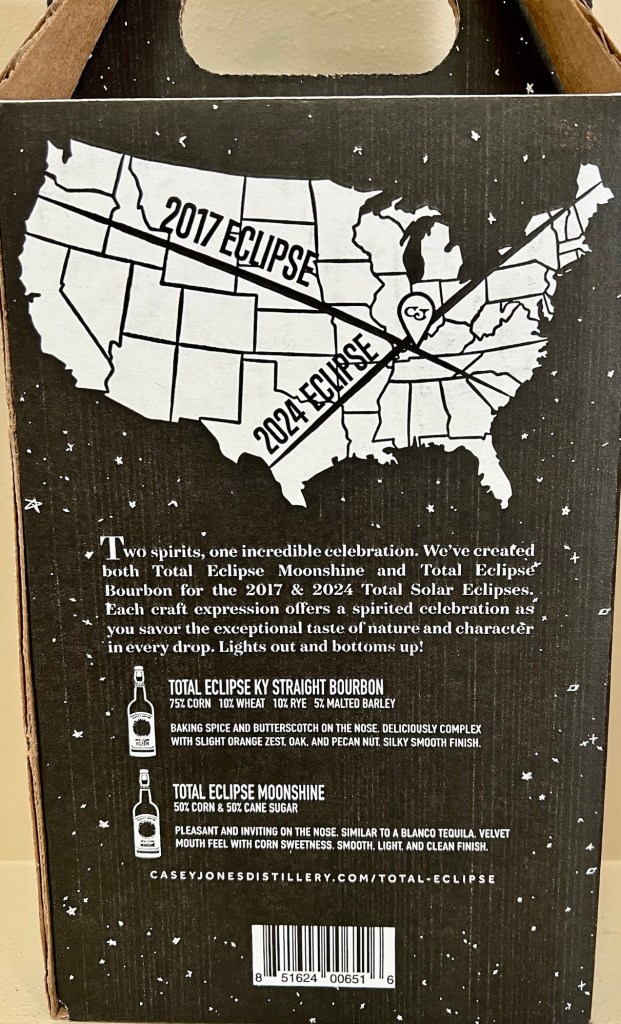
Total Eclipse Bourbon: This is a 4 grain mashbill with 75% corn, 10% wheat, 10% rye, and 5% malted barley.

Total Eclipse Moonshine: Distilled from a century-old family recipe of 50% corn and 50% cane sugar, this particular moonshine was first created during the 2017 eclipse.
It was somewhat a “given” that we would stop by The Bard Distillery as we would literally drive by the exit on our way home. From Casey’s, it is less than 40 miles to the north – and again – on our way home to Southern Indiana. We had our fingers crossed that we might catch a lull on a Saturday so we could chat for a bit. That’s exactly what happened – we arrived just after two large groups had departed!

We always enjoy visiting with the team, seeing what might be new in the gift shop, and getting a bottle or two to replenish our shelves. We were in need of their Cinder & Smoke Straight Kentucky Bourbon Whiskey finished in Spanish Oloroso casks. Apparently, we weren’t the only ones with that great idea as they were temporarily sold out. Just another reason to make a visit in the near future!

That said, we were able to catch up with Kim Carter Bard and Amy Bryant while enjoying that day’s specialty cocktails. In addition, we were blessed to receive a special behind-the-scene’s peek at things to come for the distillery. All I will share is that you will want to see it unfold! Just brilliant. We are very excited for Kim, Tom, and the entire team!

Kim invited us to follow her to Greenville, KY to check out a great spot there. And we were off to do just that!
Sip&Spin Coffee & Records in Greenville, KY

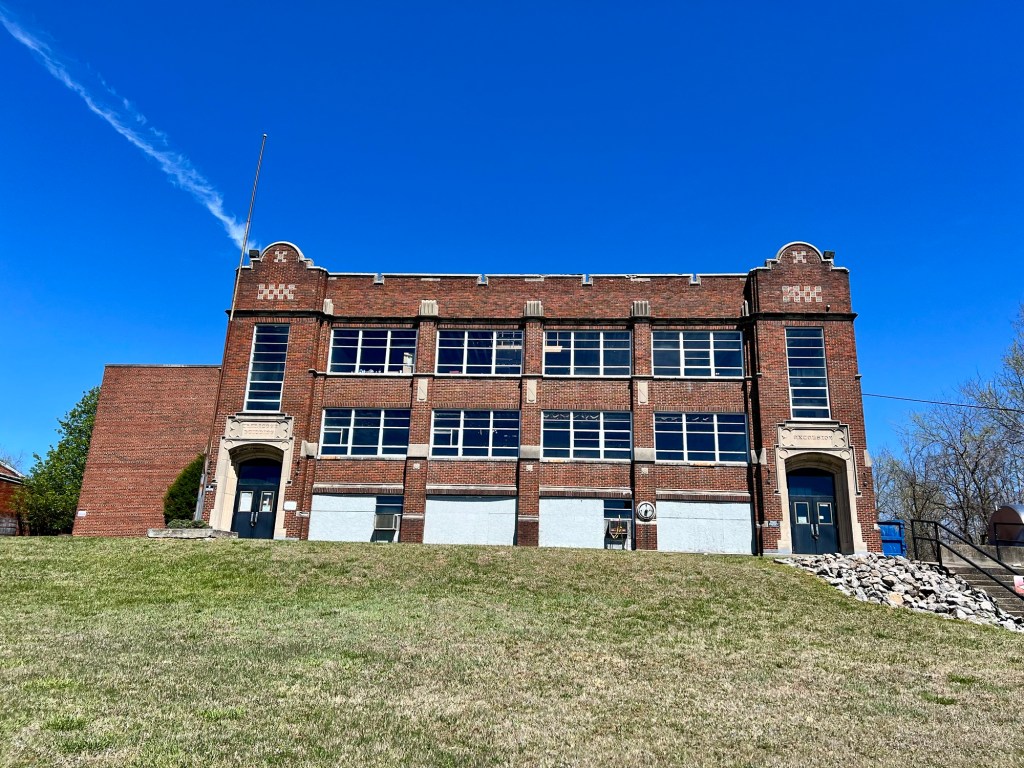
Greenville, KY is a picturesque town in Muhlenberg County with a traditional town feel and many historic buildings. The Sip & Spin Coffee & Records is no different. Located in the historic Roark building, the location has served several purposes including an undertaking business, antiques, and the printer for a local paper, “The Record.” Many historical items are on display today and it is fascinating to walk through. If that isn’t enough, they have fabulous coffee and live music on Friday and Saturday evenings.

We truly enjoyed relaxing there and chatting with Kim as well as Ben Duvall, the owner of the establishment. We look forward to returning on a Saturday in the near future to enjoy the music and people of Greenville.

Rebecca, Kim, and Wayne at the Sip & Spin

Distillery Trail Statistics

MB Roland Distillery, Casey Jones Distillery, and The Bard Distillery are on the Kentucky Bourbon Trail Craft Tour Western area. This trip marked our second visits to MB Roland and Casey Jones and our 4th to The Bard. Overall, they were our 121st, 122nd, and 123rd distillery experiences.

The Bourbon Trail is so much more than collecting stamps and bottles of spirits. Whether you are just starting the Trail or are well into it, always remember to savor each moment and take it all in. It is a culture. It is making new friends. It is supporting up and coming businesses. It is a way of life and we love it!

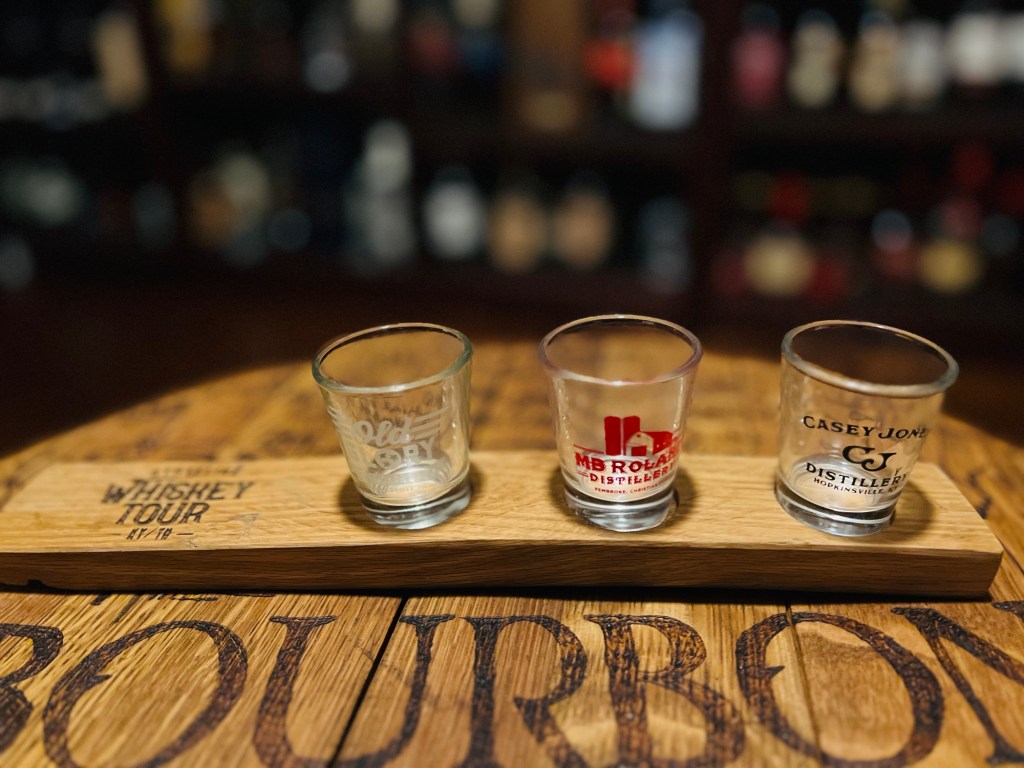
Pro Tip: Add Old Glory Distilling Co in Clarksville, TN. That plus MB Roland and Casey Jones will complete the Stateline Whiskey Tour. You will receive a souvenir shot glass at each stop and a finisher’s stave at the last one.
Happy Trails,
Wayne & Rebecca

All photos by Rebecca
April 2024 Elijah Craig Trio Tasting

04/09/24
By Rebecca Herman McBrayer 

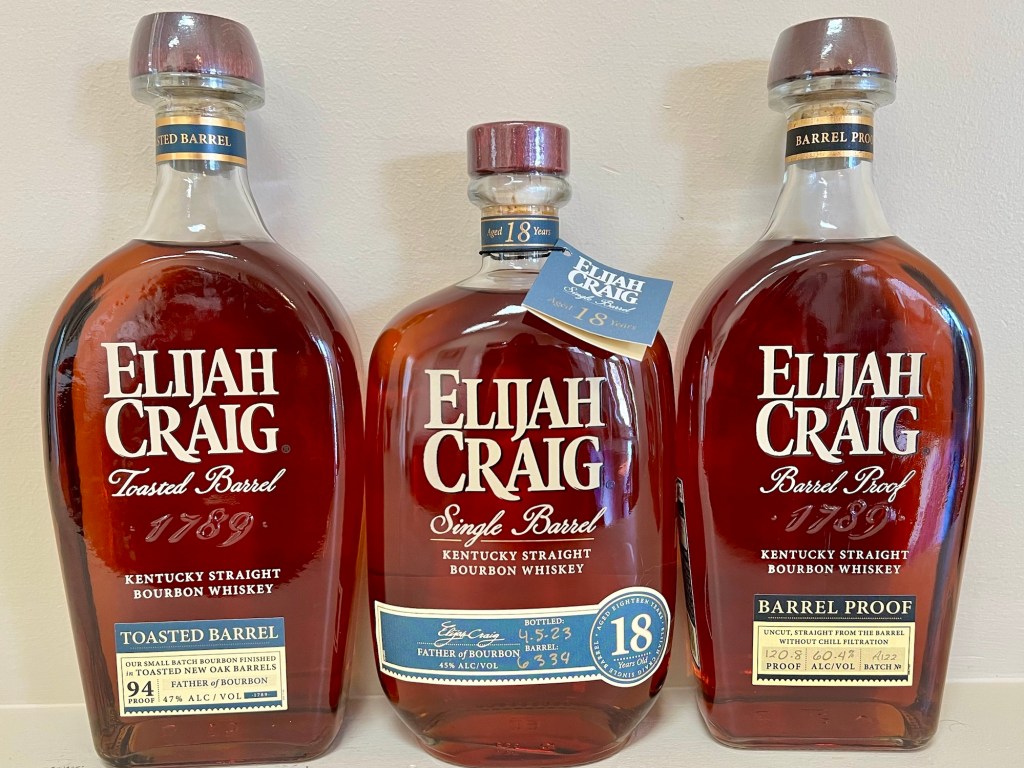
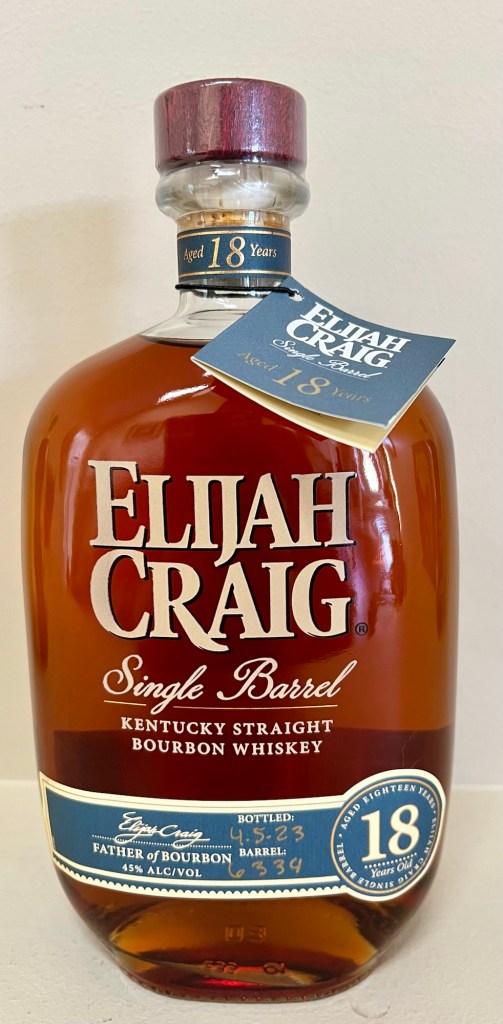
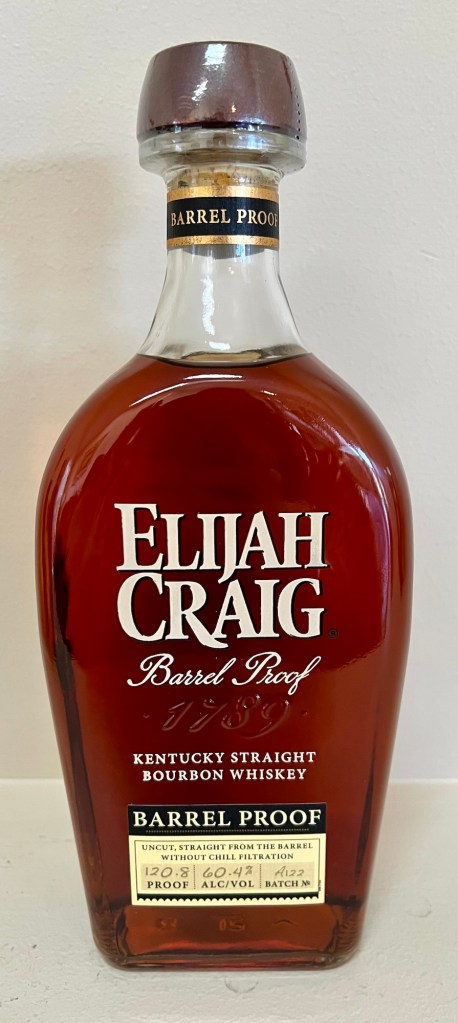
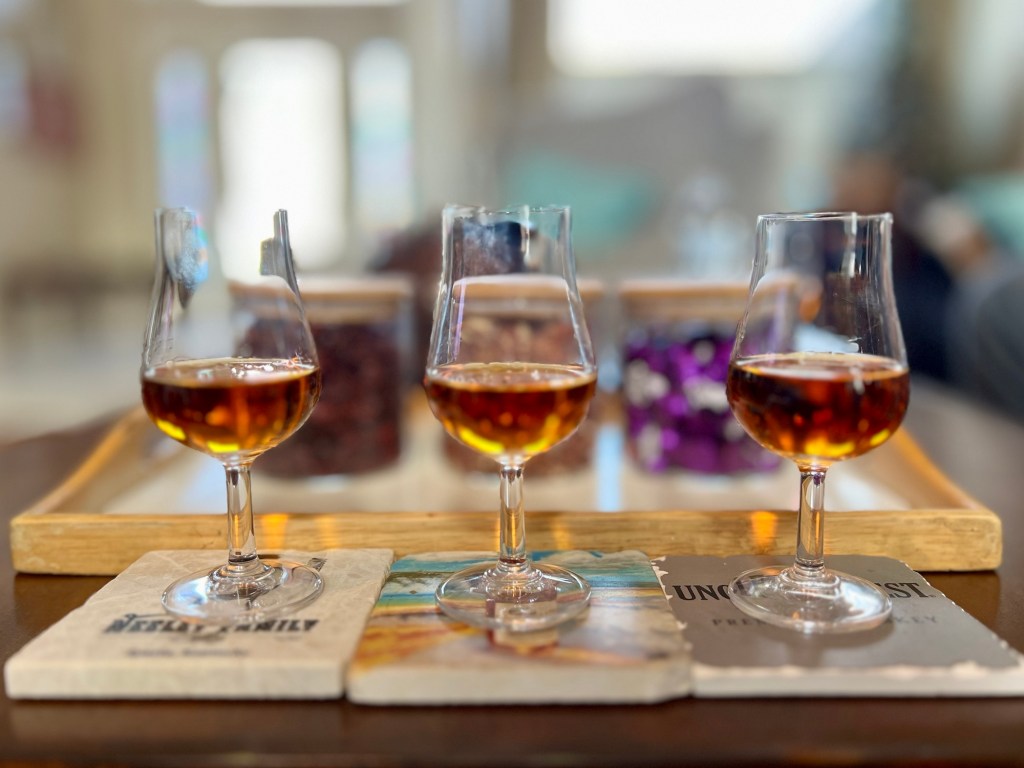
Wayne and I regularly enjoy Elijah Craig Barrel Proof offerings and the Toasted Barrel stands out as a classic toasted offering. Last year at the Kentucky Bourbon Festival, we were able to acquire a bottle of their 18-year-old and had not had an opportunity to open and taste it. Thus, we decided to taste and compare a trio of Elijah Craig for this tasting.

Selected for this Tasting

Elijah Craig Toasted Barrel, Elijah Craig Single Barrel #6334 18 year old, and Elijah Craig Barrel Proof #A122 – all produced by Heaven Hill Distillery. Please be sure to read our approach to Tasting Whiskey if you haven’t already.

Elijah Craig Toasted Barrel

Mashbill – 78% Corn, 12% Malted Barley, 10% Rye
Age – at least 4 years but typically 8-12 years
Proof – 94
Other – Toasted Barrel
Price Paid – $64.99

Color – Golden amber.

Aroma – Caramel, baking, spices, and classic toasted aromas of marshmallow.

Taste – A lovely sweetness of marshmallow and graham crackers with chocolate and caramel. Nutmeg and white pepper linger on the finish with a nice hint of smokiness.

Tasted with dried cranberry – Muted many of the flavors, only a light sweetness after the cranberry and even the spicy notes are limited.

Tasted with a pecan – Spicy notes really returned but more of a white pepper. The barrel and toasted oak is prevalent but the sweetness and toasted marshmallow is gone.

Tasted with dark chocolate – Much more balanced with a nice flavor profile, including a hint of pepper on the finish.

Elijah Craig Single Barrel #6334 18-Year-Old


Mashbill – 78% Corn, 12% Malted Barley, 10% Rye
Age – 18 years
Proof – 90
Other – Single Barrel
Price Paid – $199.99

Color –  Golden amber.

Aroma – Caramel and oak, then honey and brown sugar, followed by apple and cinnamon.

Taste – Very delicate but 18 years of oak come forward. Not as sweet as on the nose but vanilla cream and spiced apples are present. It finishes with rye spices, a touch of vanilla, and aged oak. A little higher proof might create more complexity and a more viscous mouth feel.

Tasted with dried cranberry – Not a huge difference with the cranberry but more tannins, less sweetness and spice, and somewhat of a tea flavor, perhaps cardamon.

Tasted with a pecan – The pecan made it quite bitter and it stripped away all of the delicate flavors.

Tasted with dark chocolate – The chocolate comes through and provides an elevated mouth feel.

Elijah Craig Barrel Proof #A122

Mashbill – 78% Corn, 12% Malted Barley, 10% Rye
Age – 12 years
Proof – 120.8
Other – Barrel Proof
Price Paid – $89.99

Color – Medium amber.

Aroma – Vanilla, caramel, light toffee, and light baking spice. A very pleasant nose.

Taste – Cherry, caramel, and baking spices with a hint of leather. The finish includes cinnamon, pepper, and lingering oak.

Tasted with dried cranberry – Heavy spices with a lot of cinnamon and pepper.

Tasted with a pecan – It is cinnamon on the front and pepper on the back.

Tasted with dark chocolate – Cherry came back and then cherry cinnamon pie with a buttery piecrust.

Discussion and Final Notes

We enjoyed each one. The Elijah Craig Toasted Barrel is a pretty classic toasted barrel profile and exceptional for its price point. This particular Elijah Craig Barrel Proof is good but perhaps not as flavorful as other seasonal releases. The Elijah Craig 18-year-old is good but quite delicate and lacks the viscosity and complexity that we enjoy. Based on its availability and price point, it would be lower on our recommendation.

Our personal favorite of this specific trio leans toward the Elijah Craig Toasted Barrel. It has a great flavor profile and terrific price point with good availability.

Cheers,
Rebecca

Photos by Rebecca Herman McBrayer
Kentucky Straight Bourbon Whiskey:
Such whiskeys have all the requirements of bourbon: Made in the U.S, distilled at <= 160 proof, barreled at <= 125 proof, aged in new, charred oak containers, bottled at >= 80 proof.

Straight bourbon means it is aged at least 2 years (and must have an age statement if less than 4).
In addition, to be Kentucky Straight Bourbon, it has the additional requirement that it must be produced and aged at least 1 year in the state of Kentucky.

For additional information on bourbon requirements, please read this post – Bourbon Whiskey.

NOTE: The bourbons in this review were purchased by us. We were not compensated by the spirit producers for this review. This is simply our opinion based on what we tasted on this day. Please drink responsibly.

Bourbon Grain Flavors

04/07/24
By Rebecca Herman McBrayer

As discussed in Bourbon Whiskey, there are some common tastes that are noted when tasting bourbon. For this Sunday Spirit Note, the focus is on contribution of the grains, the foundation of the spirit, to the taste of bourbon.

Corn

As part of the requirements, bourbon must be made from at least 51% corn. Corn imparts a sweet flavor profile to bourbon and contributes to bourbon’s rich body and creamy texture. Some of the tasting notes derived from corn could include:

– Vanilla
– Caramel
– Butterscotch
– Honey
– Brown butter
– Toffee
– Toasted marshmallows

Rye

Rye is a common grain used by many distillers. In general, it assists in adding a spicy flavor profile to the spirit. The percentage of rye used in the mash will influence the flavor produced. Rye bourbons are also described as aggressive and have a savory balance to the typically sweeter, corn-based elements of the bourbon. Some of the tasting notes derived from rye might include:

– Black pepper
– White pepper
– Rye bread
– Mint
– Herbal
– Anise

Wheat

In general, using wheat in the primary mashbill is not common. Some distillers create a wheated bourbon and omit the use of rye.  Others include wheat and rye to make a four-grain bourbon. The combinations are endless. In general, wheat doesn’t have a lot of flavors but can mellow the spirit and add a bread-like taste to it. Some of the tasting notes influenced from wheat use might include:

– Vanilla
– Honey
– Caramel
– Toasted oak
– Toffee
– Fruity
– Vanilla ice cream
– Bananas foster

Malted Barley

Nearly all bourbon has some percentage of malted barley because it assists with the fermentation process. Malting is a drying process that causes barley to produce enzymes that convert long-chain carbohydrates into simpler sugars that can be fermented by yeast into alcohol. In addition to that critical contribution, malted barley can give bourbon a warm, nutty, and smoky profile with hints of:

– Toast
– Toffee
– Cereal
– Cocoa

When you next taste bourbon and pick up various flavors, connect to its source and consider the contributions made by the various grains used in the mashbill.

There are many more sources of bourbon flavors. Most often, this includes, yeast selection, fermentation process, barrel selection and preparation (level of toast and char), entry proof into the barrel, the storage environment, and even decisions made for bottling. With so many variables, it is no wonder that there is such a wide range of bourbon flavors and why five people tasting from the same bottle may pick up different notes.

Happy Tasting!
Rebecca


First Visit to Cascade Hollow Distilling

April 4, 2024
By Rebecca Herman McBrayer


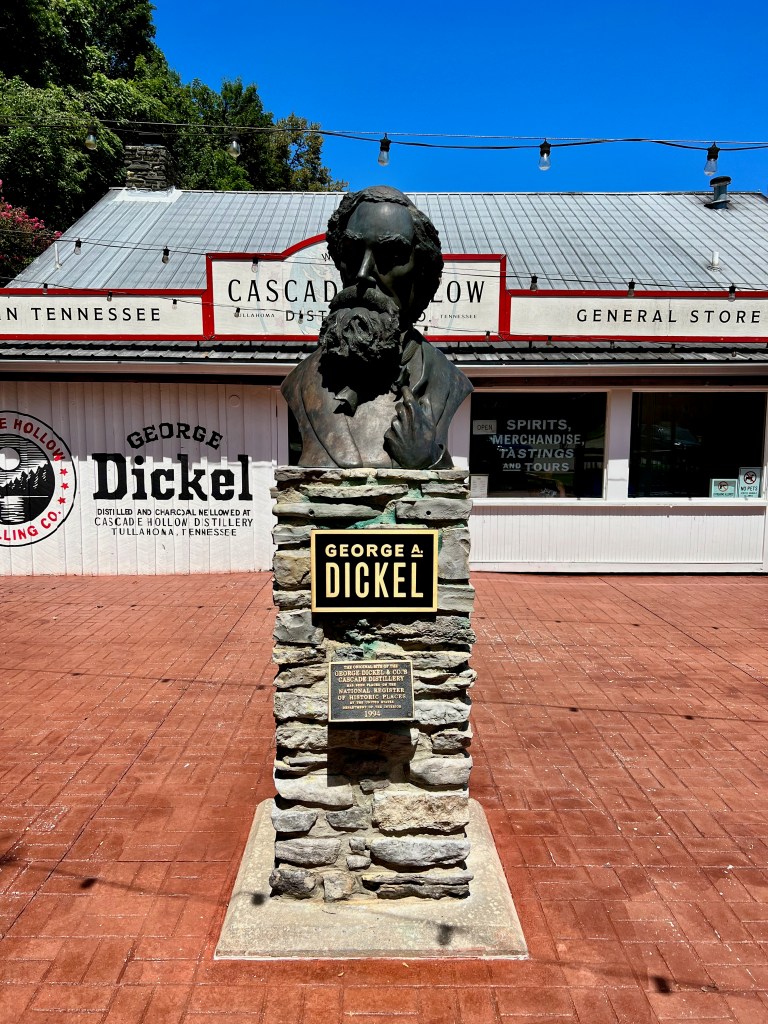
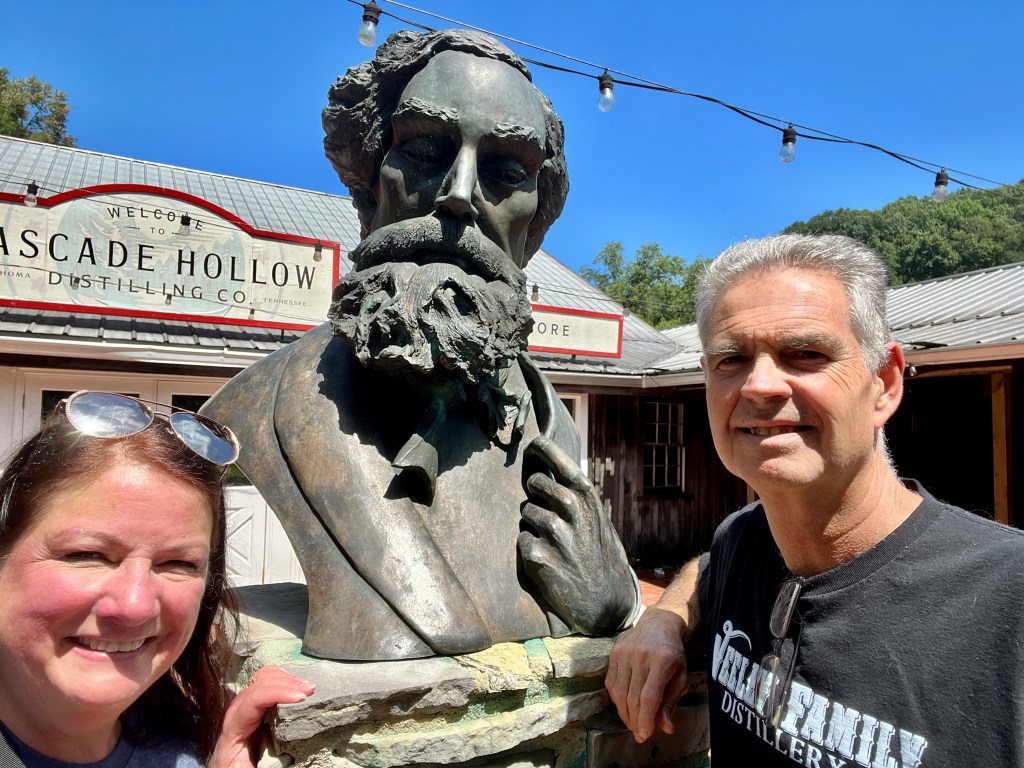
August 19, 2023, Wayne and I were in Tennessee for a family wedding. Of course, we decided that this was a great opportunity to visit a few Tennessee distilleries. This led us to Cascade Hollow Distilling – home of George Dickel Whisky – in Tullahoma, TN.


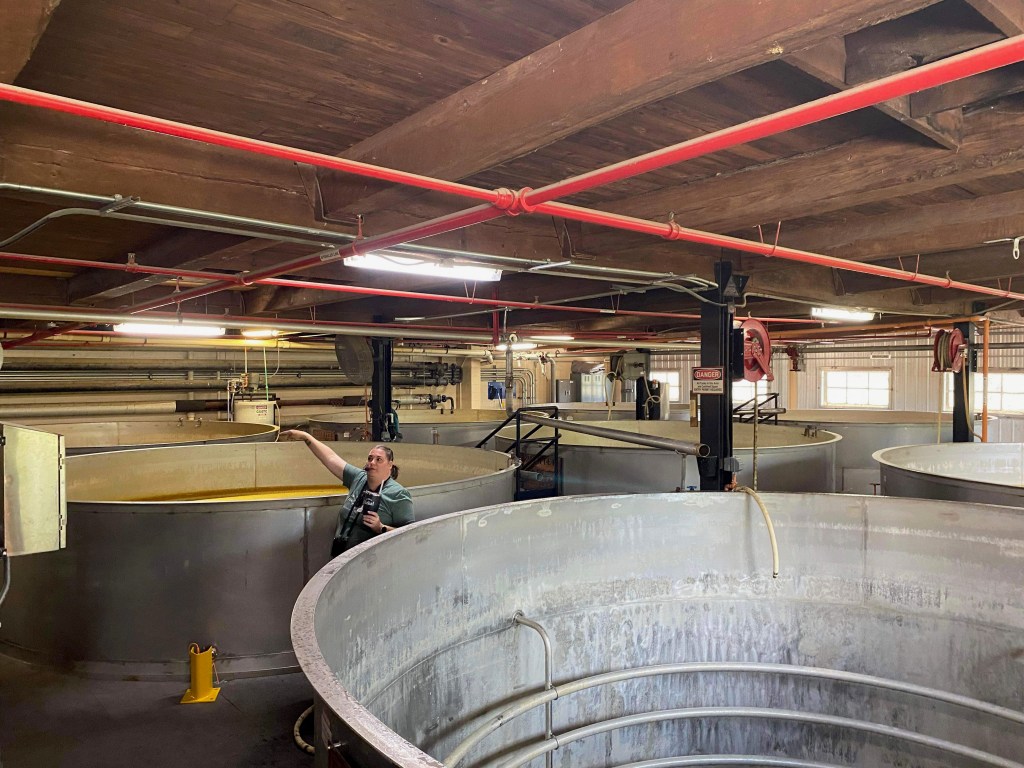
Our guide was very knowledgeable and energetic and that made the tour great. She started out by letting us know that we should keep our eyes open for wildlife, including copperhead snakes and minks. OK!

The tour was woven with stories of the history of George Dickel. It started initially in Nashville, TN but really took off when the Cascade Hollow Distillery opened in 1878 and George purchased a large share.

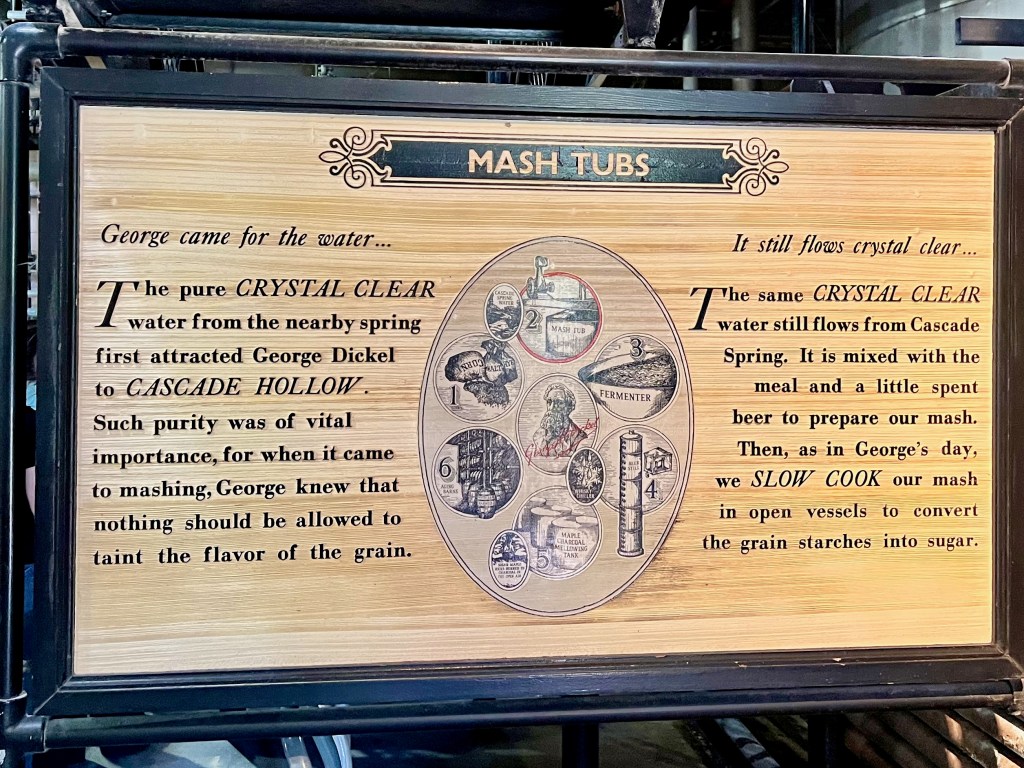
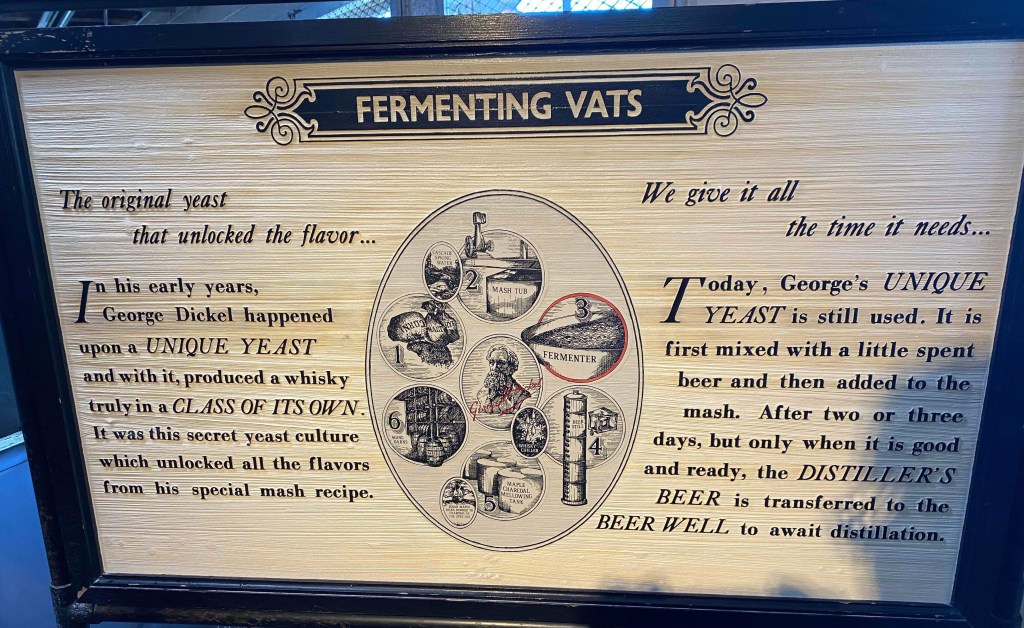
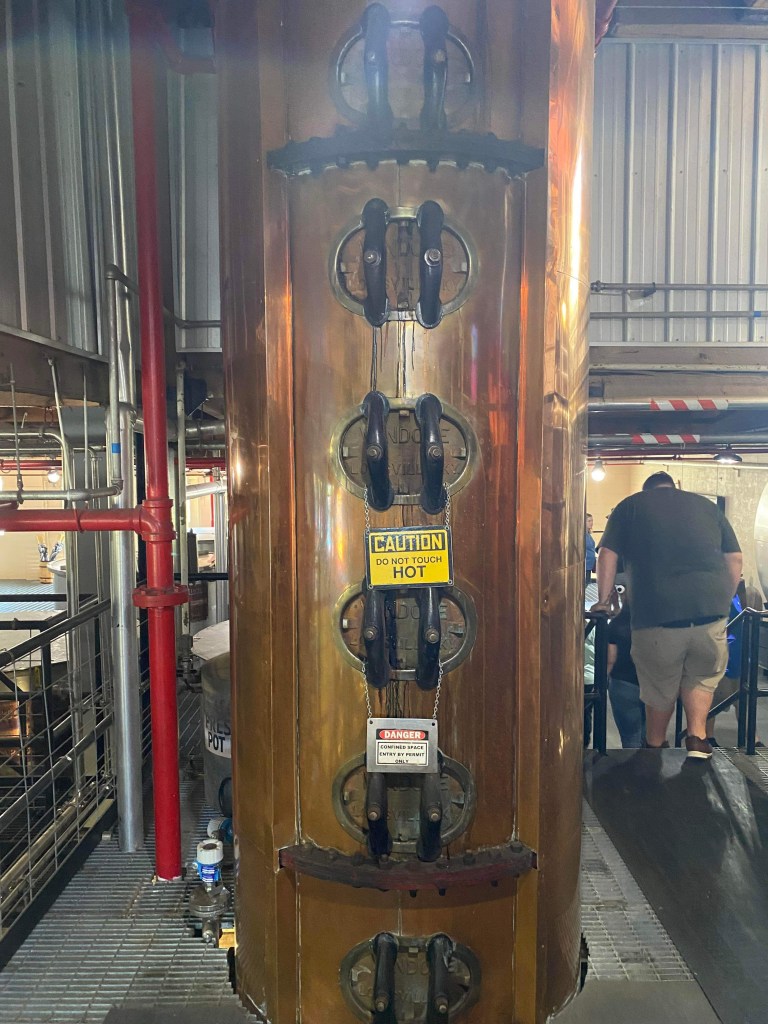
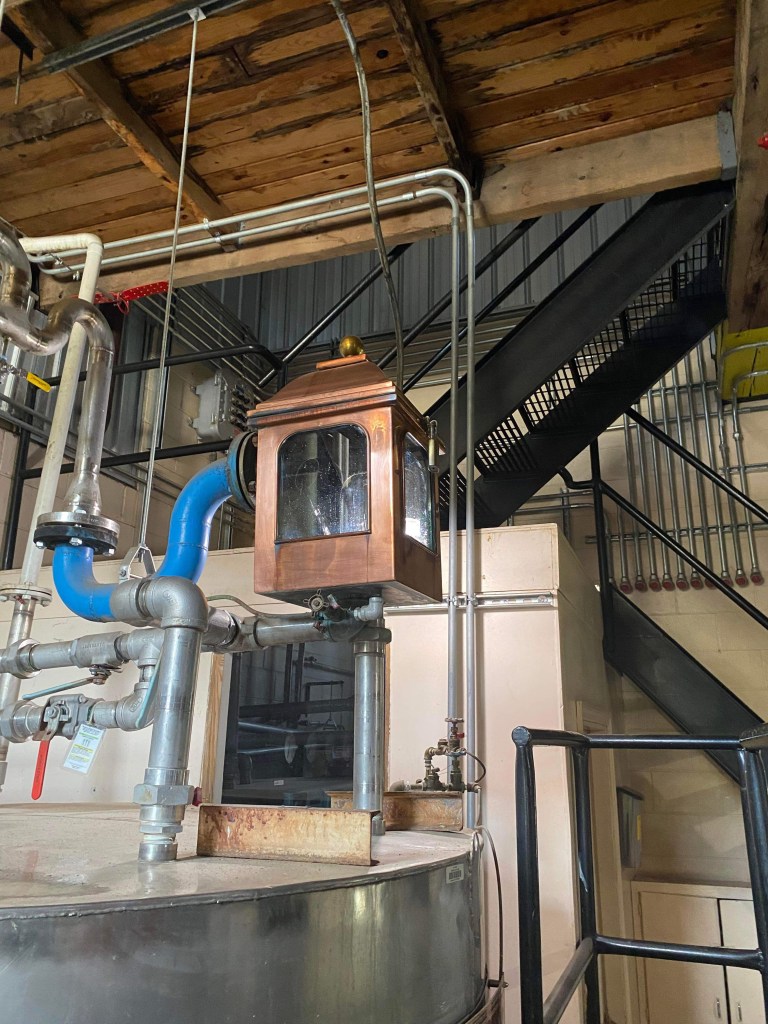
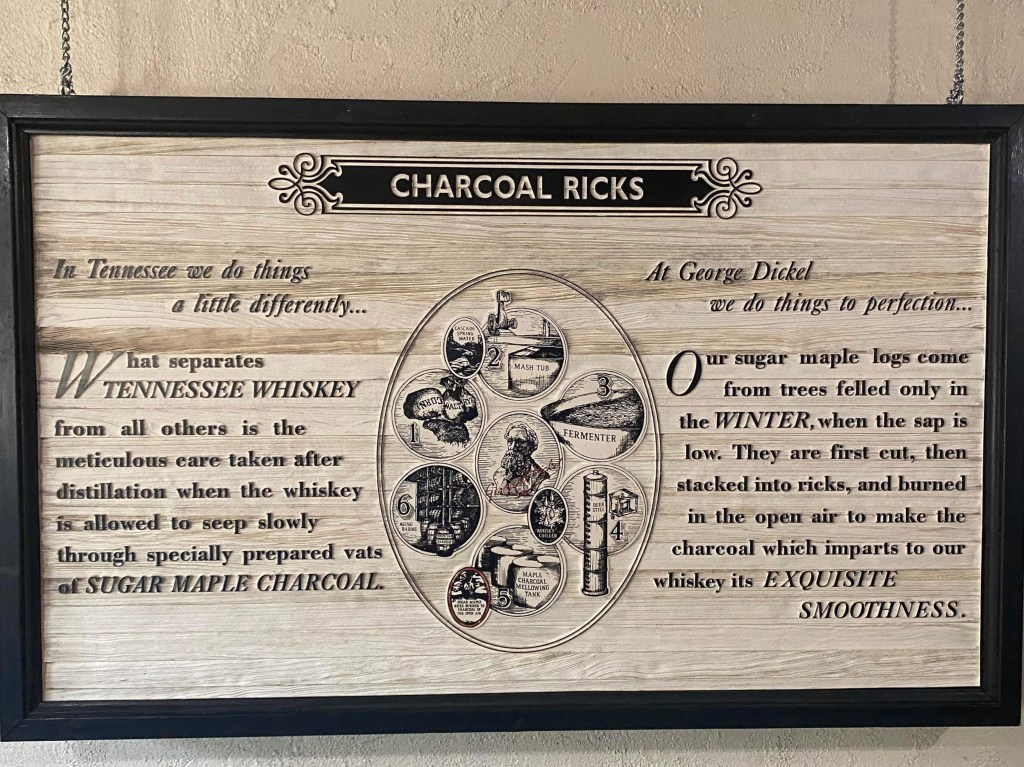
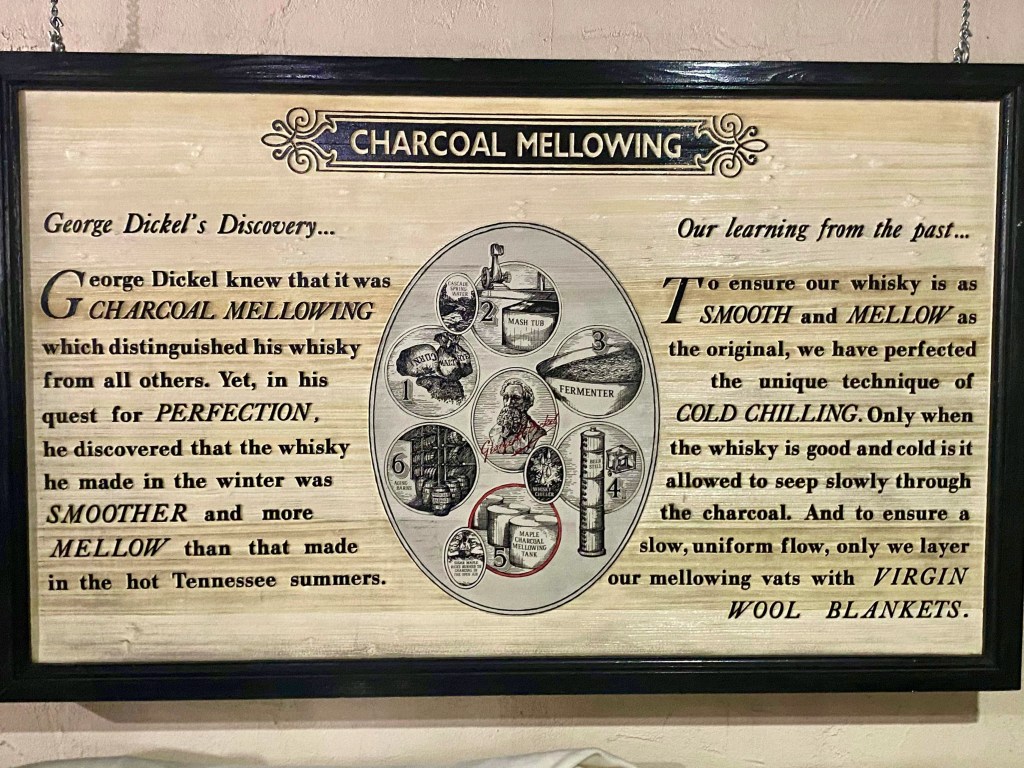
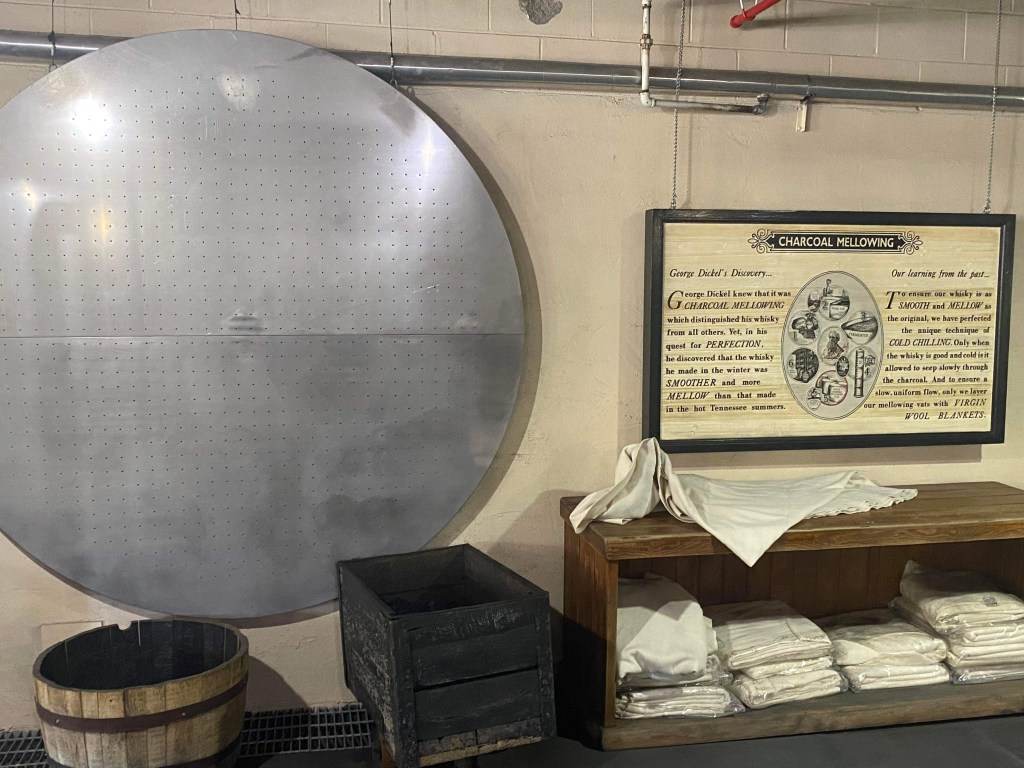
At Cascade Hollow, they have a specialized charcoal mellowing process. They cold chill the distillate to 40 degrees before starting the slow steep through the charcoal. Also interesting, their mellowing vats are layered with virgin wool blankets to achieve a slow, uniform flow. To learn more about the Tennessee Whiskey classification, please review this post.

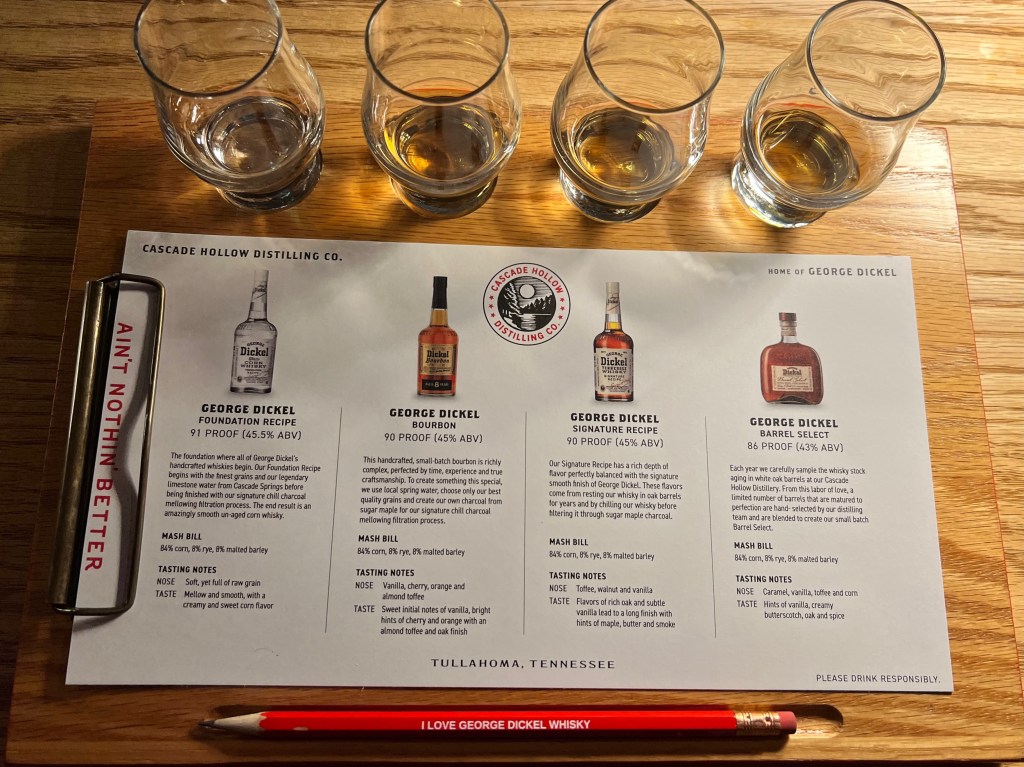
At the conclusion of the distillery tour, we returned to the “Post Office” and entered a somewhat hidden back room for our tasting.

Fun Facts

Dickel is one of the few American Whisky’s that doesn’t use the “e” in whiskey. George Dickel was a big fan of Scotch, and it does not use the “e” so George wanted to emulate that tradition. In addition to using the Lincoln County Method of maple charcoal filtration, Dickel also uses wool blankets as a secondary filtration.

Gift Shop

They have an extensive gift shop and a wonderful area to have a cocktail. However, we were on a tight schedule as we had a wedding later in the evening. So it was a quick shop to gather up our favorites such as pins, ornaments, a glencairn, and of course – some whisky!! Happy to get a couple of bottles that were signed by the Master Distiller, Nicole Austin.

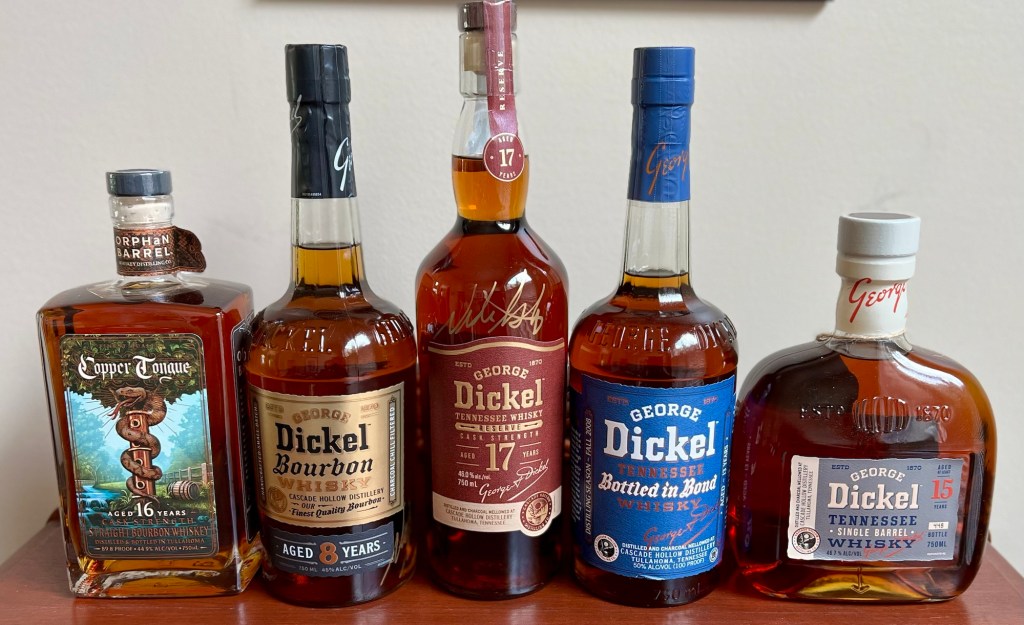
We did a formal tasting of the 15- and 17-year-old whiskys. You can read about that HERE.

Distillery Trail Statistics

While it is not easy to get to, we recommend it as it is worth the effort to visit.

Cascade Hollow Distilling, in Tullahoma, TN, was our 3rd Tennessee Distillery, 52nd distillery, and 84th distillery visit or event.

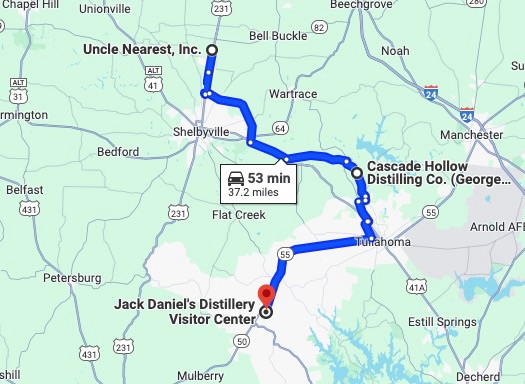
In addition to this visit and a family wedding, we visited 2 other distilleries over the weekend – Uncle Nearest and Jack Daniels.

Pro Tip: Plan to visit other nearby distilleries. With advance planning, it is possible to create a terrific weekend trip with multiple distilleries on the Tennessee Whiskey Trail.

Happy Trails!
Rebecca

April 2024 George Dickel Tasting

04/02/24
By Rebecca Herman McBrayer 

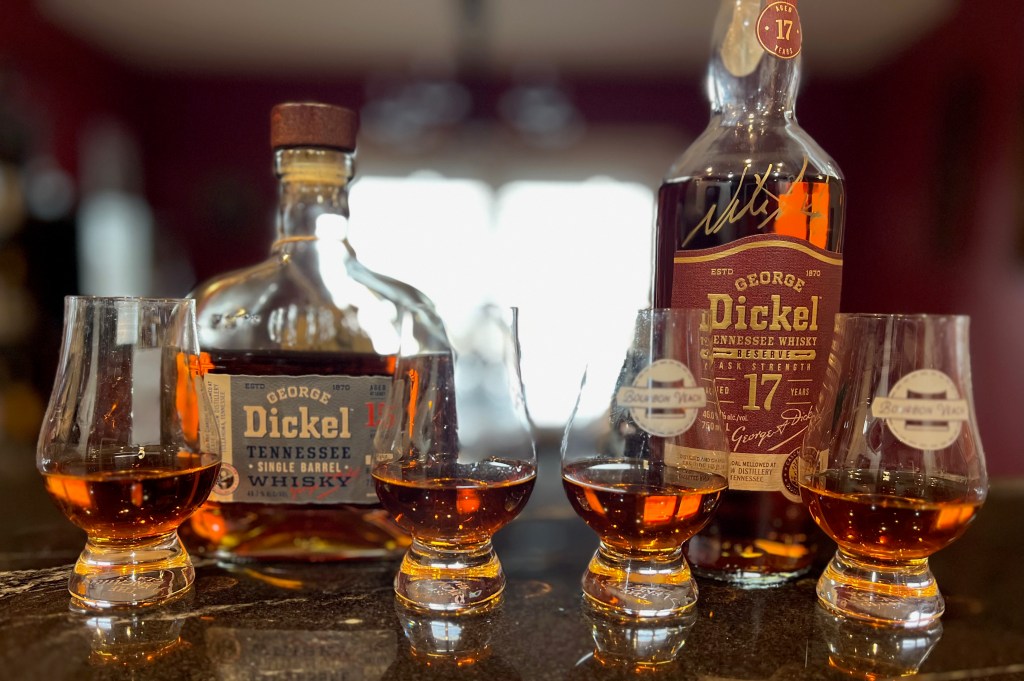
Wayne and I recently selected two Dickel offerings for a formal tasting. We had the opportunity to visit Cascade Hollow Distilling last August and that is where we acquired these particular bottles. You can read about our visit here.

Selected for this Tasting

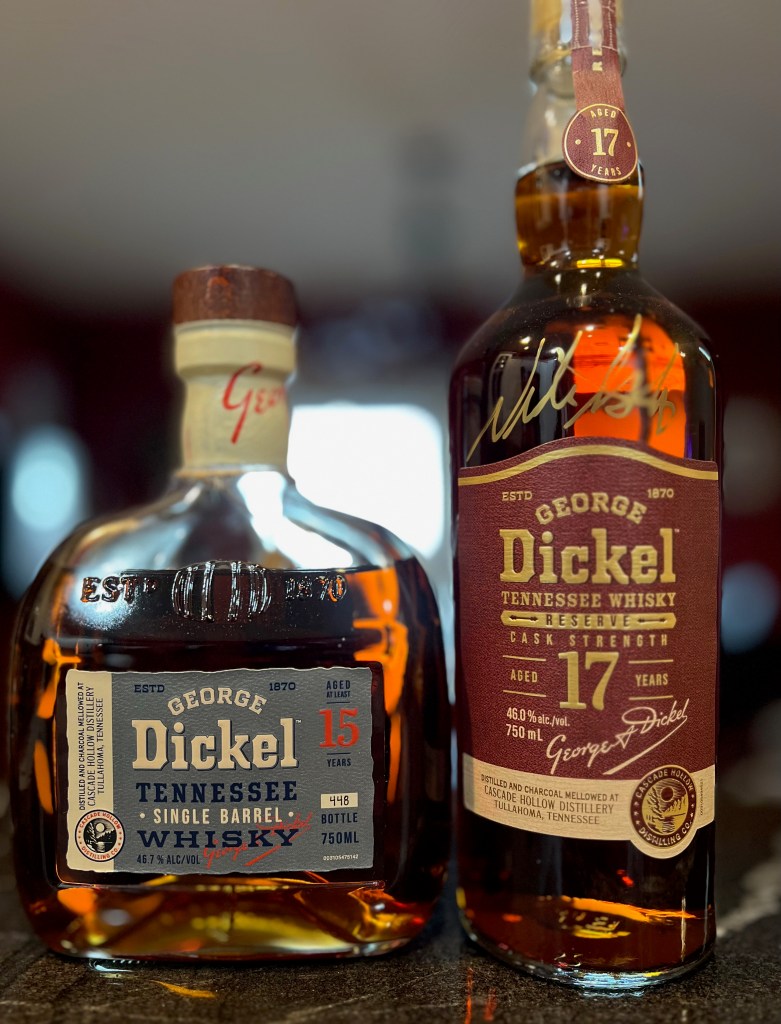
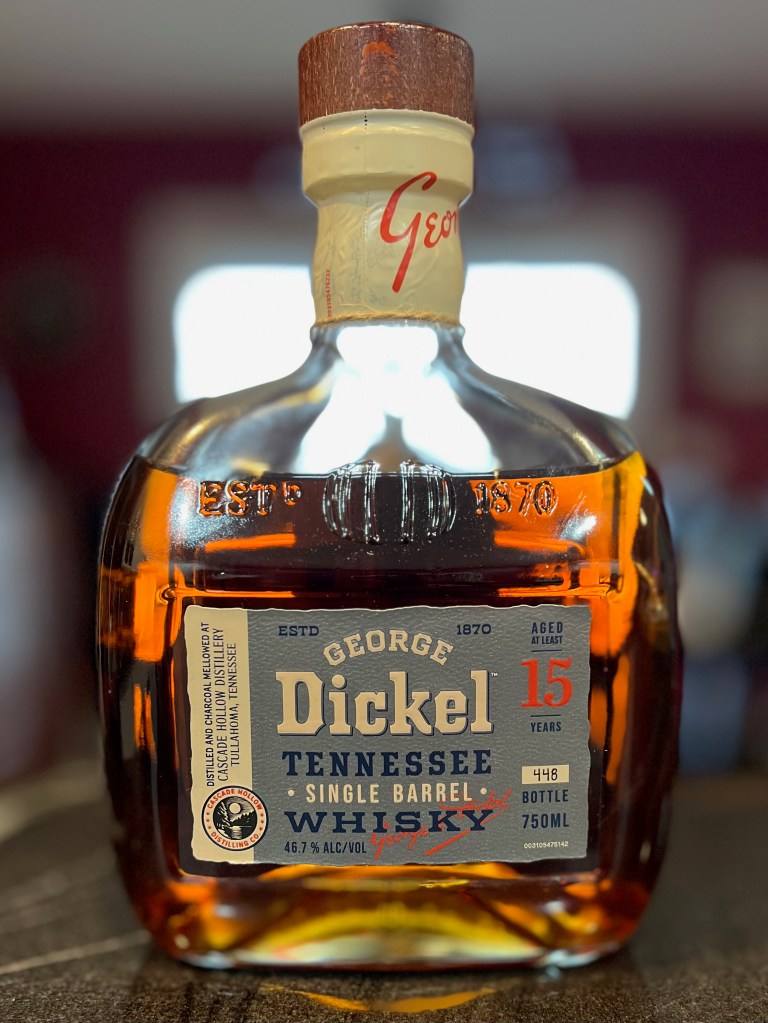
George Dickel 15-Year Single Barrel Tennessee Whisky and George Dickel 17-Year Cask Strength Reserve Tennessee Whisky. Please be sure to read our approach to Tasting Whiskey if you haven’t already.

George Dickel 15-Year Single Barrel Tennessee Whisky

Mashbill – 84% Corn, 8% Rye, 8% Malted Barley
Age – at least 15 years
Proof – 93.4
Other – Single Barrel
Price Paid – $80.00

Color – Dark copper

Aroma – Sweetness of caramel, brown sugar, vanilla, and cherry, with a nice oak, nutmeg, and light smokiness.

Taste –  Very mellow yet a full body. Sweetness of vanilla, toffee, berry, and cocoa. Finishes with nutmeg, a woodiness, a hint of leather, and a light spice.

Tasted with dried cranberry – The cranberry brought forward more smokiness but less sweetness. No real finish.

Tasted with a pecan – The pecan brought the sweetness back and the toffee and chocolate returned while the smokiness is lessened.

Tasted with dark chocolate – Now there are stronger baking spices and a Heath Bar effect with chocolate covered toffee.  

George Dickel 17-Year Cask Strength Reserve Tennessee Whisky

Mashbill – 84% Corn, 8% Rye, 8% Malted Barley
Age – 17 years
Proof – 92
Other – Cask Strength Reserve
Price Paid – $350.00

Color – Medium copper

Aroma – Caramel, vanilla, honey, fruit, leather, light smokiness.

Taste –  Toffee, vanilla, honey, sweet fruits, nutmeg, and dark chocolate, with smokiness and allspice on the finish.

Tasted with dried cranberry – The cranberry took some the sweetness away and muted all the flavors. Now there is basically no finish.

Tasted with a pecan – The pecan made it spicier but the toffee notes returned. A hint of white pepper on the finish.

Tasted with dark chocolate – The chocolate is interesting as it didn’t do much on the taste but the creaminess is very nice.

Discussion and Final Notes

Interestingly, there are many similarities between the two and we enjoyed each of them.
***15-year-old: Loved the sweetness of vanilla, toffee, berry, and cocoa. Finishes with nutmeg, a woodiness, a hint of leather, and a light spice.
***17-year-old: Really enjoyed the toffee, vanilla, honey, sweet fruits, nutmeg, and dark chocolate, with smokiness and allspice on the finish.

About 15 minutes after we concluded our tasting, our empty glasses were still in front of us. As we often like to do, we revisited the aroma of each empty glass.
***15-year-old: The smokiness is more apparent and what you notice first; however, then there is a lovely sweetness that shines through.
***17-year-old: The first note is toffee and chocolate and those aromas are very pronounced. In addition, there is a cherry-toasted-marshmallow aroma that is divine.

Our recommendation: If you have an opportunity to try either of these, please do so. The 15-year-old is easier to find in stores. Considering the tasting experience, availability, AND the price difference ($80 vs $350), we recommend the 15-year-old. It provides an exceptional pour of Tennessee Whiskey at a good value.

Cheers,
Rebecca

Photos by Rebecca Herman McBrayer

Tennessee Whiskey starts with the same requirements as Bourbon.  It must be made with a mashbill that contains at least 51% corn. It must be distilled at a maximum of 160 proof (80% ABV).  It then must be placed into a new, charred oak container at a maximum of 125 proof (62.5% ABV). In addition, it must be free from added substances (except water) and bottled at a minimum of 80 proof (40% ABV).

There are two additional requirements that make it unique. First, it must be made in the state of Tennessee.  Second, it must be filtered through maple charcoal prior to aging. The charcoal filtering is often accomplished using the Lincoln County Process.

For additional information, please read this post – Tennessee Whiskey.

NOTE: The whiskeys in this review were purchased by us. We were not compensated by the spirit producers for this review. This is simply our opinion based on what we tasted on this day. Please drink responsibly.

March 2024 Industry Highlights

04/01/24

The bourbon and whiskey market continues to perform well. American whiskey exports hit a record US$1.4bn. Beam Suntory and University of Kentucky deepen partnership. Log Still Distillery to open luxury restaurant in downtown Louisville. Frey Ranch Distillery expands into new markets. Multiple notable bourbon releases and festival announcements. New Orleans Bourbon Festival and Whisky Magazine Awards winners announced.

American whiskey exports bring in record US$1.4bn

Beam Suntory and University of Kentucky Advance Strategic Partnership

Log Still Distillery to open luxury restaurant in downtown Louisville

Frey Ranch Distillery expands into new markets

Michter’s is Releasing its Barrel Strength Rye Again

Kentucky Peerless Distilling Company Releases Toasted Bourbon Batch 1

New Riff Distilling Unveils Eight-Year-Old Bourbon Whiskey

Old Forester Releases 117 Series: High Angels’ Share

Yellowstone launches rum-finished Bourbon

Penelope Bourbon returns to Rio

Woodford Reserve releases rare $15,000 whiskey in crystal decanter for Kentucky Derby 150

Bardstown Collection 2024 Release During National Bourbon Week

Michter’s Is Releasing Its 10 Year Bourbon

Hard Truth and Mellencamp Whiskey Co. Just Dropped a Blend of Bourbon and Rye Whiskeys That Supports American Farmers

Awards Announced

New Orleans Bourbon Festival Tasting Winners

Whisky Magazine Awards 2024 global results revealed

Bourbon Festival News

Kentucky Bourbon Festival Dates and Ticket Sales

Bourbon on the Banks Festival Date and Ticket Sales

BBQ and Barrels Festival Dates and Ticket Sales

Tennessee Whiskey

03/31/24
By Rebecca Herman McBrayer

Many patrons walk into a bar and order a whiskey or a bourbon and might not understand the nuances that could make them different or the requirements for specific labeling. Instead, people are often brand loyal, try drinks that are on special, or perhaps order what friends and family members have always had around.

The popular song by Chris Stapleton – “Tennessee Whiskey” can get people singing together and raising a glass or two. How many people that know and love that song understand the requirements for a spirit to be labeled a Tennessee Whiskey? Let’s review the basics and perhaps it could help you win a local trivia contest one night!

Tennessee Whiskey starts with the same requirements as Bourbon.  It must be made with a mashbill that contains at least 51% corn. It must be distilled at a maximum of 160 proof (80% ABV).  It then must be placed into a new, charred oak container at a maximum of 125 proof (62.5% ABV). In addition, it must be free from added substances (except water) and bottled at a minimum of 80 proof (40% ABV).

There are two additional requirements that make it unique. First, it must be made in the state of Tennessee.  Second, it must be filtered through maple charcoal prior to aging. The charcoal filtering is often accomplished using the Lincoln County Process.

The traditional method of producing Tennessee Whiskey involves what is known as the Lincoln County Process or Charcoal Mellowing. The process is named after Lincoln County, Tennessee, where the Jack Daniel’s distillery was located when it was established.

The process involves filtering or steeping the freshly distilled spirit in charcoal chips before aging it in the new charred oak container. The charcoal acts as a natural filter, absorbing certain compounds from the spirit, which modifies the spirit’s character and has a significant influence on the flavor profile of the mature whiskey. The process is required by state law, but there is leeway for customization. 

The process can take 3–5 days, with newly-distilled whiskey trickling drop by drop through ten feet of densely packed sugar maple charcoal. The resulting charcoal is then run through a grinder to reduce it to consistent bean-size pellets, which are then packed into 10-foot vats. 

On the U.S. Federal level, the only recognized legislation regarding the Tennessee label is the North American Free Trade Agreement (NAFTA), which states that Tennessee whiskey is “a straight Bourbon Whiskey authorized to be produced only in the State of Tennessee.” This definition is also recognized in Canadian law, which states that Tennessee whiskey must be “a straight Bourbon Whiskey produced in the State of Tennessee.” None of these regulations requires the use of the Lincoln County filtering process (or any other filtering process).

The origin of the charcoal filtering requirements is directly connected to the state of Tennessee. On May 13, 2013, the Tennessee Governor, Bill Haslam, signed House Bill 1084, requiring maple charcoal filtering to be used for products produced in the state labeling themselves as “Tennessee whiskey” and including the existing requirements for bourbon.  Thus, this Tennessee law effectively gives a firm definition to Tennessee whiskey.

Tennessee whiskey is often described as a lighter version of bourbon. It has notes of toasted oak, caramel, and vanilla, as well as a hint of charcoal or burnt wood. The charcoal-filtering process mellows out the flavor, making it less bold and harsh. Its finish is often limited. The Lincoln County Process gives the whiskey more of a smoky flavor and it has less of a creamy mouthfeel.

While the number of Tennessee Whiskeys is growing, there are some brands that are more well-known and typically readily available.

Jack Daniels is the most popular Tennessee whiskey in the US, and the most recognizable. Ordering a Jack & Coke is something frequently heard in bars. Jack Daniels is owned by Kentucky-based Brown-Forman, who also owns such brands as Old Forester and Woodford Reserve.

George Dickel is also well-known and was established in 1878. Dickel is owned by London-based Diageo, who owns such brands as Bulleit and Crown Royal.

Chattanooga Whiskey has gained popularity and one of the fastest growing Tennessee brands is Uncle Nearest. The current list of distilleries on the Tennessee Whiskey Trail is 26!

Recent Visit with Jimmy Russell at Wild Turkey

March 28, 2024
By Rebecca Herman McBrayer

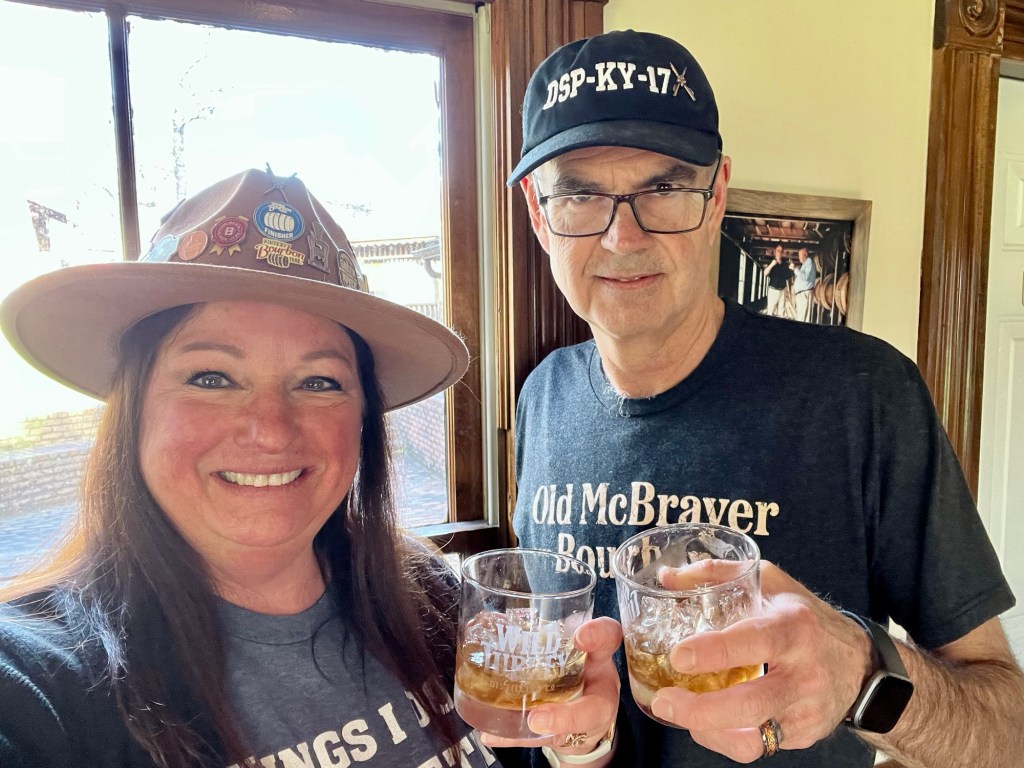
Rebecca & Wayne enjoying a Chocolate Cherry Cordial

February 23, 2024, Wayne and I decided to enjoy the Frankfort and Lawrenceburg areas in Kentucky. We only had one scheduled visit that day and it wasn’t until 5PM. It is amazing all the places you can visit in a single day.

Our first stop was at Wild Turkey. We cannot wait until their Visitor Center “refresh” is completed and they are offering tours again. We were told that would be very soon. Meanwhile, the people at their outpost are terrific.

We selected a few items to purchase and then enjoyed a fantastic cocktail – a Chocolate Cherry Cordial made with Russell’s 10 Year. I asked if Jimmy Russell might stop in and was told that our best bet would be after lunch. We decided not to wander too far so we could make a return trip later in the day.

We departed and just went with the flow. Our first stop was Lawrenceburg Bourbon, which is just down the road. Then we revisited Four Roses, Woodford Reserve, and Castle & Key. It was a lovely day to enjoy the beauty of the area. We had worked a good “loop” and the timing seemed good to return to Wild Turkey. As we approached the building, a few folks said – “Hey, someone is in there signing bottles and taking pictures.” In our minds, that could only be one person!

Visit with Jimmy Russell


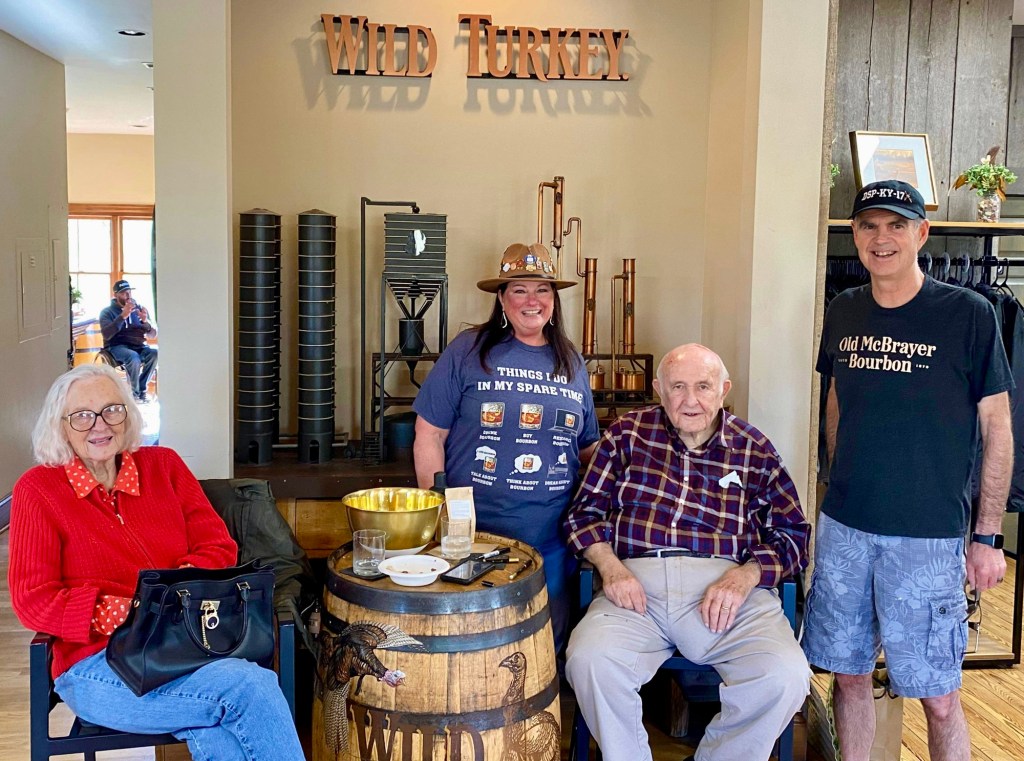
We walked in to see Mr. Jimmy Russell and his lovely wife Joretta greeting visitors. We waited for our opportunity to speak with them. They were incredibly gracious and you could tell that Jimmy loved meeting people and sharing stories.

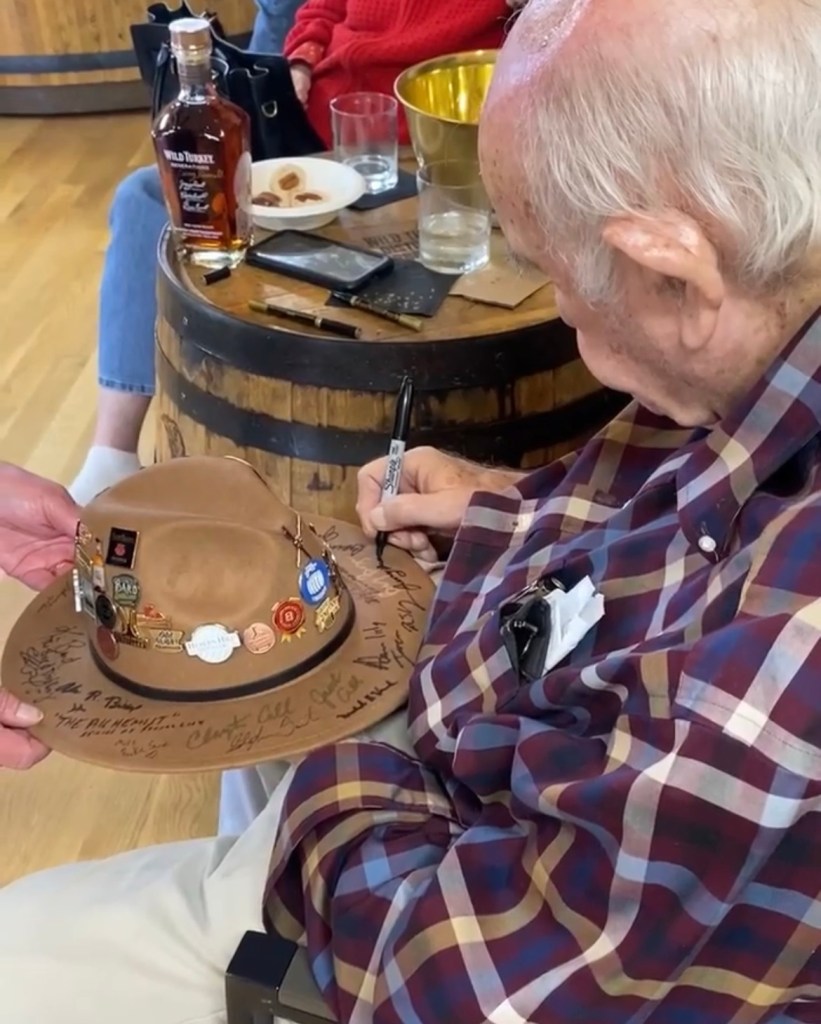
We took photos with him and he signed items for us. We stayed and talked with him whenever someone else wasn’t waiting for the opportunity. This was truly a dream come true and I admit to getting a bit emotional to finally meet him.

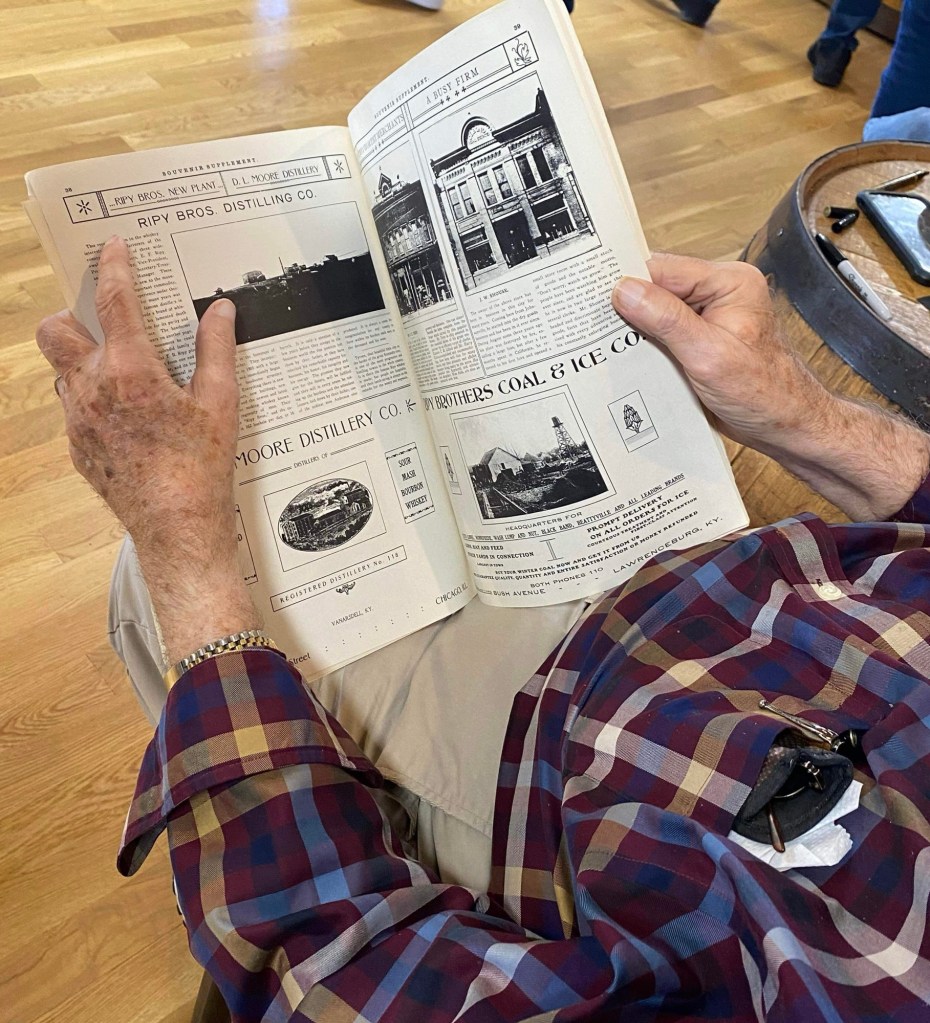
Jimmy got into a great conversation with Wayne about Judge McBrayer. He had someone grab publication where he looked up an article about Cedar Brook and was trying to find something about the Judge but couldn’t put his finger on it. It was a special conversation.

Wayne asked him if he loved the aromas of walking through a distillery as much as we do. He share that he really doesn’t notice the great smells because his nose is trained to look for something that is wrong or out of place. Then he knows there is an issue. Wayne also asked which of their bourbons was his favorite. He quickly noted that the Russell’s 10 Year is his pick!

He also signed my Bourbon Trail hat! This really made my day. I could have stayed longer but we really needed a bite to eat before our scheduled evening event.

What a fantastic experience to meet the “Buddha of Bourbon” who has enjoyed an amazing 60+ years making Wild Turkey whiskey! It should be no surprise that he is a member of the Kentucky Bourbon Hall of Fame. He was also granted a Lifetime Honorary Membership to the Kentucky Distillers’ Association’s Board of Directors. Read more of his story here.

Great Finds to Bring Home


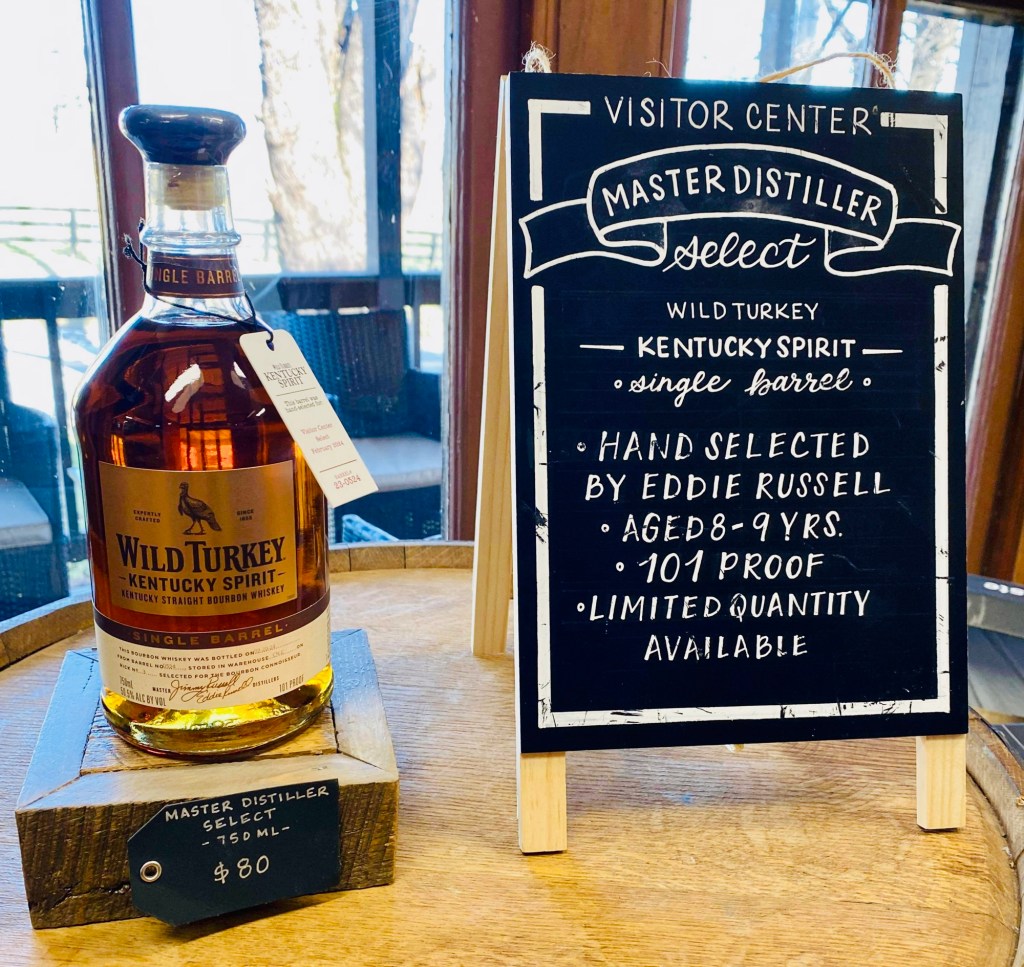
In the morning, we selected the Russell’s Single Barrel and the Russell’s 10 Year. In the afternoon, we ha the opportunity to acquire the month’s personal selection by Eddie Russell of Kentucky Spirit Single Barrel.


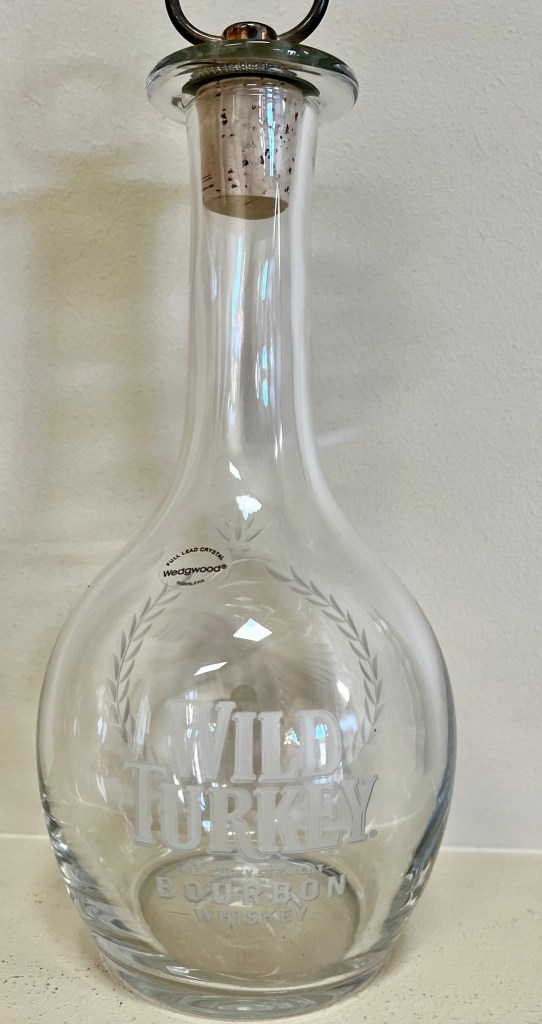
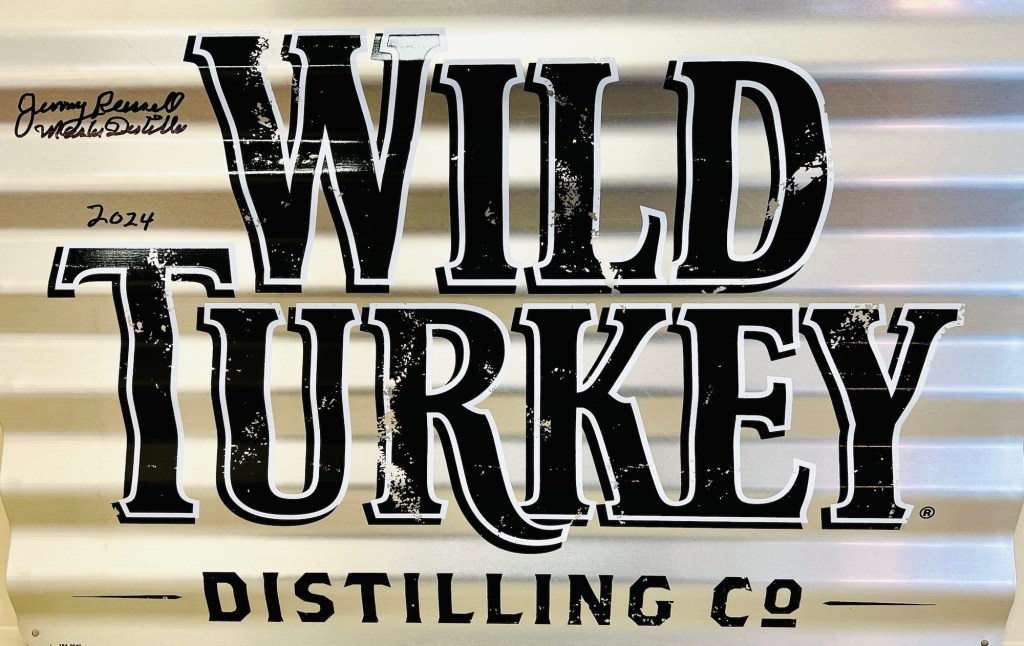
We also got this amazing crystal decanter and a terrific Wild Turkey sign for our Bourbon Room.

This was a great memory for Our Bourbon Journey!

Cheers!
Rebecca

March 2024 Holladay Distillery Tasting

03/26/24
By Rebecca Herman McBrayer 

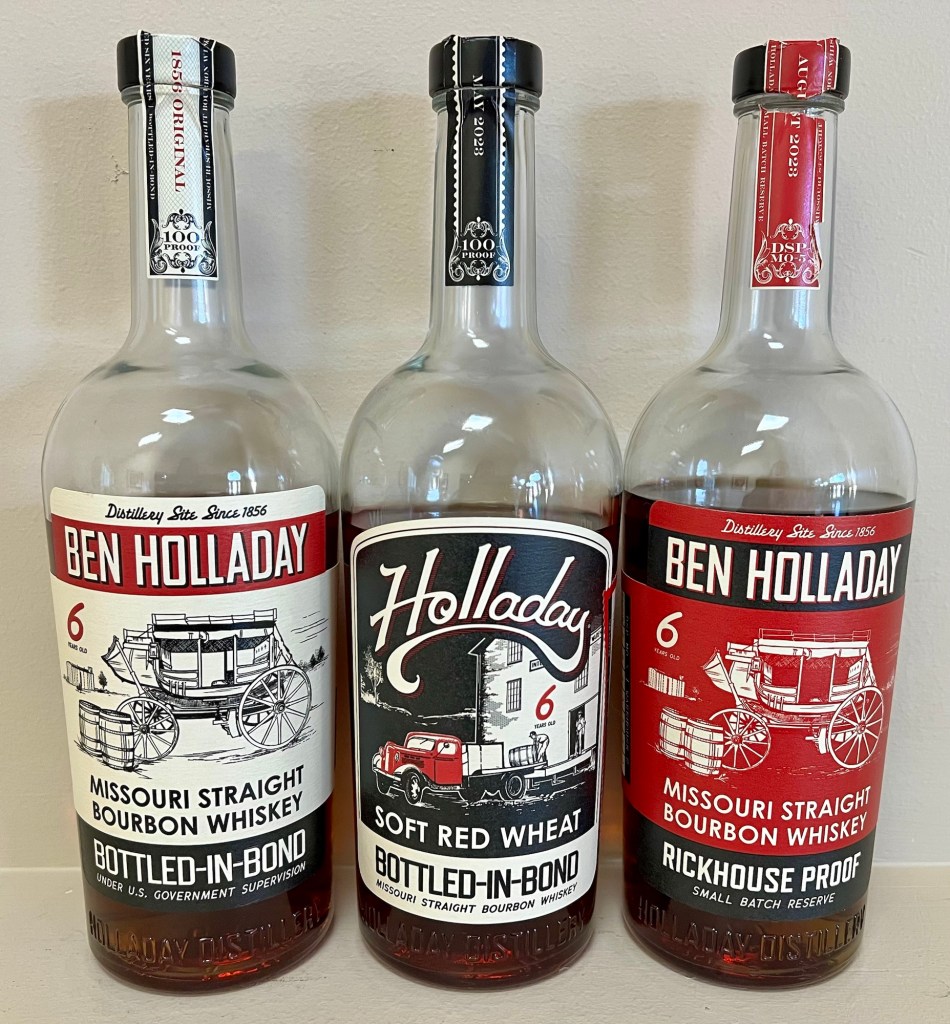
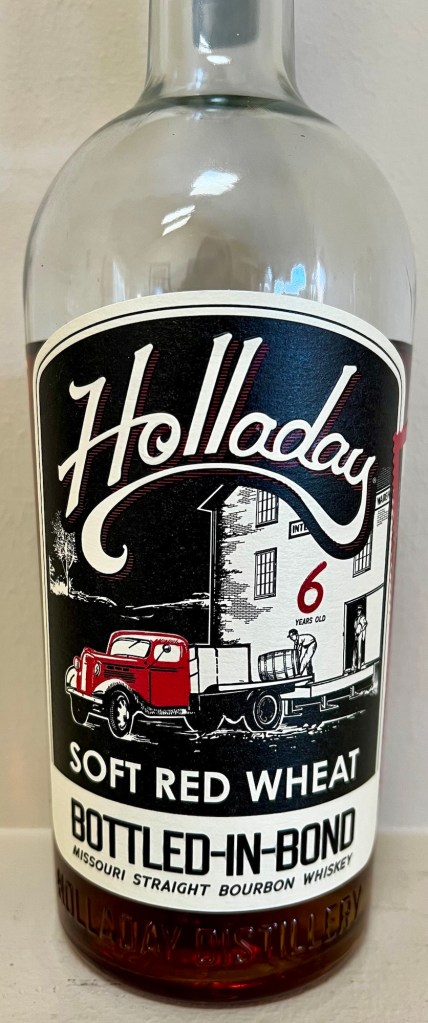
Wayne and I became familiar with the Holladay Distillery and their bourbons while watching Mike Veach & Matt Kohorst tastings on the BourbonVeach YouTube channel. We first watched their tasting of the Soft Red Wheat and later the Rickhouse Proof. They each sounded amazing! We kept an eye out at our local liquor stores and have acquired three bottles over the last few months. We have also reviewed the Holladay Distillery website and now want to make time to visit there this summer! We hope you enjoy our tasting notes and want to give them a try as well.

Selected for this Tasting

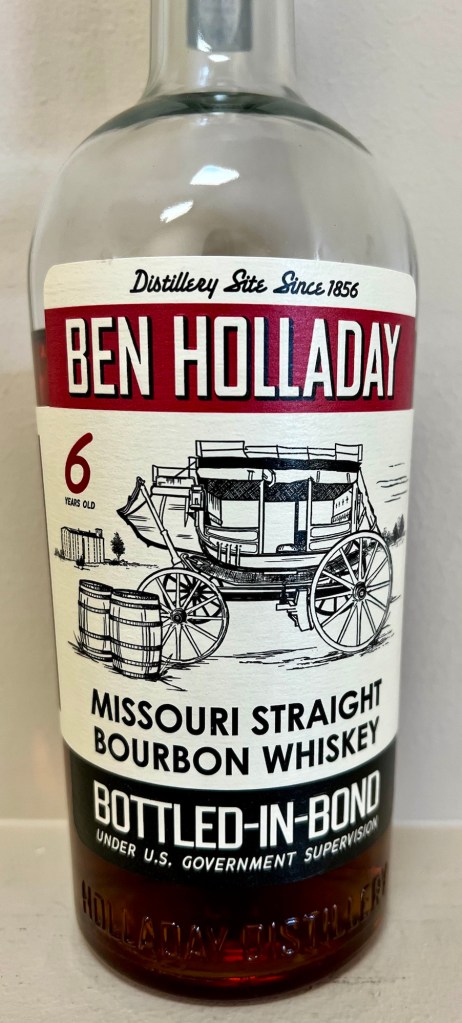
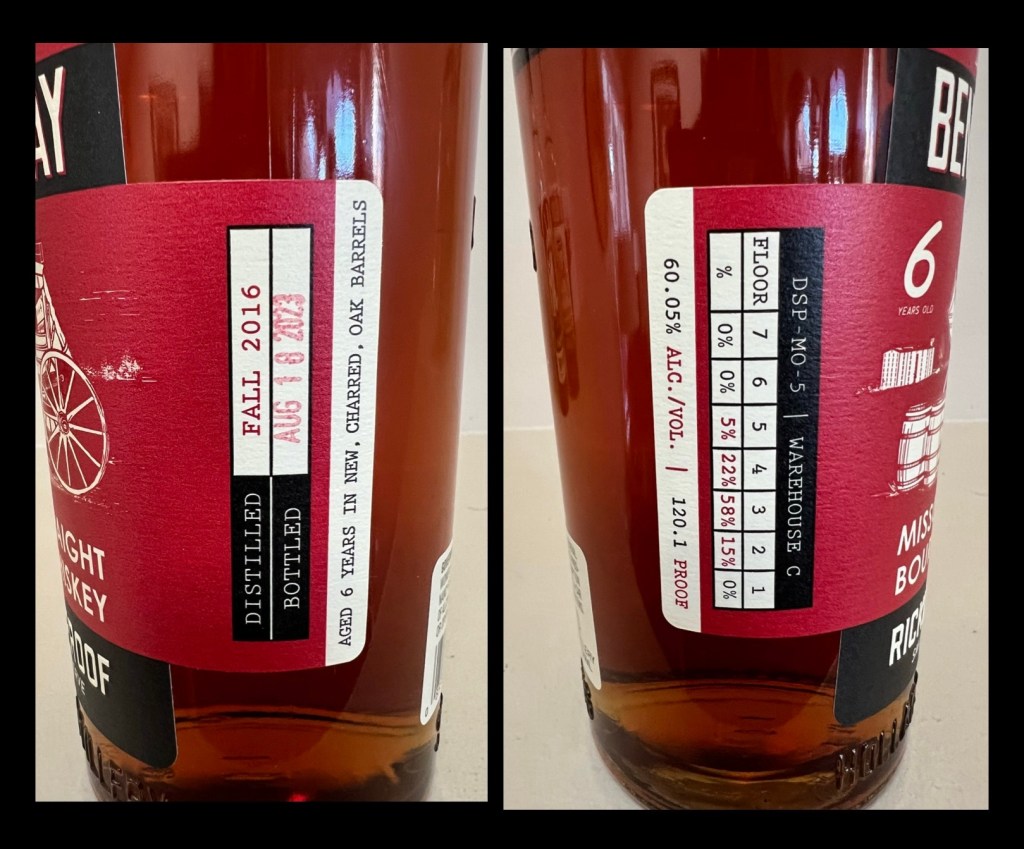
Ben Holladay Missouri Straight Bourbon Whiskey Bottled-in-Bond, Holladay Soft Red Wheat Bottled-in-Bond Missouri Straight Bourbon Whiskey, Ben Holladay Missouri Straight Bourbon Whiskey Rickhouse Proof Small Batch Reserve. Please be sure to read our approach to Tasting Whiskey if you haven’t already.

Ben Holladay Missouri Straight Bourbon Whiskey Bottled-in-Bond

Mashbill – 73% Corn, 15% Rye, 12% Malted Barley
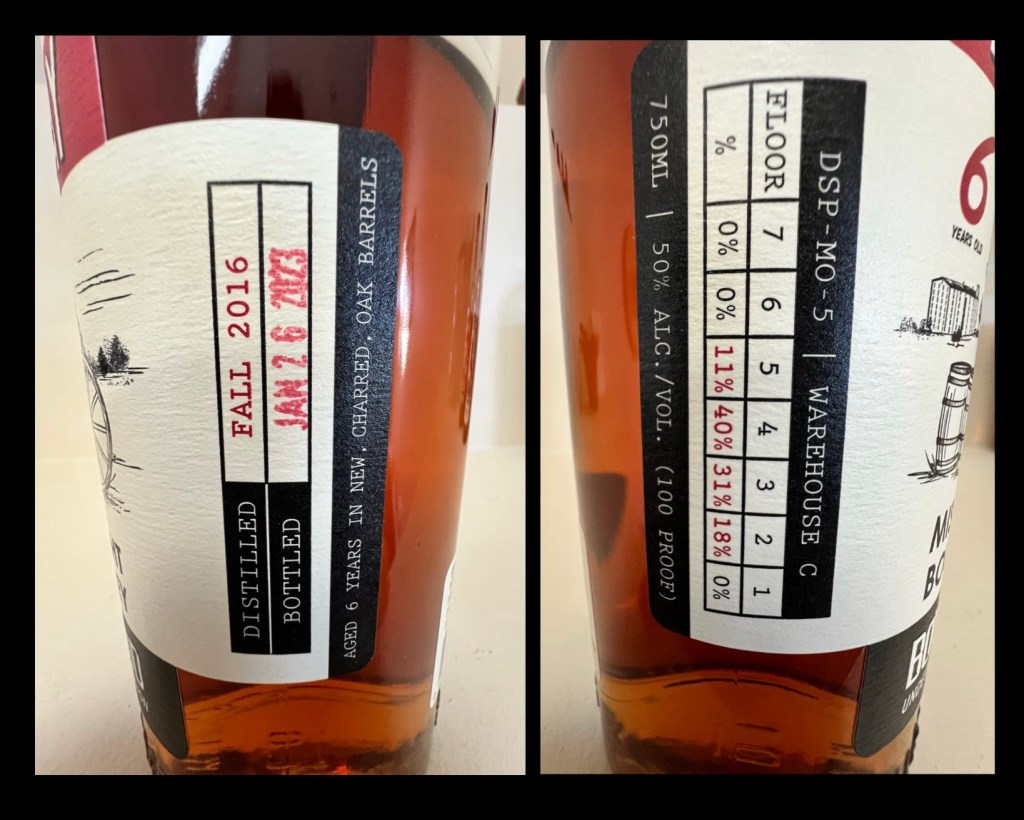
Age – 6 years
Proof – 100
Other – Bottled in Bond
Price Paid – $69.99

Color – Medium amber

Aroma – Sweetness is the first thought, caramel, vanilla, fruity – perhaps a nice crisp apple.

Taste –  Very similar to the nose with one exception, it’s got baking spices on the finish. Sweet caramel, vanilla, and apple. Light cinnamon and a pleasant oak on the finish.

Tasted with dried cranberry – The baking spices became pronounced on the front and the oak is gone. Still very pleasant. It’s almost like being at Cracker Barrel when you order that little bowl of baked cinnamon apples as a side dish.

Tasted with a pecan – The oak is more pronounced and there is still a lite cinnamon on the back.

Tasted with dark chocolate – Beside the mouth feel being great, most of the sweet notes are gone and a strong hit of cinnamon.

Holladay Soft Red Wheat Bottled-in-Bond Missouri Straight Bourbon Whiskey


Mashbill – 73% Corn, 15% Wheat, 12% Malted Barley
Age – 6
Proof – 100
Other – Bottled in Bond
Price Paid – $64.99

Color – Medium amber. 

Aroma – The sweetness of that soft red wheat is coming through as well as red fruits, vanilla, and a pleasant woodiness.

Taste – Great mouth feel to match the viscosity/legs as demonstrated on the glass. Much like the nose, the soft red wheat is present with sweet caramel and creamy vanilla, a juicy red apple, a hint of cinnamon with a light yet long finish.

Tasted with dried cranberry – Less sweet, the cinnamon is hitting the mid-palate while the apple seems to be the finish. Not bad – but interesting.

Tasted with a pecan – The caramel and vanilla have returned but the fruit is muted and the baking spices are stronger.

Tasted with dark chocolate – There’s no sweetness or fruit and limited woodiness, but baking spices on the finish. Different yet still pleasant.

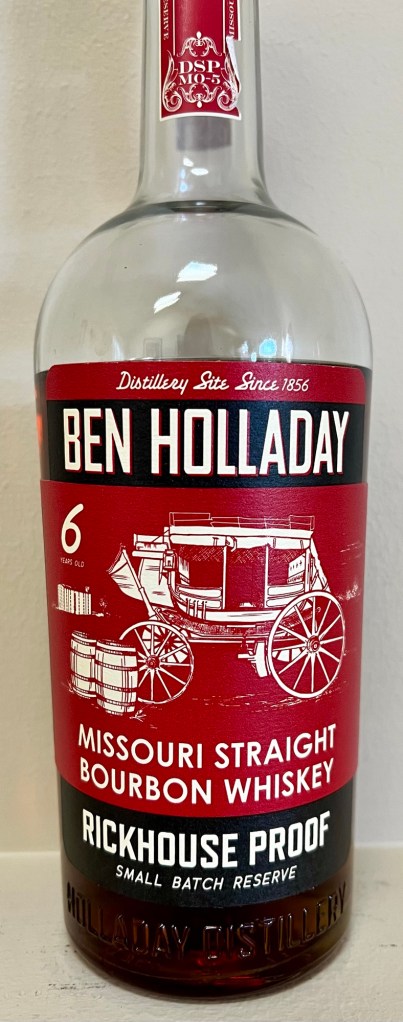
Ben Holladay Missouri Straight Bourbon Whiskey Rickhouse Proof Small Batch Reserve

Mashbill – 73% Corn, 15% Rye, 12% Malted Barley
Age – 6 years
Proof – 120.1
Other – Small Batch Reserve
Price Paid – $74.99

Color – Medium to dark amber .

Aroma – Brown sugar, cherry or perhaps another red fruit.

Taste – Caramel, French vanilla, butterscotch, cinnamon, and other baking spices. It is 120.1 proof but it doesn’t drink like we just did a 20-point jump.

Tasted with dried cranberry – Muted the sweetness and amplified the cinnamon. Perhaps a hint of cherry or apple.

Tasted with a pecan – Creamy, juicy apple, woodiness, and a lot more baking spices on the finish.

Tasted with dark chocolate – Again, very creamy with baking spices, apple, and chocolate. Almost like a chocolate cake with creamy vanilla icing and crumble of apples and cinnamon on top. It is very good with dark chocolate.

Discussion and Final Notes

One thing is for certain, when you taste each of these, you know they are family. While they are each quite distinct, they have some common aromas and tastes that remind you that they are related.

On the nose, each had a lovely sweetness – either caramel, vanilla, brown sugar, or red fruits. The Soft Red Wheat also included that particular grain and the Rickhouse Proof seemed to bring more of the barrel notes and brown sugar. All inviting!

On the palate, they were very true to their nose and that doesn’t always happen. All had terrific viscosity with a very soft and creamy mouth feel. The BIB leaned in with sweet caramel, vanilla, and apple. The Wheated BIB was a bit more pronounced with sweet caramel and creamy vanilla as well as a juicy red apple. The Rickhouse Proof had more pop with its proof and the sweetness leaned more toward french vanilla and butterscotch.

On the finish, all were soft and lingering. The BIB and Wheated BIB lingered with a hint of cinnamon an oak. The Rickhouse Proof had was stronger with the baking spices and woodiness.

Our recommendation: If you find these locally, certainly give at least one a try. Align your selection to what your palate most enjoys. If you can’t decide, get them all as they will be a great addition to your bourbon collection. For us, we now know that we want a back-up bottle of each one plus a visit to the distillery!

Cheers,
Rebecca

Photos by Rebecca Herman McBrayer
Basic requirements of bourbon: Made in the U.S, distilled at <= 160 proof, barreled at <= 125 proof, aged in new, charred oak containers, free from additives (except water), and bottled at >= 80 proof.

Missouri Bourbon or Missouri Bourbon Whiskey must meet all federal requirements for bourbon AND the 2019 laws to include Missouri on the label: must be mashed, fermented, distilled, aged, and bottled in the state of Missouri; aged in oak barrels manufactured in Missouri; and, as of January 1, 2020 – made with corn exclusively grown in Missouri.

Straight bourbon means it is aged at least 2 years (and must have an age statement if less than 4).

For additional information on bourbon requirements, please read this post – Bourbon Whiskey.

Bottled-in-Bond: must be produced in a single distillation season by a single distillery; must mature in a U.S. bonded warehouse for a minimum of four years; and the aged spirit must be bottled at 50% ABV (100 proof). For additional information on Bottled-in-Bond requirements, please read this post – Bottled in Bond.

NOTE: The bourbons in this review were purchased by us. We were not compensated by the spirit producers for this review. This is simply our opinion based on what we tasted on this day. Please drink responsibly.

Bottled in Bond

03/24/24
By Rebecca Herman McBrayer

If you drink whiskey, you have likely seen: Bottled in Bond, Bottled-in-Bond, or BIB on some bottles. In case you have ever wondered what this means or requires, we will dive into it a bit in this Sunday Spirit Note.
The Bottled in Bond Act of 1897 was a groundbreaking consumer protection law addressing widespread whiskey adulteration in the 19th century. Championed by Colonel Edmund Haynes Taylor Jr., the act standardized the designation of high-quality spirits, designated as “bottled-in-bond” if they met specific requirements.

Why Bottled in Bond was Needed – Rectifiers

In his book, Kentucky Bourbon Whiskey: An American Heritage, Michal Veach explains that rectifiers were individuals who purchased cheap whiskey and refined it to make it more palatable and appealing to the mass market. Initially, they relied on unaged spirits from farmer distillers, but eventually, they began using various additives to enhance the flavor and appearance of their product. These additives included burnt sugar for sweetness and color, prune and cherry juice for color and flavor, and even unusual ingredients such as creosote (a wood preservative) and cochineal (a red dye made from crushed insects) to achieve the desired characteristics. The resulting product, while not an authentic bourbon, was affordable, sweet, and easy to produce in a matter of hours rather than years, making it a popular choice for consumers seeking an affordable and flavorful whiskey option.

The Specific Requirements to be Bottled in Bond

The very first consumer protection passed by Congress was the Bottled in Bond Act of 1897 was a response to the widespread adulteration of American whiskey in the late 1800s. The act established a standardized designation for spirits based on quality and made the federal government the guarantor of a spirit’s authenticity. The act also provided a tax incentive for distilleries that ensured their spirits met specific requirements.

The act allows distillers to label aged spirits, mostly bourbon and rye, as bottled-in-bond if the product meets the following criteria:

  • The spirit must be produced in a single distillation season by a single distillery.
  • The spirit must mature in a U.S. bonded warehouse for a minimum of four years.
  • The aged spirit must be bottled at 50% ABV (100 proof).

The act also helps ensure proper accounting and the collection of tax that is due. The Bottled in Bond Act is one of the earliest examples of a consumer protection law. President Grover Cleveland signed the act into effect in 1897.

What it Means to Consumers Today

According to a publication by the American Distilling Institute, What the Bottled in Bond Act of 1897 Means Today, the “Bottled in Bond” label remains relevant due to its guarantee of authenticity and quality.  Consumers continue to rely on the label as a symbol of trustworthiness in an era where undisclosed sourcing is prevalent. Despite changes in regulations and the absence of government stamps, distillers still use the term for marketing purposes. The global threat of alcohol contamination underscores the continued need for safeguards like the Bottled in Bond label. International regulations require imported spirits to meet the same standards as domestic products, further enhancing the label’s credibility.

Ultimately, it ensures authenticity and quality, especially in an era of unknown sourcing.  Despite not being a requirement, the label has become a symbol of trust and quality for whiskey enthusiasts. It also protects against alcohol contamination.