November 15, 2024
By Rebecca Herman McBrayer
While Wayne and I have been encouraged to explore Japanese Whisky, we have been hesitant only because we feel we still have so much to learn about bourbon. However, when I discovered this particular bottle at our local Costco, it piqued my interest and I decided to give it a try. Even so, we weren’t sure if it would be something to review or record a video about – until we tasted it. At that point, we quickly decided that we would take a slight detour from our bourbon journey and travel a small path to learn more about Japanese Whisky.
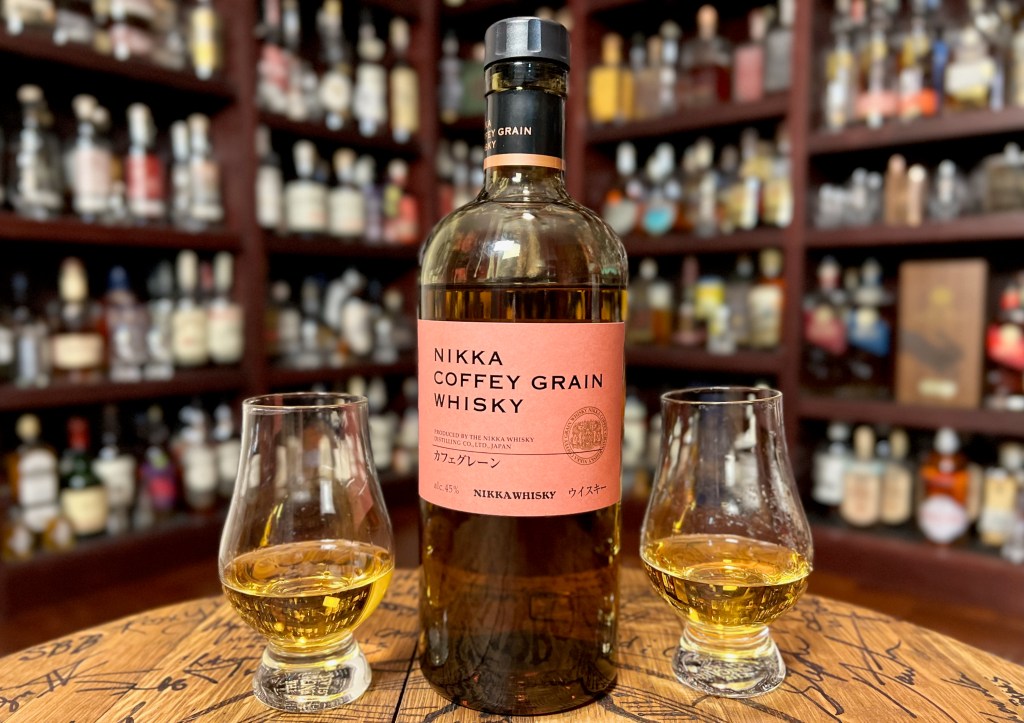
Background on the Coffey Still and Nikka’s History
The Coffey still is the world’s first patented continuous still, invented by Aeneas Coffey in 1830. While in Scotland, Masataka Taketsuru learned to distill grain whisky in a Coffey still at James Calder in 1919. He valued this still type and installed two sets at Nikka Whisky, importing the first from Scotland in 1963 and the second in 1966. Although challenging and inefficient, traditional Coffey stills retain ingredient flavors and provide a creamy texture.
Masataka Takesuru, the founder of Nikko and father of Japanese whisky – Abbreviated Timeline
- 1894 Born into a sake brewing family in Hiroshima on June 20.
- 1916 Graduated from Osaka Technical (High School) where he majored in brewing. Entered Settsu Shuzo Company in Osaka.
- 1918 Arrived in Scotland and enrolled at the University of Glasgow in December.
- 1919 Apprenticed at Longmorn Distillery in Speyside to learn malt whisky production.
- 1919 Apprenticed at James Calder in Bo’ness to learn Coffey grain whisky.
- 1923 Entered Kotobukiya Limited (Suntory) with a 10-year contract.
- 1923 Directed to build Yamazaki Distillery, the first whisky distillery in Japan, and engaged in whisky production.
- 1934 Left Kotobukiya in March.
Nikka Whisky History – Abbreviated Timeline
- 1934 Masataka Takesuru established Dai Nippon Kaju Co., Ltd. on July 2.
- 1936 Yoichi Distillery started distillation.
- 1940 The first whisky “NIKKA WHISKY” launched.
- 1952 The corporate name Dai Nippon Kaju Co., Ltd. was altered to The Nikka Whisky Distilling Co., Ltd.
Tasting Notes: Nikka Coffey Grain Japanese Whisky
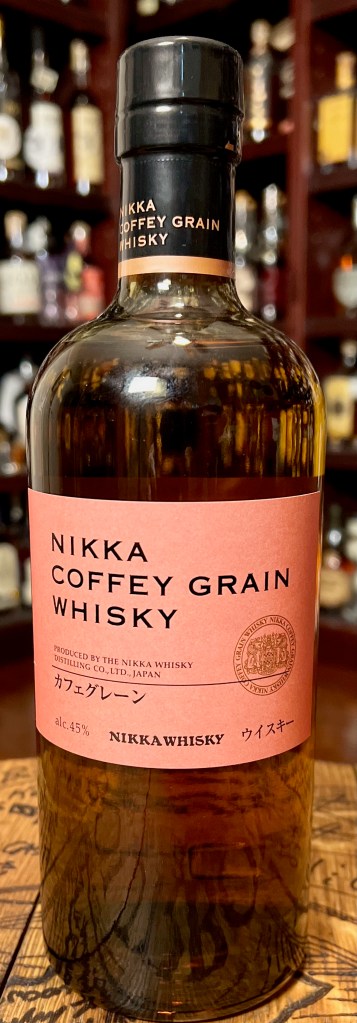
Mashbill – 95% Corn, 5% Barley
Age – NAS, at least 3 years by rule
Proof – 90
Price Paid – $49.99 (plus tax)
Color – Golden honey.
Aroma – Light, sweet, caramel, candy-like, vanilla, a hint of cinnamon and roasted corn.
Tasted Neat – A lot of sweetness, creamed corn, cinnamon, light caramel, vanilla pudding, creamy – great mouth feel. It seems to evolve with each sip.
Finish – Mild but somewhat lingering finish. Much more savory than on the nose and palate. Some leather and tobacco notes came forward.
Final Notes and Video
This was our first experience with Japanese Whisky. I don’t believe we had any specific expectations or preconceived notions about it and simply explored it like we would any other spirit.
To summarize our tasting experience: The color is a lovely golden honey. The aroma is inviting, with light, sweet notes of caramel, candy, vanilla, and a hint of cinnamon along with roasted corn. Tasting it neat reveals an abundance of sweetness, conjuring thoughts of delicious creamed corn, warm cinnamon, and vanilla pudding. It boasts a wonderfully creamy and pleasant mouthfeel that evolves beautifully with each sip, so take your time to enjoy it. While the finish is gentle, it has a lovely lingering quality. In contrast to the sweet nose and palate, the finish introduces a savory layer with nice notes of leather and tobacco, creating a well-rounded experience.
Recommendation: Wayne and I are pleased that we decided to give this a try. While it likely will not become a “daily drinker,” it is very nice to have in our spirits collection. Our recommendation for those who have not tried Japanese Whisky is to give it a try when it is available to sample at a bar. That will help you decide if purchasing a bottle is right for you.
Embracing the Craft,
Rebecca & Wayne
Photos and video by Rebecca Herman McBrayer
NOTE: The whisky in this review was purchased by us. We were not compensated by the spirit producer for this review. This is simply our opinion based on what we tasted on this day. Please drink responsibly.
Japanese Whisky
To be labeled Japanese Whisky, the following is required:
- Ingredients – Raw ingredients must be limited to malted grains, other cereal grains, and water extracted in Japan. Malted grains must always be used.
- Production – Saccharification, fermentation, and distillation must be carried out at a distillery in Japan. Alcohol content at the time of distillation must be less than 95%.
- Aging – The distilled product must be poured into wooden casks not exceeding a capacity of 700 liters and matured in Japan for a period of at least 3 years thereafter.
- Bottling – The distilled product must be poured into wooden casks not exceeding a capacity of 700 liters and matured in Japan for a period of at least 3 years thereafter.
- Other – Plain caramel coloring can be used.
 Your Bourbon Journey