
03/03/24
By Rebecca Herman McBrayer
Full disclosure – I am not even close to being an expert on making spirits. My minimal knowledge base has been gained through many distillery tours, watching videos, and reading books on the this topic. If you desire to make spirits, you will need a lot more information than provided in this basic overview.
While the process for making a spirit can be complex and varied, at its core, there are four basic stages: Mashing, Fermentation, Distillation, and Aging.
MASHING GRAINS
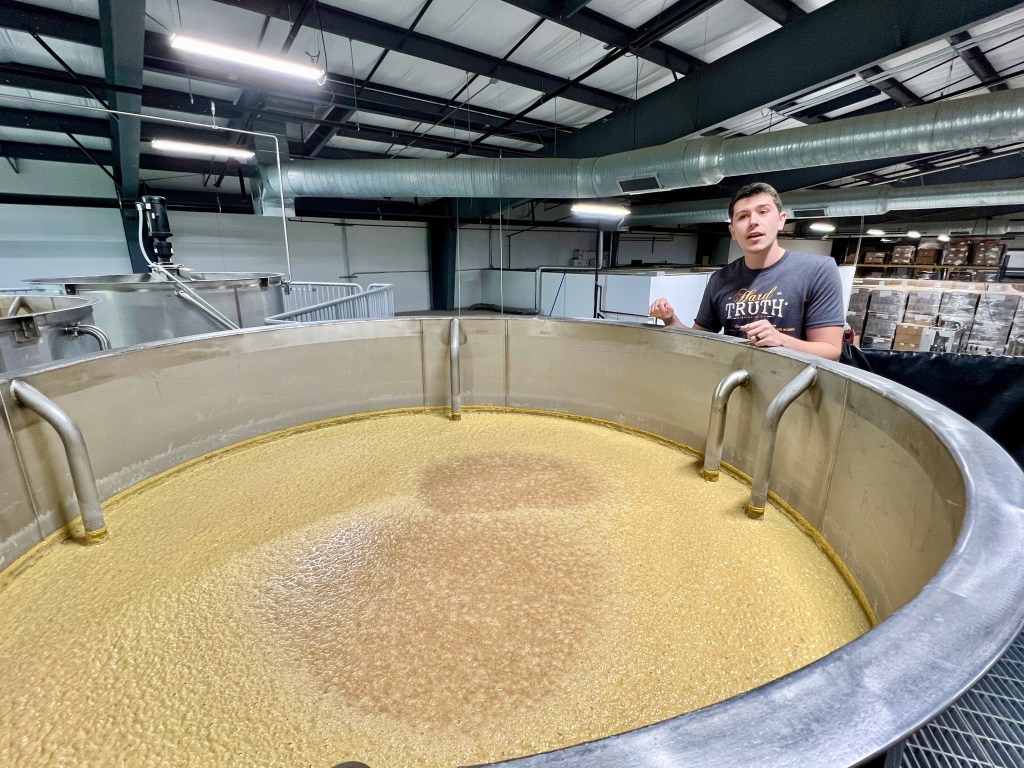
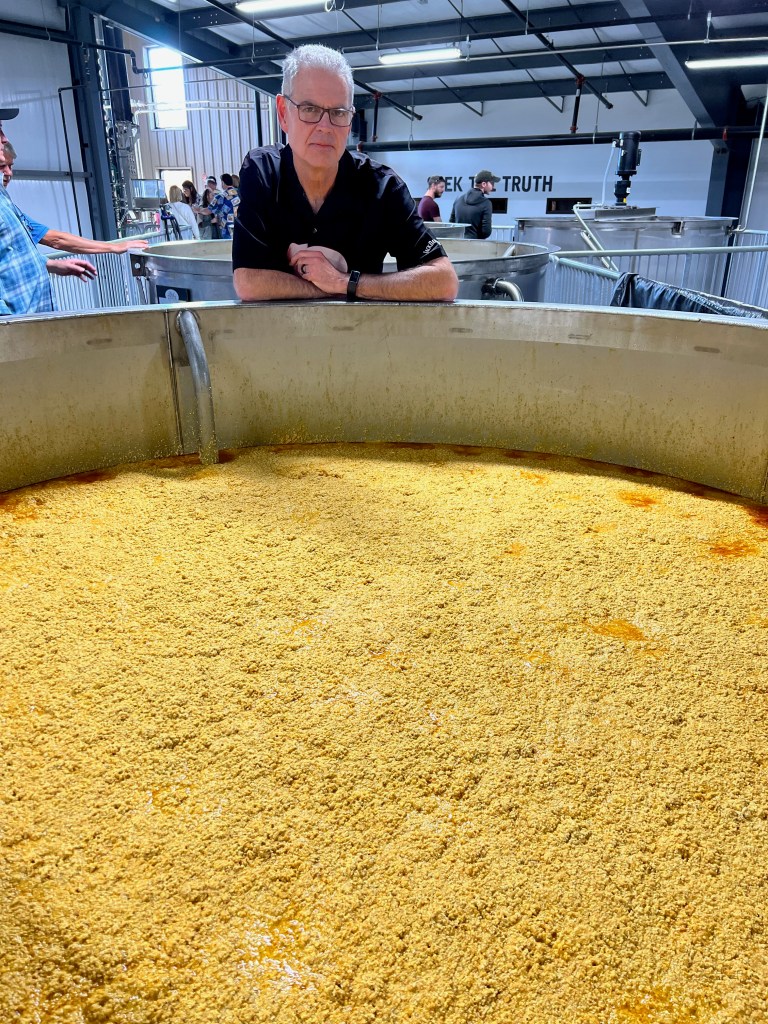
Mashing is the process of adding water to milled and/or malted grain, heating it, and activating enzymes in the grain to convert starches into fermentable sugars. All parts of this equation are important. You need a good water and that is typically considered water that is calcium-rich and iron-free. The temperature of the cooking process is critical because if too low or too high, the activation of the enzymes does not happen. When “just right” the mash becomes starchy and thick and looks a lot like oatmeal. Once cooled, it can be transferred to the fermentation stage.
Sour Mash versus Sweet Mash
Sour mash is a process in distillation that involves using material from an older batch to start fermenting a new batch of mash. It is very similar to the process of making sourdough bread with a starter. Using sour mash has the benefit of consistency between batches. It also reduces the possibility of unwanted bacterial growth.
Sweet mash is a process in distillation that does not use the sour mash as a starter for fermentation. Instead, only fresh yeast is used. Using sweet mash has the benefit of more control over specific ingredients and the ability to use lower temperatures for fermentation. However, it does require more maintenance and extreme cleanliness to avoid contamination.
FERMENTATION
The goal of fermentation is the creation of alcohol. The basic formula is:
Yeast + Sugar = Alcohol + Carbon Dioxide.
During the fermentation stage, yeast is added to the mash and it begins converting the sugars in the mash to alcohol and carbon dioxide. The fermentation stage typically requires three to five days but it could be longer as well. Ultimately, the product of fermentation is 8-18 percent alcohol by volume (ABV). The fermented mash is then ready for distillation.
SPIRIT DISTILLATION
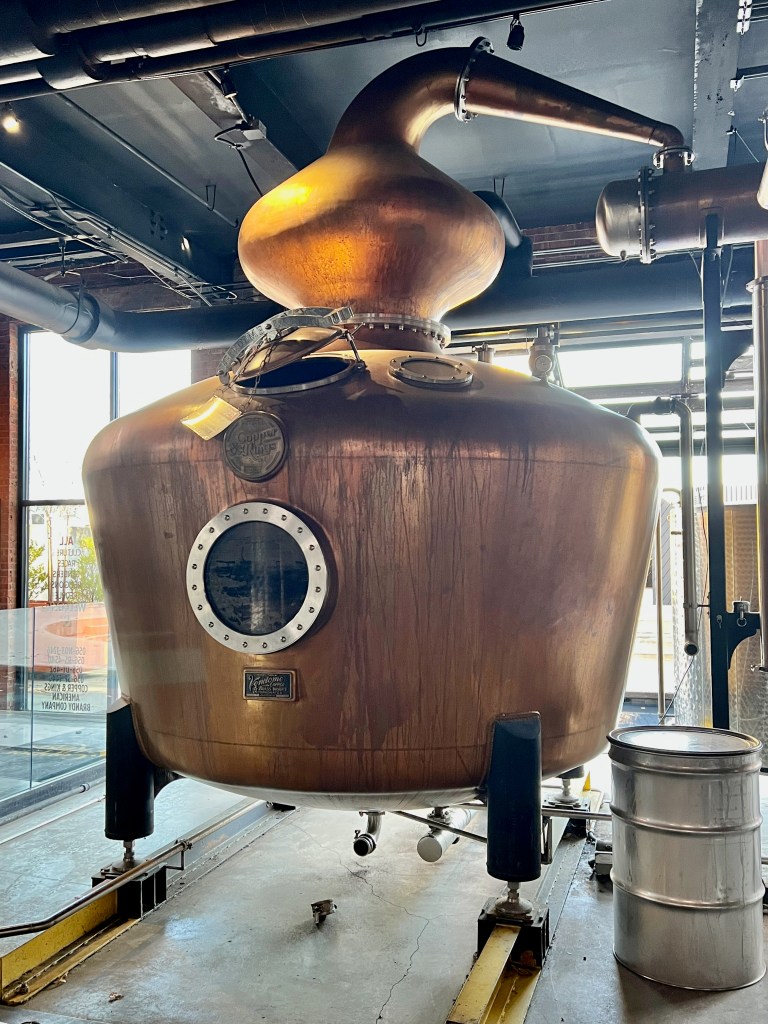
In general, the purpose of distillation is to separate alcohol from water through evaporation and condensation. The fermented liquid is heated until the alcohol evaporates. The vapor is then cooled and condensed back into a liquid. This process purifies and concentrates the alcohol.
In the spirits world, there are three primary classifications of stills in production:
1. Column stills provide a continuous process and are very efficient. This type of still is currently very common in the bourbon industry.
2. Pot stills are considered more traditional and are often used for smaller batches. Some Distillers in the bourbon industry prefer a pot still because they appreciate the flexibility and control and believe they produce more flavorful spirits.
3. Hybrid stills, as the name implies, combine features of pot and column stills.
BARREL AGING
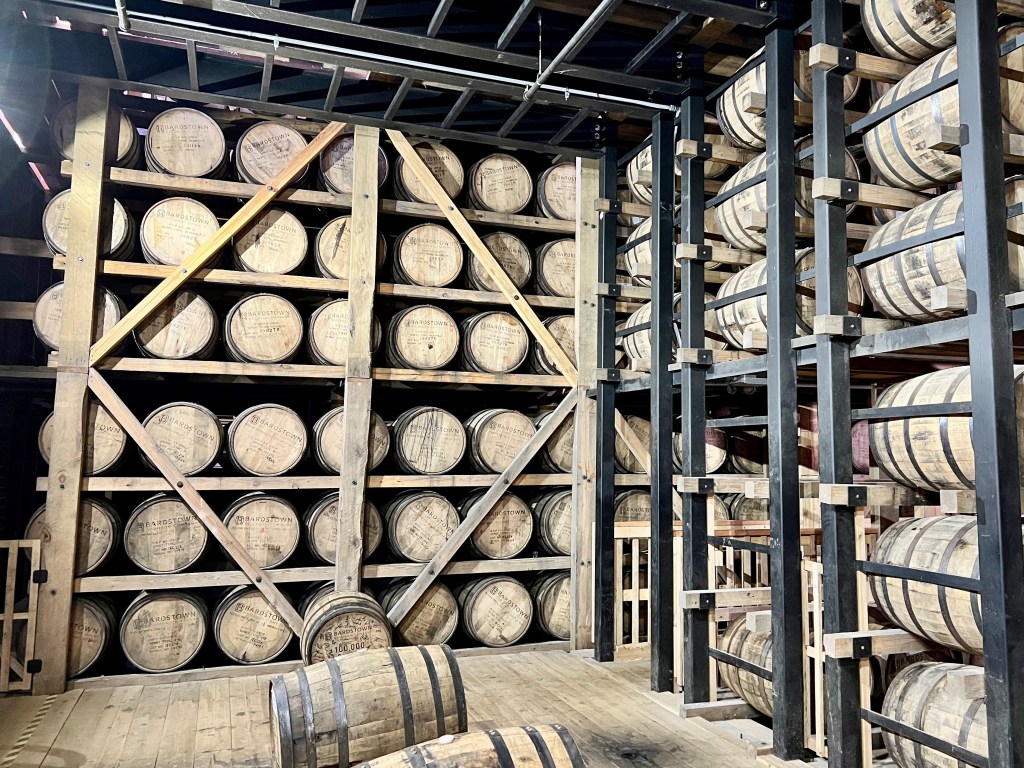
Barrel aging is an important step in the whiskey-making process. A transformation occurs when a clear spirit is placed into a barrel and interacts with the wood. As it evolves, the spirit gains color, aroma, flavor, and complexity. Whiskey could age in a barrel from two to twenty-five years.
For bourbon, a requirement is that it is stored in a new, charred oak barrel. The charring process opens the wood and prepares it to receive the spirit. Without being overly scientific, during a warm season, the liquid expands and is absorbed into the barrel. In a colder season, the liquid contracts and exits the wood while bringing the colors and flavors with it.
This relationship with the barrel creates the color we expect from bourbon. Even more importantly, it brings forward flavors from the wood that interact with the flavor profile of the spirit. An amazing synergy occurs, and this is where the flavors of caramel, vanilla, toffee, butterscotch are derived. In addition, the char level of the barrel can contribute spice and smoke flavors.
Understanding when the spirit is “ready” or at its peak is an experience art form. Sometimes it is the Master Distiller that makes the determination. Some distilleries have specific roles such as Head of Maturation or Lead Taster. Other times there are routine samples drawn and explored by teams of people to narrow it down. It also depends on the specific requirements for labeling – does it need to be at least two years old, does it require at least four years, etc. A particular brand might have a very specific flavor profile that is being sought and it won’t be bottled until that is achieved.
I hope this very high-level overview of the process will bring you a greater appreciation of what is in that bottle that you enjoy so much and why there are so many nuances from brand to brand.
Cheers!
 Your Bourbon Journey