Irish Whiskey

03/10/24
By Rebecca Herman McBrayer

Irish whiskey is made from a high grain mash of barley, wheat, and corn. The exact quantities of each grain depend on the type of whiskey. The most common primary grain is barley.  The barley and be malted, un-malted, or a combination of each.

Basic Requirements for Irish Whiskey

The Irish Whiskey Act of 1980 defines the basic requirements for Irish whiskey. The act protects Irish whiskey by statute law and provides regulations and labeling for the spirit. The requirements include:
– Produced and aged in Ireland.
– Made from cereal grains that are fermented with yeast.
– Distilled no higher than 94.8% ABV (proof of 189.6).
– Aged in wooden casks for a minimum of three years.
– Free of added substances with the exception of water and caramel coloring.
– Bottled at a minimum ABV of 40% (proof of 80).

Types of Irish Whiskey

Malt Irish Whiskey: Made in pot stills at one distillery with only water and malted barley. Example – Bushmills 10-year-old, 80 proof.

Pot Still Irish Whiskey: Denotes it was made from malted and un-malted barley and distilled only in a pot still. Example – Redbreast 12-year-old, 80 proof.

Grain Irish Whiskey: It was made from un-malted grains in a column still. Example – Teeling Single Grain, 92 proof.

Blended Irish Whiskey: Indicates the whiskey is a blend from both column and pot stills. Example – Jameson, 80 proof.

Irish Whiskey Taste Profile

Irish Whiskey has a distinct flavor profile that can be described as light, fruity, and floral, with common notes of cereal grains, vanilla, caramel, and oak.

Single Malt Irish Whiskey often has a fruity profile with notes of apple, pear, and citrus, and a subtle nuttiness and hint of vanilla. Those made of 100% malted barley-based blends are smooth, sweet, and malty. 

Blended Irish Whiskey is generally smooth, with notes of caramel, vanilla, light spice, and a hint of oak. 

Like other spirits, the flavor profile can depend on where it was produced, how it was aged, and brand desires for its signature taste profile.


With St. Patrick’s Day around the corner, many will be sipping and toasting with an Irish Whiskey. I hope that this basic overview will help you to enjoy it all the more!

Cheers!
March 2024 Hard Truth Sweet Mash Tasting

03/05/24
By Rebecca Herman McBrayer

Please be sure to read our approach to Tasting Whiskey if you haven’t already. 

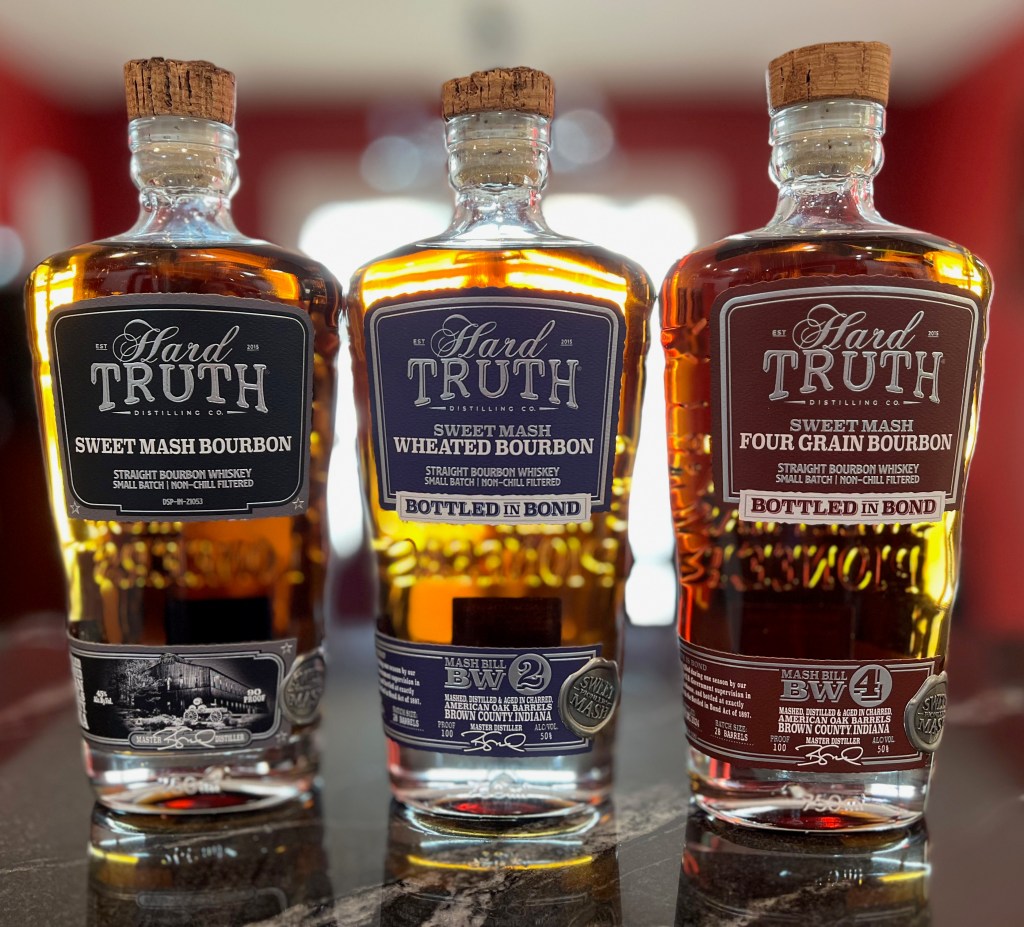
With the long-awaited release of Hard Truth’s Sweet Mash Bourbons, Wayne and I were anxious to get the bottles locally and sit down to do a formal tasting.

Basic requirements of bourbon: Made in the U.S, distilled at <= 160 proof, barreled at <= 125 proof, aged in new, charred oak containers, free from additives (except water), and bottled at >= 80 proof. Straight bourbon means it is aged at least 2 years (and must have an age statement if less than 4). For additional information on bourbon requirements, please read this post – Bourbon Whiskey.

These selections are also labeled as Sweet Mash. Sweet mash is a process in distillation that does not use the sour mash as a starter for fermentation. Instead, only fresh yeast is used. Using sweet mash has the benefit of more control over specific ingredients and the ability to use lower temperatures for fermentation. However, it does require more maintenance and extreme cleanliness to avoid contamination. For more information, please read this post – Four Stages of Making Spirits.

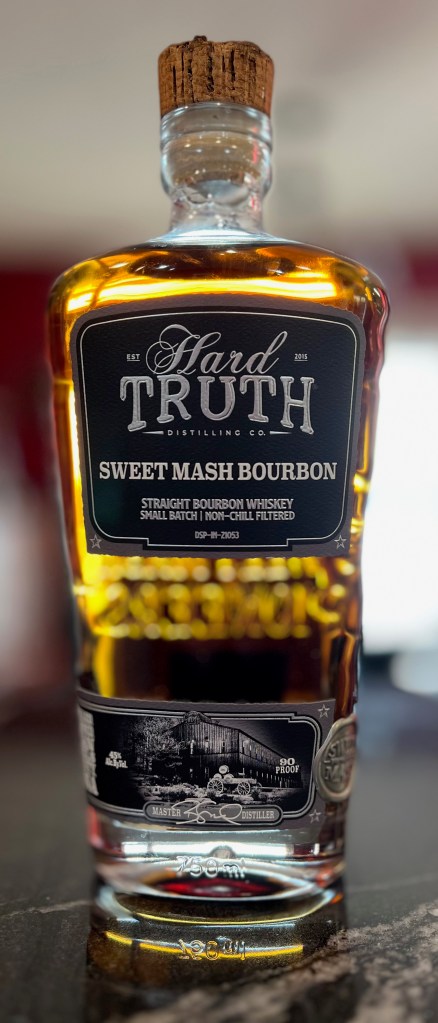
Hard Truth Sweet Mash Bourbon

Mashbill – 73% Corn, 19% Rye, 8% Malted Barley
Age – At least 4 years old
Proof – 90
Specifics – Sweet Mash, Straight Bourbon Whiskey, Small Batch, Non-Chill Filtered
Price Paid – $44.99

Color – medium copper

Aroma – sweetness of caramel and vanilla with a hint of nutmeg and perhaps a fruit such as apple or berry.

Taste –  less sweetness that on the nose but a very light hint of caramel; has a black pepper finish.

Tasted with dried cranberry – the berry and red apple from the nose is coming forward with the cranberry, the finish is greatly softened but still carries a note of pepper.

Tasted with a pecan – this brought the pepper forward, but it is more of a white pepper and a nice sweetness from caramel is present.

Tasted with dark chocolate – caramel and chocolate are strong as well as some baking spices and hints of oak.

Notes: A very good 90 proof bourbon for under $45.

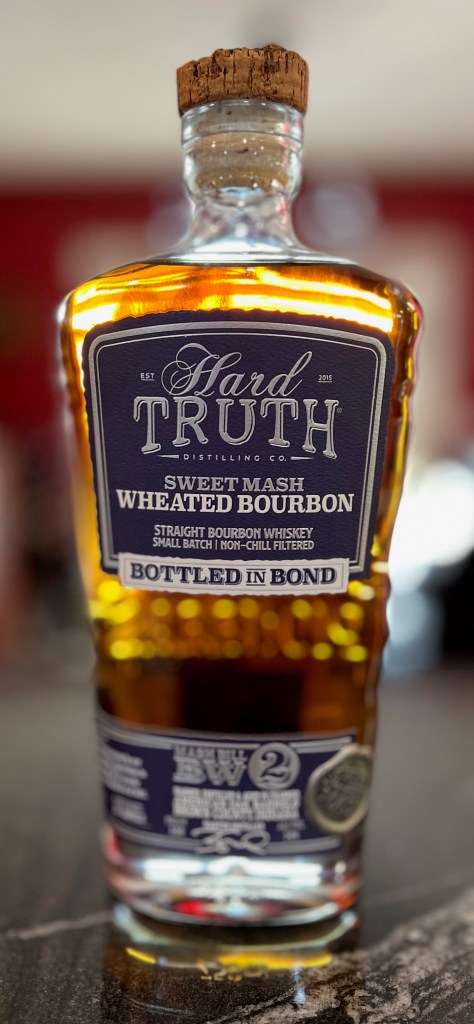
Hard Truth Sweet Mash Wheated Bourbon – Bottled in Bond


Mashbill – 69% Corn, 19% Wheat, 12% Malted Barley
Age – At least 4 years old
Proof – 100
Specifics – Sweet Mash, Wheated Bourbon, Straight Bourbon Whiskey, Small Batch, Non-Chill Filtered, Bottled in Bond
Price Paid – $54.99

Color – medium copper

Aroma – the sweetness of the wheat really comes through as well as honey and light baking spices, it is very inviting, much like a muffin right fresh from the oven and you can’t wait to taste it.

Taste – sweet wheat and honey, much like the nose, and a very nice finish of cinnamon and perhaps another baking spice.

Tasted with dried cranberry – brought forward a strong black pepper and the lovely wheat sweetness has faded.

Tasted with a pecan – a sweet caramel comes forward and the wheat is present, the finish is more of a light white pepper.

Tasted with dark chocolate – baking spices are really forward but not on the finish, the sweetness seems to have disappeared.

Notes: This is a fine wheated bourbon in the $50 price range. This is something that we will want to keep on our bourbon shelf.

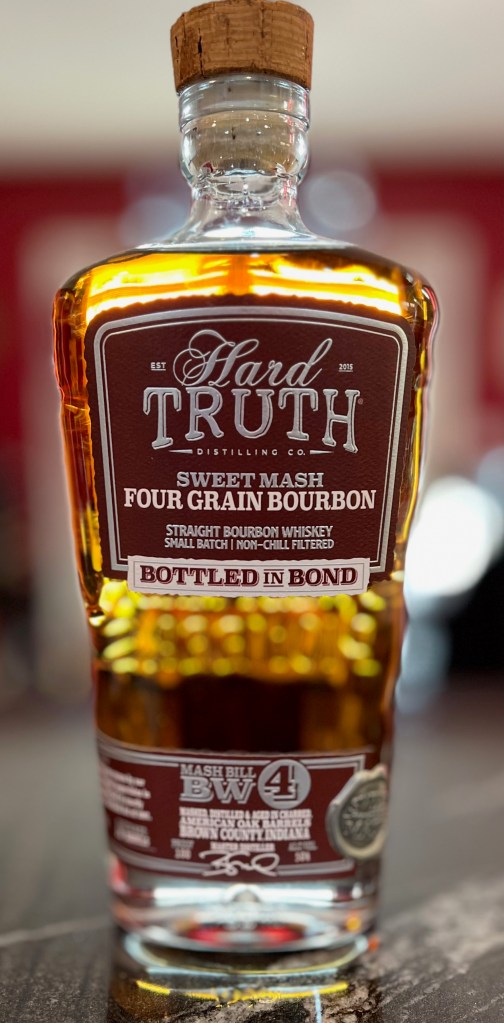
Hard Truth Sweet Mash Four Grain Bourbon – Bottled in Bond

Mashbill – 78% Corn, 9% Rye, 9% Wheat, 4% Malted Barley
Age – At least 4 years old
Proof – 100
Specifics – Sweet Mash, Four Grain Bourbon, Straight Bourbon Whiskey, Small Batch, Non-Chill Filtered, Bottled in Bond
Price Paid – $59.99

Color – medium copper

Aroma – quite different from the other two, notes of sweet cherries. Interesting that there is 78% corn yet it isn’t on the nose.

Taste – cherry, baking spices, and a minimal finish, perhaps like a cinnamon wheat cereal, not as much grain as anticipated in a four grain bourbon.

Tasted with dried cranberry – brings the wheat forward, really warm and inviting.

Tasted with a pecan – now it has the sweetness of caramel and a cinnamon baking spice with a light finish.

Tasted with dark chocolate – very similar as with the pecan … light caramel and cinnamon.

Notes: It is a nice pour of a four grain although not what we were expecting. While equal percentages (9%) in the mashbill, the wheat is a bit more prevalent than the rye. It drinks much more like a “regular” bourbon than a four grain. Perhaps the 9% rye and 9% wheat are not enough of those grains to make a significant difference.

Comparison and Ranking

Aroma
  Wayne: Wheated, Four Grain, Bourbon
  Rebecca: Four Grain, Wheated, Bourbon
Taste
  Wayne: Wheated, Four Grain, Bourbon
  Rebecca: Wheated, Four Grain, Bourbon
Overall
  Wayne: Wheated, Four Grain, Bourbon
  Rebecca: Wheated, Four Grain, Bourbon

Discussion – Each of the new Sour Mash offerings from Hard Truth is very good and at a reasonable price point. The Sour Mash Bourbon is good and good value for the money. The Sour Mash Four Grain Bourbon offers a different taste profile even though the grains do not stand out like we have experienced in other four grains. That said, due to the price point and taste profile, we would certainly recommend it. If we could only buy one, it would be the Sour Mash Wheated.

We have loved Hard Truth Ryes for a few years and it is wonderful to see them release these new Sour Mash Bourbon varieties with a very approachable price point.

Cheers,
Rebecca

Photos by Rebecca Herman McBrayer

NOTE: The bourbons in this review were purchased by us. We were not compensated by the spirit producers for this review. This is simply our opinion based on what we tasted on this day. Please drink responsibly.

Four Stages of Making Spirits

03/03/24
By Rebecca Herman McBrayer

Full disclosure – I am not even close to being an expert on making spirits. My minimal knowledge base has been gained through many distillery tours, watching videos, and reading books on the this topic. If you desire to make spirits, you will need a lot more information than provided in this basic overview.

While the process for making a spirit can be complex and varied, at its core, there are four basic stages: Mashing, Fermentation, Distillation, and Aging.

MASHING GRAINS

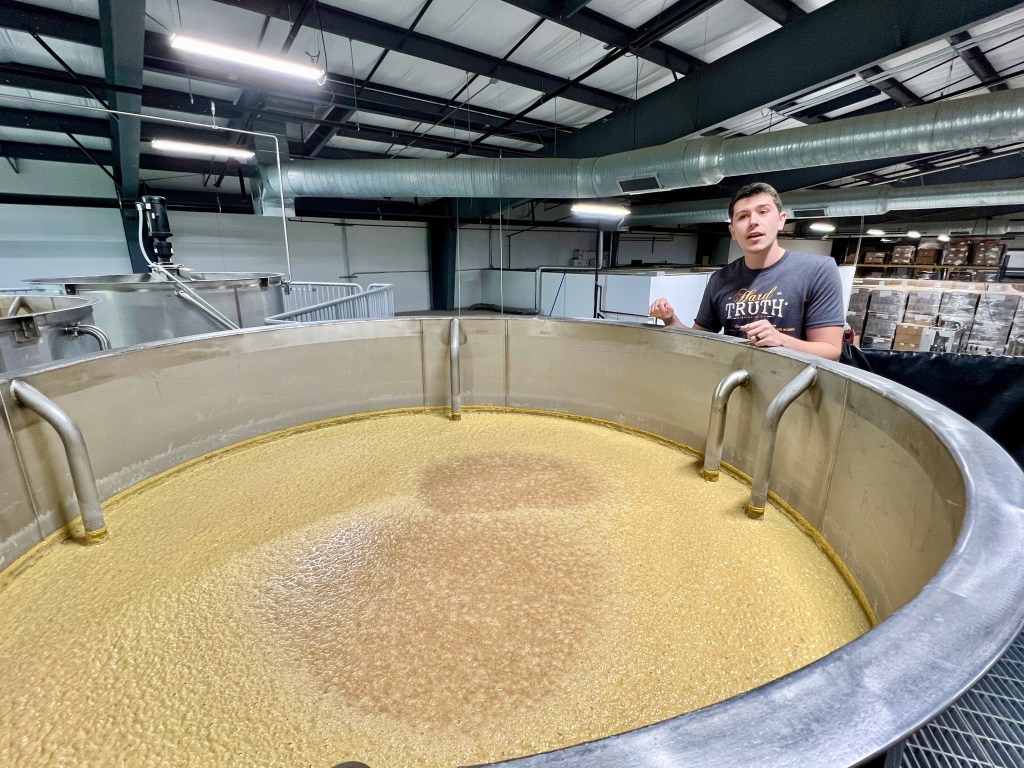
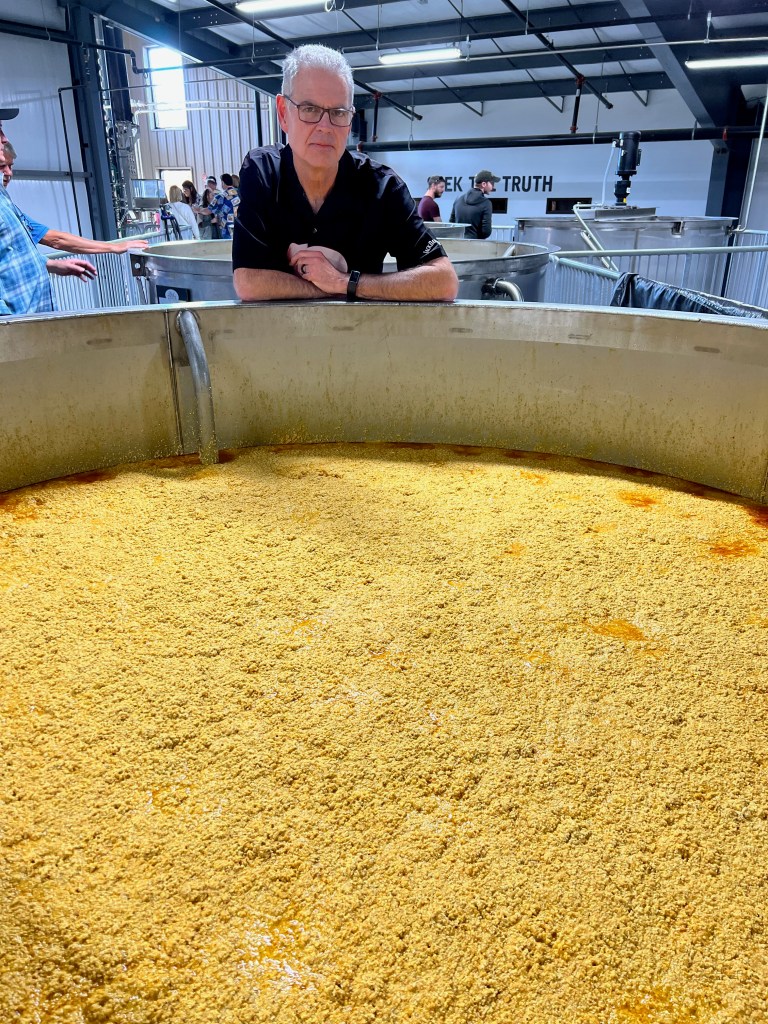
Mashing is the process of adding water to milled and/or malted grain, heating it, and activating enzymes in the grain to convert starches into fermentable sugars. All parts of this equation are important. You need a good water and that is typically considered water that is calcium-rich and iron-free. The temperature of the cooking process is critical because if too low or too high, the activation of the enzymes does not happen. When “just right” the mash becomes starchy and thick and looks a lot like oatmeal. Once cooled, it can be transferred to the fermentation stage.

Sour Mash versus Sweet Mash

Sour mash is a process in distillation that involves using material from an older batch to start fermenting a new batch of mash. It is very similar to the process of making sourdough bread with a starter. Using sour mash has the benefit of consistency between batches. It also reduces the possibility of unwanted bacterial growth.

Sweet mash is a process in distillation that does not use the sour mash as a starter for fermentation. Instead, only fresh yeast is used. Using sweet mash has the benefit of more control over specific ingredients and the ability to use lower temperatures for fermentation. However, it does require more maintenance and extreme cleanliness to avoid contamination.

FERMENTATION

The goal of fermentation is the creation of alcohol. The basic formula is:
Yeast + Sugar = Alcohol + Carbon Dioxide.

During the fermentation stage, yeast is added to the mash and it begins converting the sugars in the mash to alcohol and carbon dioxide. The fermentation stage typically requires three to five days but it could be longer as well. Ultimately, the product of fermentation is 8-18 percent alcohol by volume (ABV). The fermented mash is then ready for distillation.

SPIRIT DISTILLATION

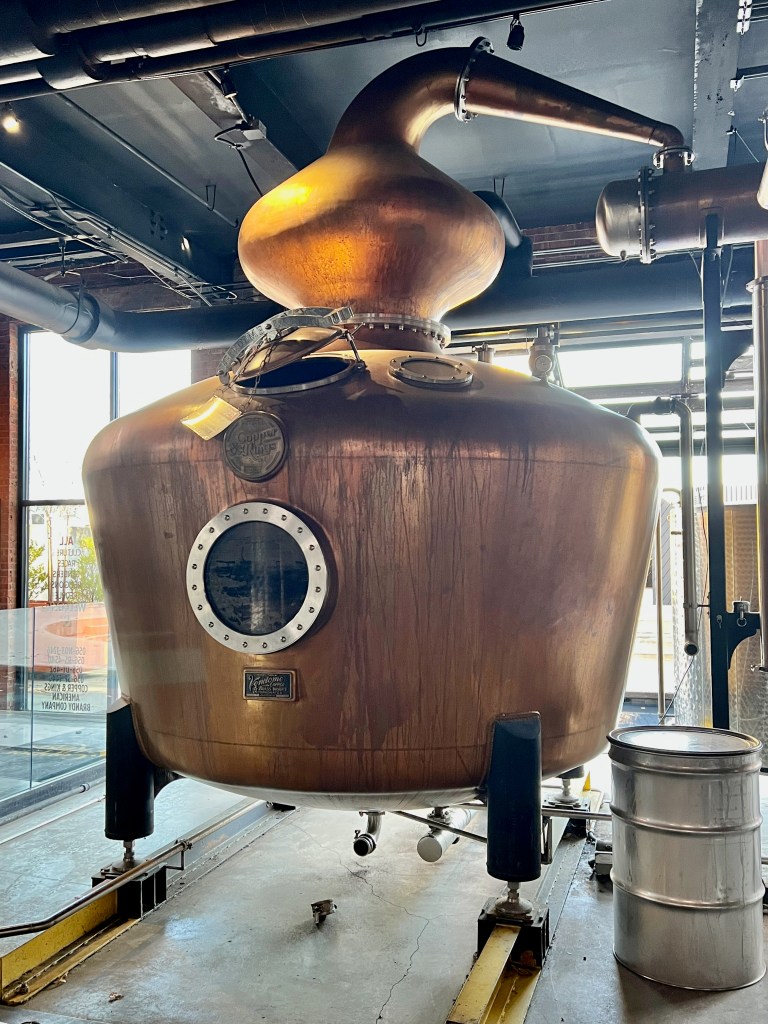
This is a Pot Still at Copper & Kings

In general, the purpose of distillation is to separate alcohol from water through evaporation and condensation. The fermented liquid is heated until the alcohol evaporates. The vapor is then cooled and condensed back into a liquid.  This process purifies and concentrates the alcohol.

In the spirits world, there are three primary classifications of stills in production:
1. Column stills provide a continuous process and are very efficient. This type of still is currently very common in the bourbon industry.
2. Pot stills are considered more traditional and are often used for smaller batches.  Some Distillers in the bourbon industry prefer a pot still because they appreciate the flexibility and control and believe they produce more flavorful spirits.
3. Hybrid stills, as the name implies, combine features of pot and column stills.

BARREL AGING

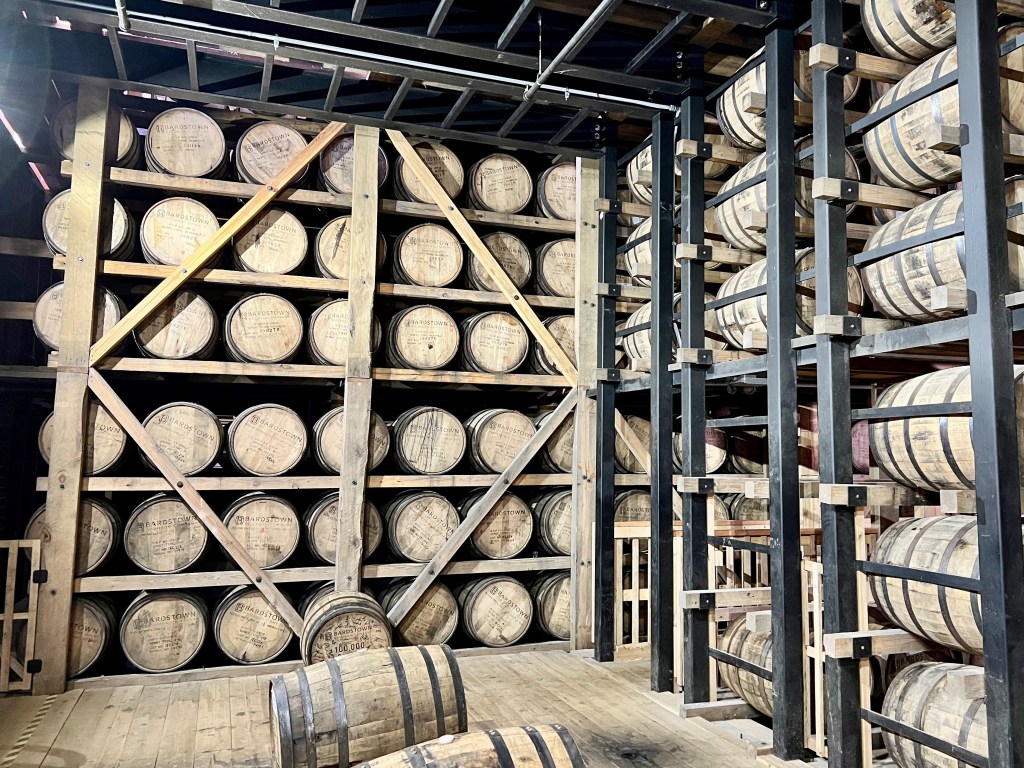
Barrel storage at Bardstown Bourbon Company

Barrel aging is an important step in the whiskey-making process. A transformation occurs when a clear spirit is placed into a barrel and interacts with the wood. As it evolves, the spirit gains color, aroma, flavor, and complexity. Whiskey could age in a barrel from two to twenty-five years.

For bourbon, a requirement is that it is stored in a new, charred oak barrel. The charring process opens the wood and prepares it to receive the spirit. Without being overly scientific, during a warm season, the liquid expands and is absorbed into the barrel. In a colder season, the liquid contracts and exits the wood while bringing the colors and flavors with it.

This relationship with the barrel creates the color we expect from bourbon.  Even more importantly, it brings forward flavors from the wood that interact with the flavor profile of the spirit. An amazing synergy occurs, and this is where the flavors of caramel, vanilla, toffee, butterscotch are derived. In addition, the char level of the barrel can contribute spice and smoke flavors.

Understanding when the spirit is “ready” or at its peak is an experience art form. Sometimes it is the Master Distiller that makes the determination. Some distilleries have specific roles such as Head of Maturation or Lead Taster. Other times there are routine samples drawn and explored by teams of people to narrow it down. It also depends on the specific requirements for labeling – does it need to be at least two years old, does it require at least four years, etc. A particular brand might have a very specific flavor profile that is being sought and it won’t be bottled until that is achieved.

I hope this very high-level overview of the process will bring you a greater appreciation of what is in that bottle that you enjoy so much and why there are so many nuances from brand to brand.

Cheers!


February 2024 Industry Highlights

02/28/24

There were many interesting articles in February. The annual market analysis and economic impact reports on spirits, bourbon, and the Kentucky bourbon industry were released. February was filled with award ceremonies and new bottle releases. Plus, several annual bourbon festivals finalize dates and announce ticket prices and on sale dates.

Bourbon Spirits Market Analysis Report released.

Kentucky bourbon industry is projected to create $9 billion in economic impact for 2024.

Kentucky Senate Bill Would Enhance Distribution Options for Craft Distilleries.

Whiskey Market Size Has Anticipated Growth Acceleration for 2024.

Staghorn opens Garrard County Distilling Co in Lancaster, KY.

Staghorn names Lisa Wicker Master Distiller of Garrard County Distilling Co.

Henderson Distilling Co closes on property

A Kansas City distillery, J. Rieger & Co, released a boxed set that salutes the Negro Baseball League.

Heaven Hill releases 18-year-old bourbon for their 2024 Heritage Collection.

Trey Zoeller, Jefferson’s Bourbon, discusses plans for future releases.

Hard Truth releases their first set of homemade bourbons – Sweet Mash Bourbon, Sweet Mash Wheated Bourbon, and Sweet Mash Four Grain Bourbon.

Angel’s Envy Cellar Collection are on the market again.

Bulleit Unveils American Single Malt.

Penelope’s Small Batch Tokaji Cask Finish Returns.

Woodford Releases Limited Edition Barrel Strength Bourbon.

Bob Dylan Launches Exploration Series of Heaven’s Door

Chattanooga Whiskey Unveils White Port Cask Finish

World Whiskies Awards announced at the Brown Hotel in Louisville, KY.

Whisky Magazine Awarded Back-to-Back Distiller of the Year to Heaven Hill.

Four Roses Wins Best Single Barrel Bourbon at the World Whiskies Awards.

Bourbon Festival News

Kentucky Bourbon Festival Dates and Ticket Sales

Bourbon on the Banks Festival Date and Ticket Sales

BBQ and Barrels Festival Dates and Ticket Sales

February 2024 Traveller Whiskey Tasting

02/27/24
By Rebecca Herman McBrayer

Please be sure to read our approach to Tasting Whiskey if you haven’t already. 

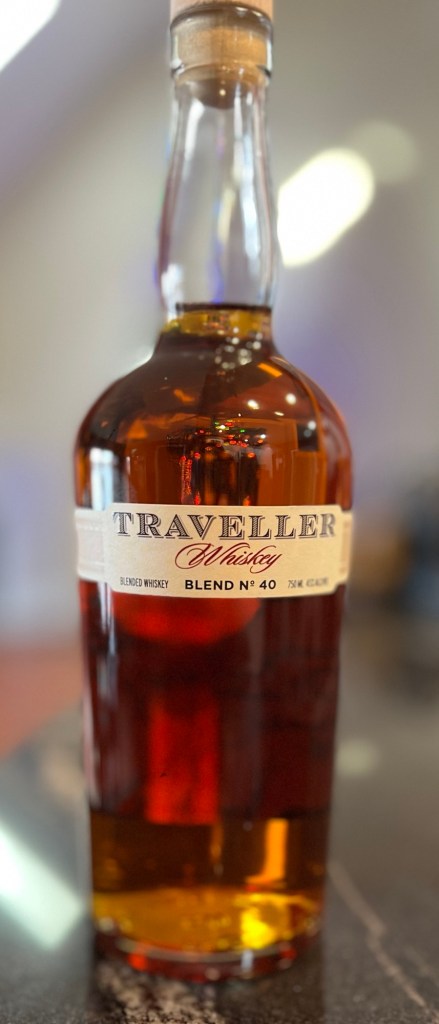
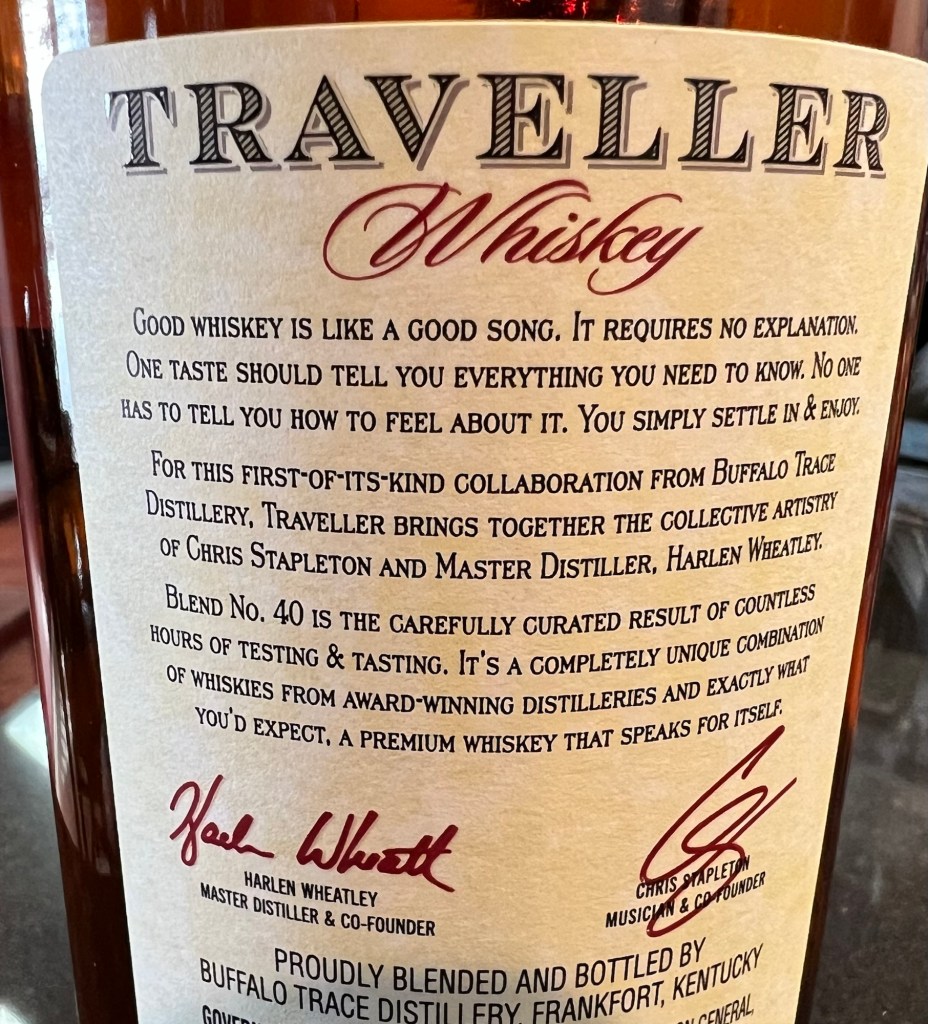
For this tasting, Wayne and I tasted the recent release from Buffalo Trace, Traveller Whiskey. From the Buffalo Trace site: For this first-of-its-kind collaboration from Buffalo Trace Distillery, Traveller brings together the collective artistry of 8X Grammy Award-Winning Artist Chris Stapleton and Buffalo Trace Distillery Master Distiller, Harlen Wheatley.

What is a Blended Whiskey? A Blended Whiskey is a mixture of different types of whiskeys, sometimes with other ingredients. It’s typically made by mixing one or more higher-quality straight or single malt whiskeys with less expensive spirits, neutral spirits, colorings, and flavorings. For example, a blended Scotch might be a combination of a barrel-aged malt whisky and some other grain whisky. In the US, blended whiskey is a combination of straight whiskies and neutral spirits containing at least 20 percent straight whiskey and bottled at not less than 80 proof. For additional information, read Blended Whiskey, part of the Sunday Spirit Notes.

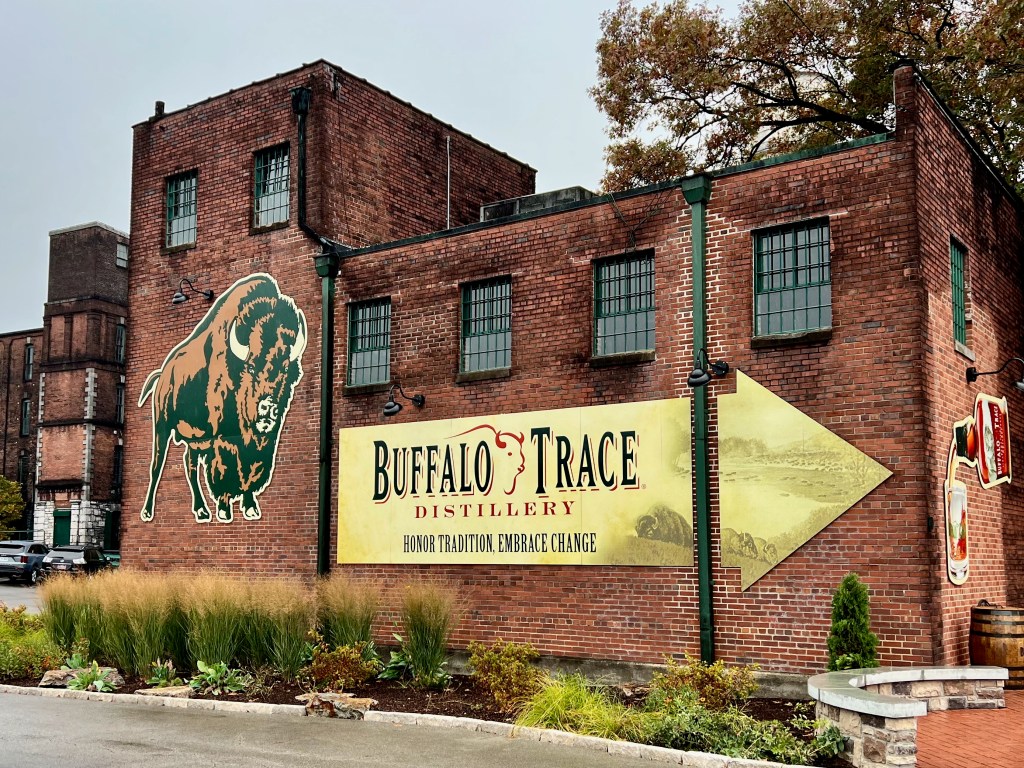
Buffalo Trace Welcome Center

Traveller Whiskey Blend No. 40

Mashbill – Unknown a blended whiskey

Age – Unknown a blended whiskey

Blend – From the Buffalo Trace site: In pursuit of the finest possible whiskey, over 50 blends were sampled before making Blend No. 40 the chosen combination. Blend No. 40 is the carefully curated result of countless hours of testing & tasting and is exactly what you’d expect – a premium whiskey that speaks for itself. 

Proof – 90

Price Paid – $39.99

Color – golden

Aroma – very light, sweet such as honey or fruit, not distinct, doesn’t draw you in but also doesn’t push you away.

Tasted Neat –  somewhat of a creamy mouthfeel, like the nose, it is sweet with hints of maple, caramel, or some sort of dessert.

Tasted with dried cranberry –  sweetness again with nothing distinct or specific.

Tasted with a pecan –  brought out some complexity of oak and white pepper.

Tasted with dark chocolate – the creamy mouthfeel returned, but it is rather one note.

Discussion and Final Notes

In general, it is a rather nondescript whiskey that lacks complexity. However, with the marketing, availability, and price point, it has gained a lot of attention by those who might not typically drink whiskey or bourbon.

If you are seeking a sweet, creamy, lower proof whiskey at a good price, you should give Traveller a try. For this reason, it is also a great bottle for bourbon enthusiasts to keep on their shelf for friends who might not appreciate a more robust or complex pour of bourbon.

Cheers,
Rebecca & Wayne

Photos by Rebecca Herman McBrayer

NOTE: The whiskey in this review was purchased by us. We were not compensated by the spirit producer for this review. This is simply our opinion based on what we tasted on this day. Please drink responsibly.

Blended Whiskey

02/25/24
By Rebecca Herman McBrayer

Whiskey (generic) must be made from cereal grains, distilled below 190 proof, placed into an oak container, and bottled at a minimum of 80 proof.

A Blended Whiskey is a mixture of different types of whiskeys, sometimes with other ingredients. It’s typically made by mixing one or more higher-quality straight or single malt whiskeys with less expensive spirits, neutral spirits, colorings, and flavorings. For example, a blended Scotch might be a combination of a barrel-aged malt whisky and some other grain whisky. 

In the US, blended whiskey is a combination of straight whiskies and neutral spirits containing at least 20 percent straight whiskey and bottled at not less than 80 proof.

History and Pioneer

The art of blending whisky was pioneered by Andrew Usher in Edinburgh, Scotland, in the early 1860’s. It was discovered that blending whisky could create a lighter and sweeter whisky than the more common robust whiskies of that time.

Benefits of Blending Whiskey

First, it allows the distiller to produce a consistent flavor. When we open a bottle of Buffalo Trace, Four Roses, or Woodford, for example, we expect it to taste like the last bottle or drink that we had. The environment of the barrel, weather, placement in the rickhouse, etc. can affect the taste of the spirit in each barrel. The blending process allows a careful matching to the brand’s expected taste.

Another benefit is that blending can highlight the best qualities of each barrel. By combining barrels with specific characteristics, a distiller can achieve a higher quality end-product by identifying and blending the best qualities of each one. This can create a synergy for the flavor profile that is often better than any of the individual parts.

Sometimes the goal of blending could be to create a new and diverse flavor profile. By blending spirits derived from different grains, ranges of age, various storage and aging processes could produce an end-product that has unique and desirable flavor profile.

Also, it is not uncommon for young distilleries to used sourced whiskey. Sometimes this is because they are awaiting the aging process of the whiskey that they have produced. By blending various sources and ages, they can create a unique offering to match the flavor profile what they anticipate for their brand.

In addition, there could be another purposeful approach for using sourced whiskey for blending. Bardstown Bourbon Company is known for their Discovery Series and each series represents a very specific blend of sourced spirits. It might be a blend of different grained whiskey, from different distilleries, from different states and process requirements, different ages, the possibilities are endless.

Visit to Second Sight Spirits

By Rebecca Herman McBrayer

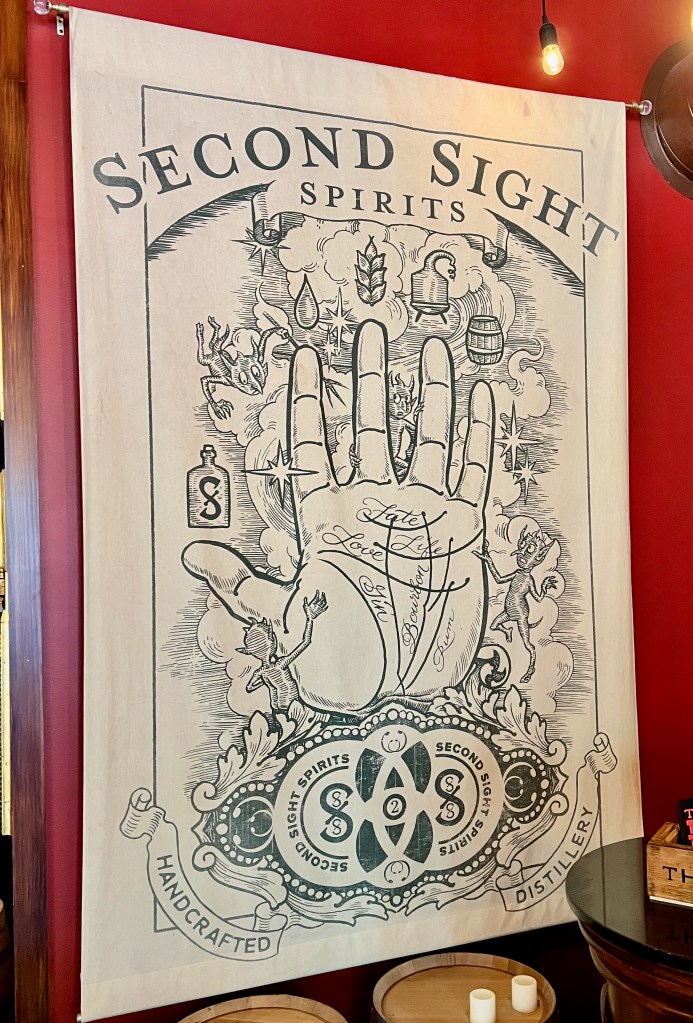
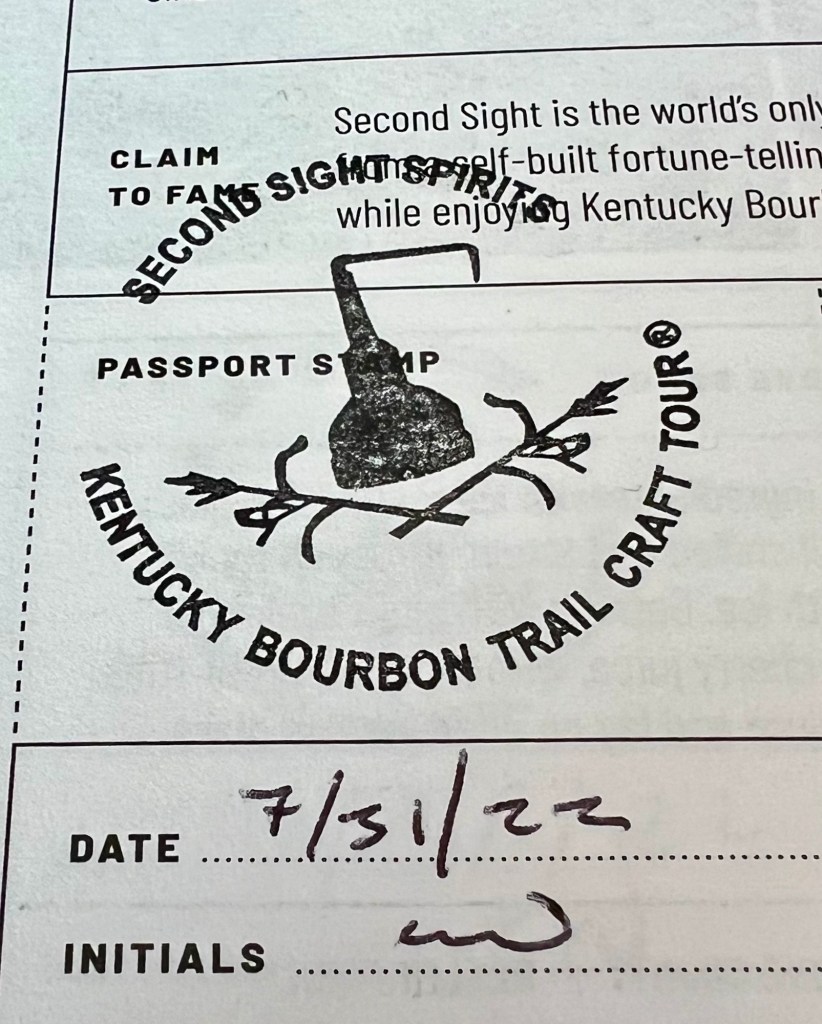
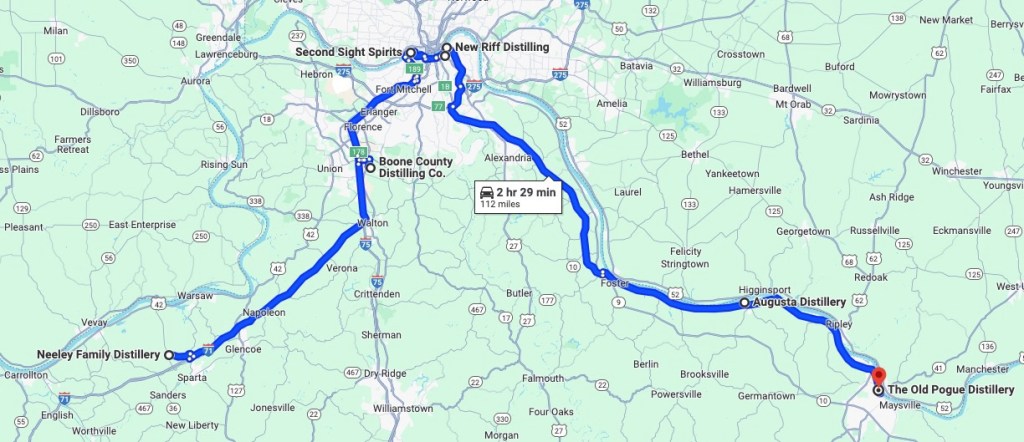
July 31, 2022, Wayne and I visited Second Sight Spirits for the first time. We were in Cincinnati for a weekend event with the Reds and planned three distillery visits within our allotted time. Second Sight was our final stop on a Sunday afternoon.

Located in Ludlow, KY which is just south of Cincinnati, OH, on the south side of the Ohio River, this quaint town is approximately 2 square miles and was incorporated in 1864. Elm St., where Second Sight is located, is definitely a happening part of this small community.

Distillery Tour & Visit

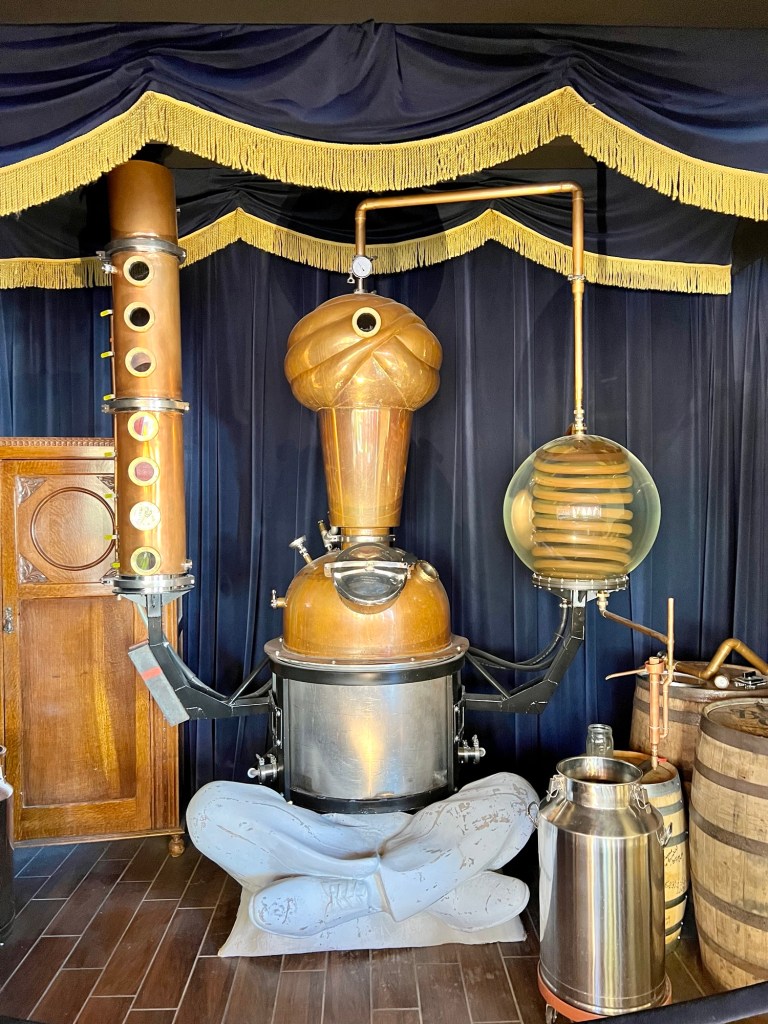
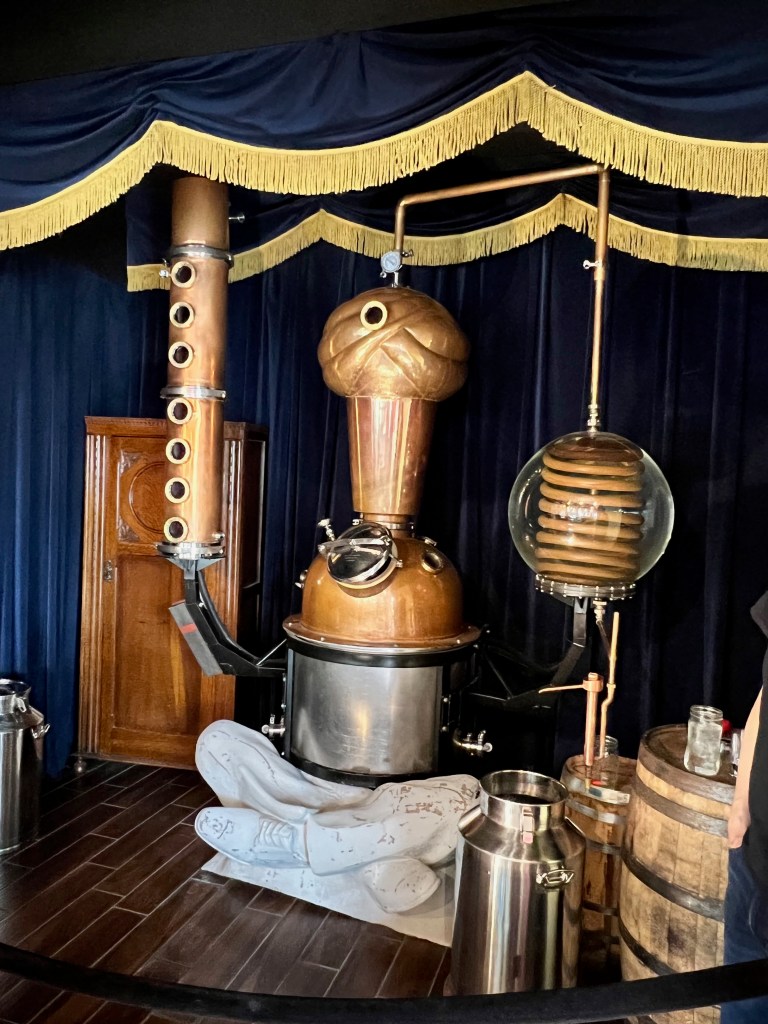
We learned that founders Rick Couch and Carus Waggoner have been friends since grade school. Their backgrounds of Rick being a mechanical engineer and Carus an industrial designer let them to careers on the Las Vegas Strip. Carus shared stories of their time in Vegas and working on Cirque Du Soleil’s LOVE as well as Viva Elvis. I won’t share the full story of how they got involved with assembling a very large still, you will need to go on the tour to hear all about that!

He shared their story of living their vision of creating an artisan distillery to focus on local products in a fun and innovative way. We followed their distillation process, toured the rick closet and storage area. All that they do is accomplished in a very small footprint.

The energy and creativity of Rick and Carus are found in every aspect of their business. Not only do they create a fun and creative experience for visitors, but every employee that we have spoken with always says it is truly a family and they love being a part of it. The culture that they have created helps them to achieve their goal of being a company that excites, engages, and entertains.

Time and time again, when people ask about our favorite distillery or experience along the Trail, Wayne always says that his most memorable and most unique is Second Sight Spirits. We highly recommend that you carve out time in your Trail planning to include a visit to Ludlow, KY!

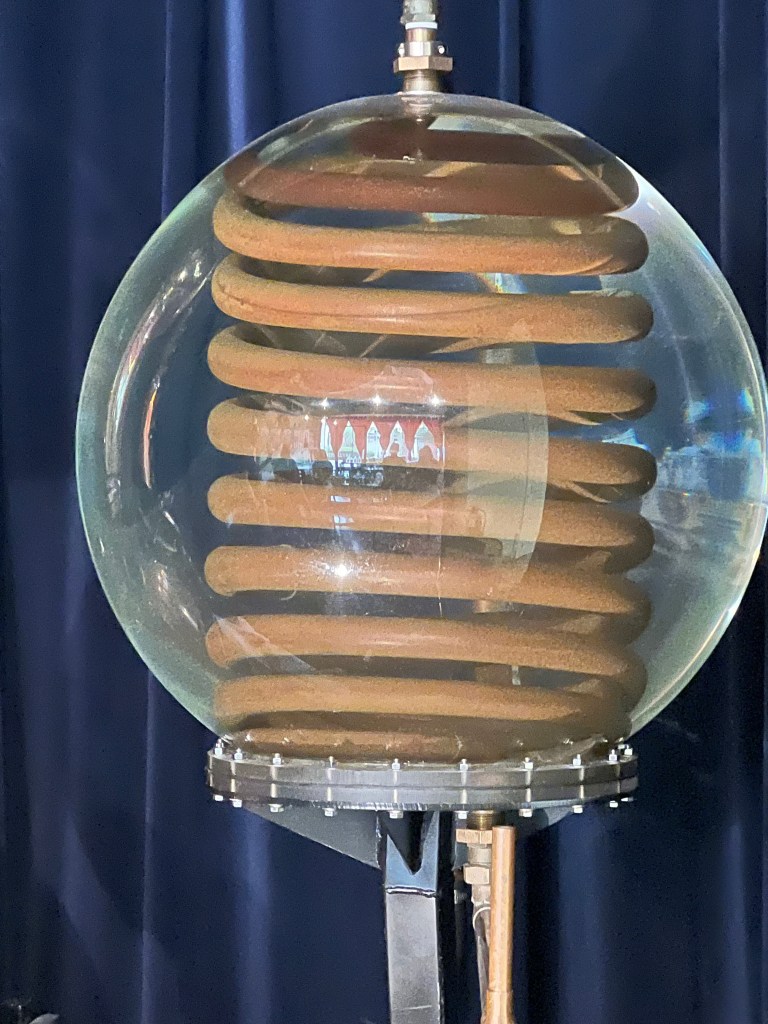
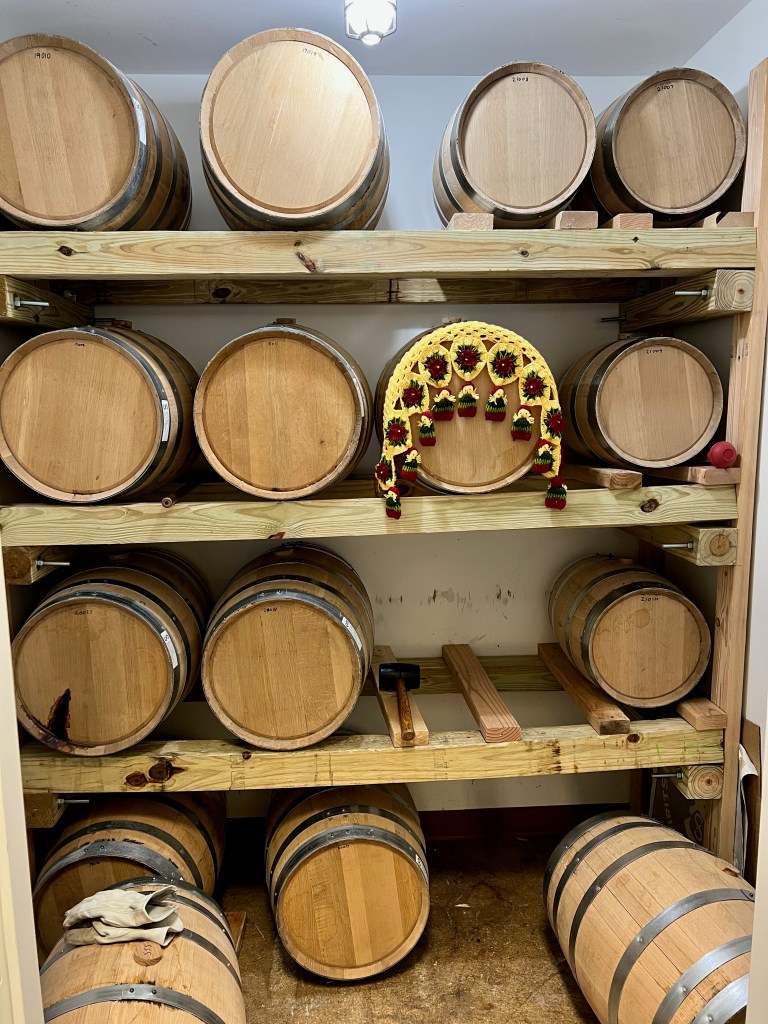
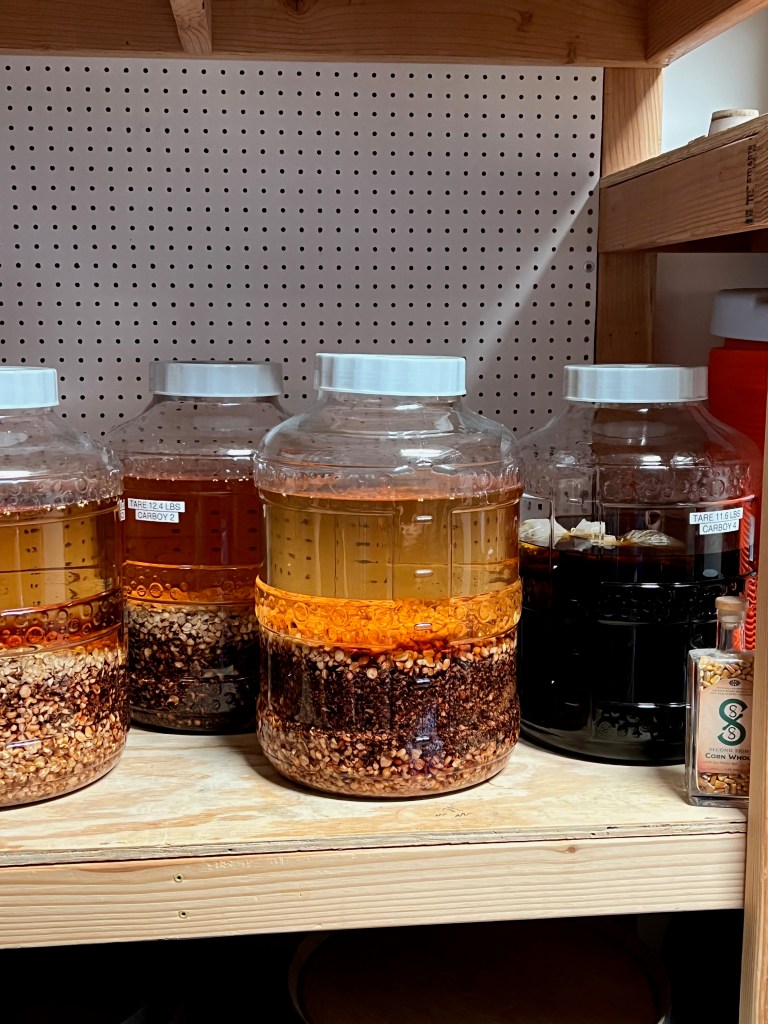
Photos from the tour: Worm crafted from an old street lamp and other parts found on Craig’s List. Their Rick Closet – perfect for their small barrel sizes. Special spices and grains in containers. Founder Carus Waggoner sharing their story. The Mystic Mustache Ride (yes, it runs) in the bar area of the lounge.

Gift Shop

They have a great selection of shirts. We purchased a pin for my distillery hat, an ornament for our bourbon tree, a glass, and T-shirts.

Bottles Available for Sale

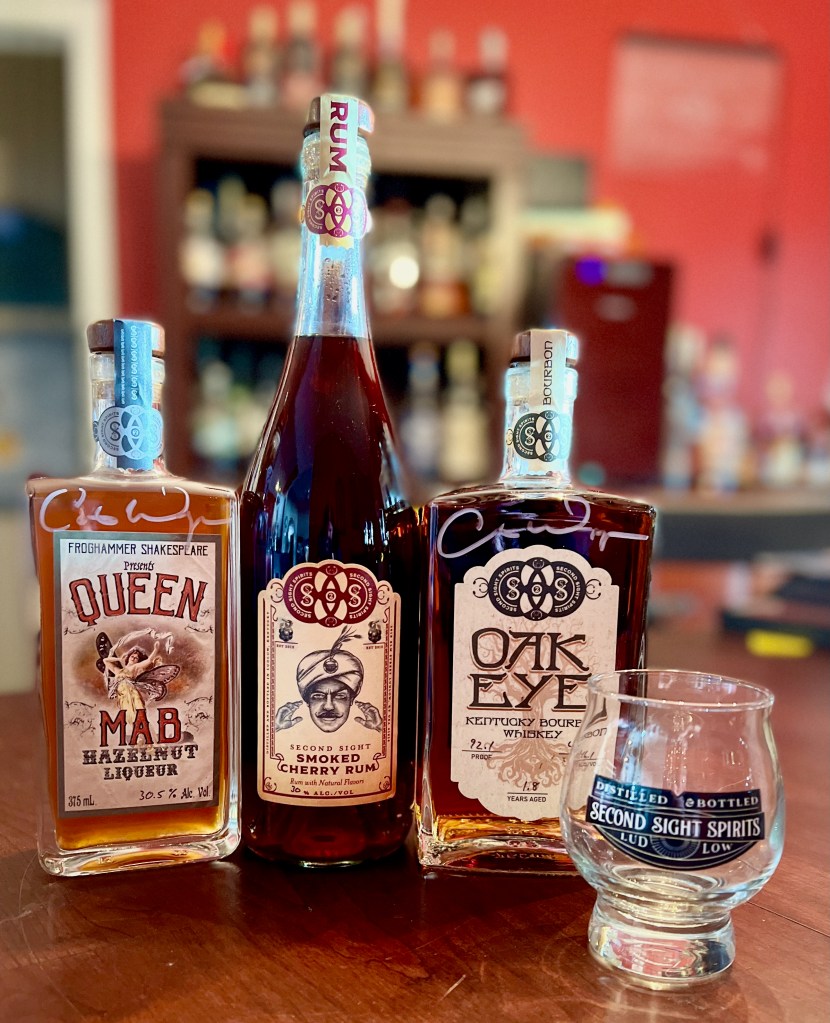
In addition to their Oak Eye Kentucky Bourbon Whiskey, Second Sight Spirits also produce a Hazelnut Liquor (Queen MAB) and several varieties of rum including: unbarreled rum, spiced rum, smoked cherry rum, and bourbon barreled rum. We opted to bring home a variety of their spirits.

You can review our tasting notes of Second Sight Spirits Oak Eye Bourbon here.

Distillery Trail Statistics


Second Sight Spirits was our 13th new distillery. It is on the Kentucky Bourbon Trail Craft Tour Northern area. It was our 5th craft distillery and our 9th Kentucky Bourbon Trail stamp.


Pro Tip: Plan to visit other nearby distilleries. With advance planning, it is possible to create a terrific 3-4 day weekend trip.

Pensive Distilling 4.0 miles
New Riff Distilling 5.6 miles

South/East
Augusta Distillery 44.5 miles
Old Pogue Distillery 61.9 miles

South/West
Boone County Distilling 17 miles
Neeley Family Distillery 42.8 miles

February 2024 Oak Eye Bourbon Tasting

02/20/24
By Rebecca Herman McBrayer

Please be sure to read our approach to Tasting Whiskey if you haven’t already. 

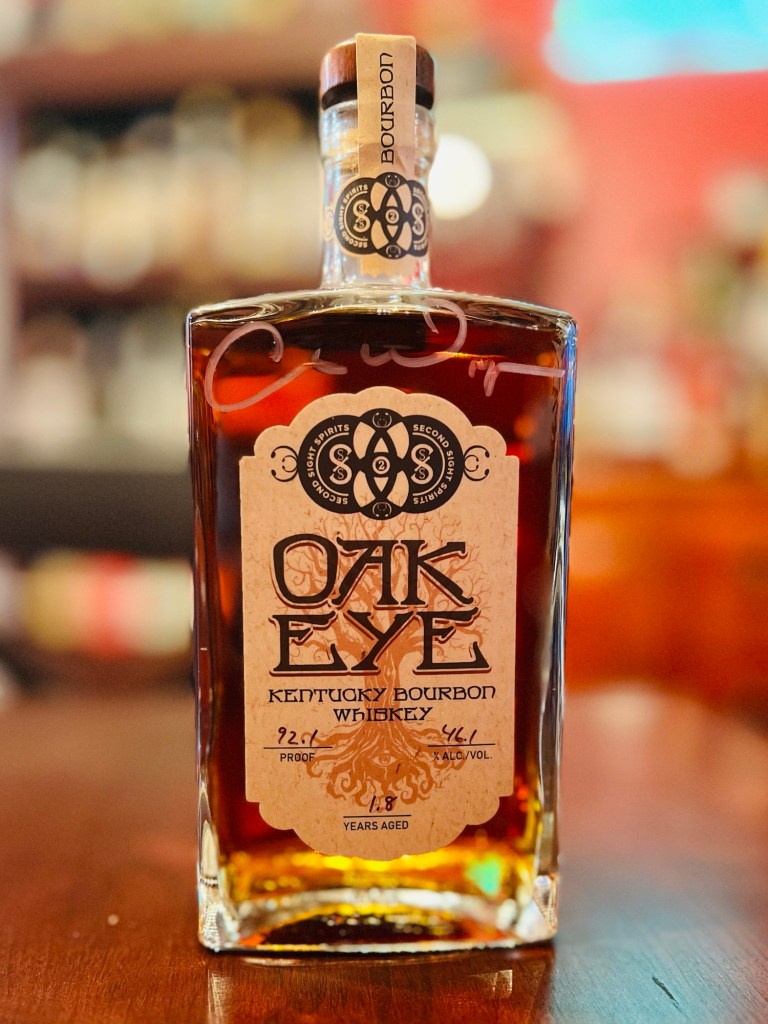
For this tasting, Wayne and I tasted the Oak Eye Kentucky Bourbon from Second Sight Spirits in Ludlow, KY. We have had this bottle for quite some times as we purchased it on our first visit to the distillery July 30, 2022.

What is Kentucky Bourbon Whiskey? Bourbon whiskey must be made in the USA from at least 51% corn. It must be distilled at 160 proof or less.  It then must be placed into a new, charred oak container at a proof of 125 or below. In addition, it must be free from added substances (except water) and bottled at a minimum of 80 proof. To add “Kentucky” to the label, it must be aged for at least one year in the state of Kentucky. For additional information, read Bourbon Whiskey, part of the Sunday Spirit Notes.

Second Sight Spirits

Oak Eye Kentucky Bourbon


Mashbill – 72% Corn, 16% Wheat, 5% Rye, and 7% Malted Barley
Age – 1.8 years
Proof – 92.1
Barrel – 15 gallon with Char Level 3 and 115 entry proof
Price Paid – $33 for 375ml


Color – copper

Aroma – honey, grains, barley, sweet cereal.

Tasted Neat – wheat, barley, honey with cinnamon and nutmeg on the lingering finish.

Tasted with dried cranberry –  added pops of citrus (perhaps orange zest) but no longer grain-forward.

Tasted with a pecan –  the grains return in a strong way but the fruit is gone and the original cinnamon finish is very light.

Tasted with dark chocolate – as with chocolate, it is creamy; however, it reduced a lot of the original character of this spirit. That said, it is very smooth and stands up as a solid bourbon.  

Discussion and Final Notes

Nice color, great nose, and the viscosity produces lingering legs. If you enjoy tasting multiple grains in your bourbon, you will certainly enjoy this pour. While it drinks terrifically as a neat pour, we can envision it being great in an Old Fashioned with walnut bitters.

If you have the opportunity to try a pour of Oak Eye, please do! Better yet, make a trip to Second Sight Spirits and enjoy the entire experience of what founders, Rick Couch and Carus Waggoner, have brought to Ludlow, KY.

Cheers,
Rebecca & Wayne

Photos by Rebecca Herman McBrayer

NOTE: The bourbon in this review was purchased by us. We were not compensated by the spirit producer for this review. This is simply our opinion based on what we tasted on this day. Please drink responsibly.

Bourbon Whiskey

02/18/24
By Rebecca Herman McBrayer

American – Bourbon is considered America’s only native spirit, and it originated in the late 1700s. During the Civil war, bourbon was used as currency due to ease of transport. By the end of the Civil War, there were over 4,000 bourbon distilleries in the USA.

What’s in a name? – There are several theories on how Bourbon got its name; however, the most common thoughts are that it is derived from the French Bourbon dynasty, from Bourbon County in Kentucky, or perhaps Bourbon Street in New Orleans.

All bourbon is whiskey but not all whiskey is bourbon.”

Whiskey (generic) must be made from cereal grains, distilled below 190 proof, placed into an oak container, and bottled at a minimum of 80 proof.

To be Bourbon, additional requirements must be satisfied, and this is in accordance with Title 27 of the US Code of Federal Regulations (CFR). This was further acknowledged by the US Congress May 4, 1964, when it declared Bourbon a “distinctive product of the United States.”

Bourbon Requirements include that it must be made in the USA with a mashbill that contains at least 51% corn. It must be distilled at a maximum of 160 proof (80% ABV).  It then must be placed into a new, charred oak container at a maximum of 125 proof (62.5% ABV). In addition, it must be free from added substances (except water) and bottled at a minimum of 80 proof (40% ABV).

Straight bourbon whiskey is a subcategory of bourbon whiskey that has been aged for at least two years in new, charred oak barrels and doesn’t contain any additives. If aged less than four years, the label must include an age statement.

To add “Kentucky” to the label, it must be aged for at least one year in the state of Kentucky.

Common Taste Profiles for Bourbon

Taste influences: Bourbon can have a wide range of aromas and tastes. It is thought that 70-75% of the flavor is derived from the barrel and taste is also influenced by how long it remains in the barrel and the temperature of where the barrel was stored. Another source of the flavor is the mashbill and the specific grains because the use of rye versus wheat will derive a different profile. The yeast strain used in fermentation also influences the taste profile.

Common tastes identified: The most common flavor note from bourbon is a sweetness, often vanilla and caramel. Notes of wood are prevalent as well and that might include oak, almonds, and pecans. Sometimes there are spicy flavors such as pepper, nutmeg, and cinnamon. Other times fruit and floral flavors emerge such as apple, pear, cherry, figs, raisins, dates, and rose. Naturally, the grains used will be part of the flavors identified and that might be corn, rye, wheat, barely, etc.

As you can see, the flavor combinations are endless and can be quite complex. It is also important to note that you can have five people in a room, tasting the same bourbon, and they might each identify different things and that is OK! Our nose, personal palates, and even learned experiences and memories all influence what we taste. This is what makes bourbon such an interesting drink and how it can generate a lot of conversation between friends.

Green River Rye Whiskey Launch Party

By Rebecca Herman McBrayer

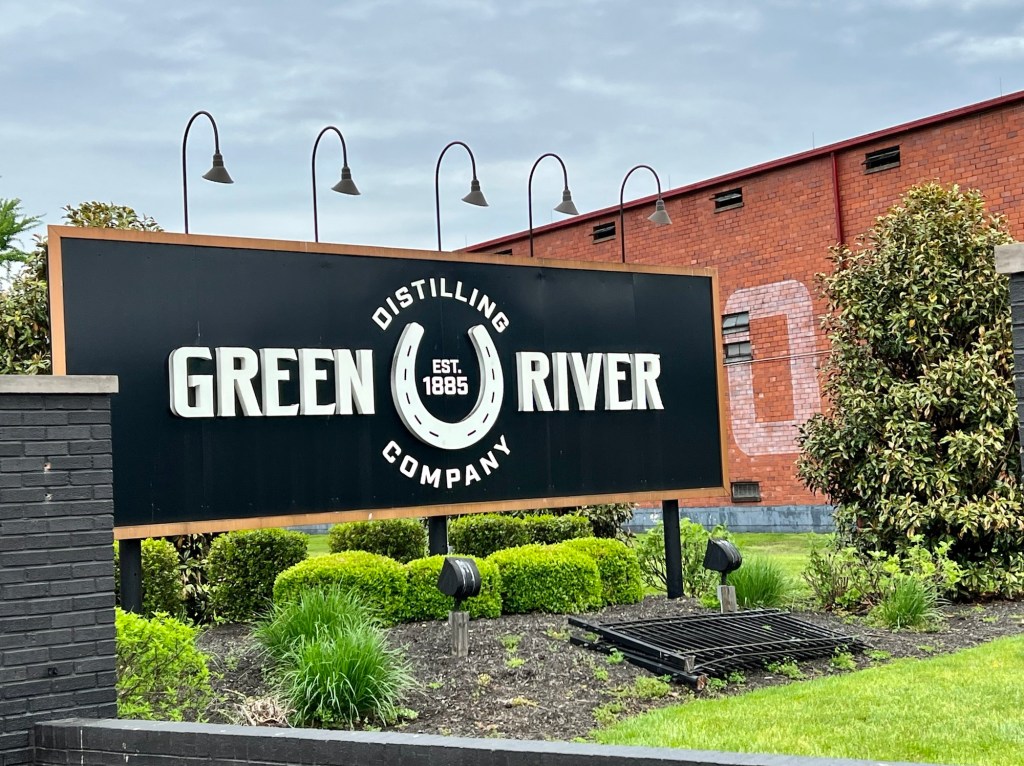
February 1, 2024, Wayne and I ventured to Owensboro, KY to partake in Green River Distillery’s launch of their rye whiskey.  We had secured the final VIP Tour of the day and arrived early to take in the festivities.

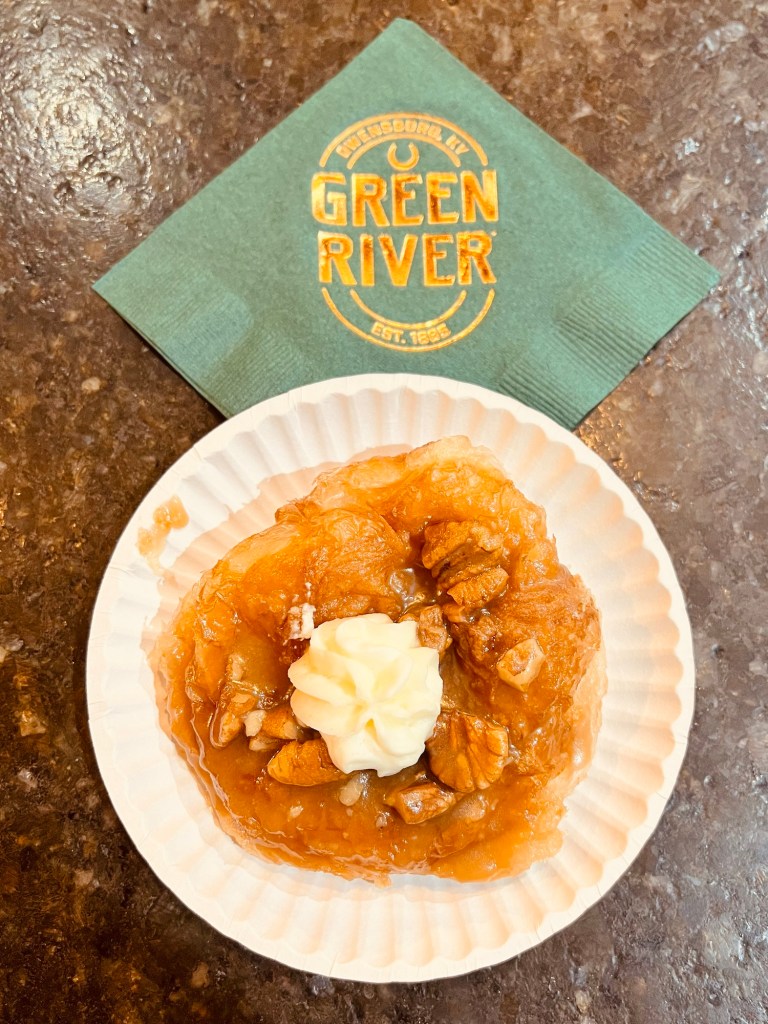
When we arrived and checked in, we were greeted with a donut.  What?? But not any ordinary donut. These were by the local Gramps Coffee and Donuts. Each donut was dipped in a delicious homemade glaze that is made with the newly released Green River Rye Whiskey. It was then topped with pecans and a dab of whipped cream for that small creamy bite. Wow – just wow!

We then ventured to the bar to see what specialty cocktails were available. Not surprising, one of the featured drinks was an Old Fashioned made with the Green River Rye – it was very good. Read our tasting notes here.

VIP Distillery Tour


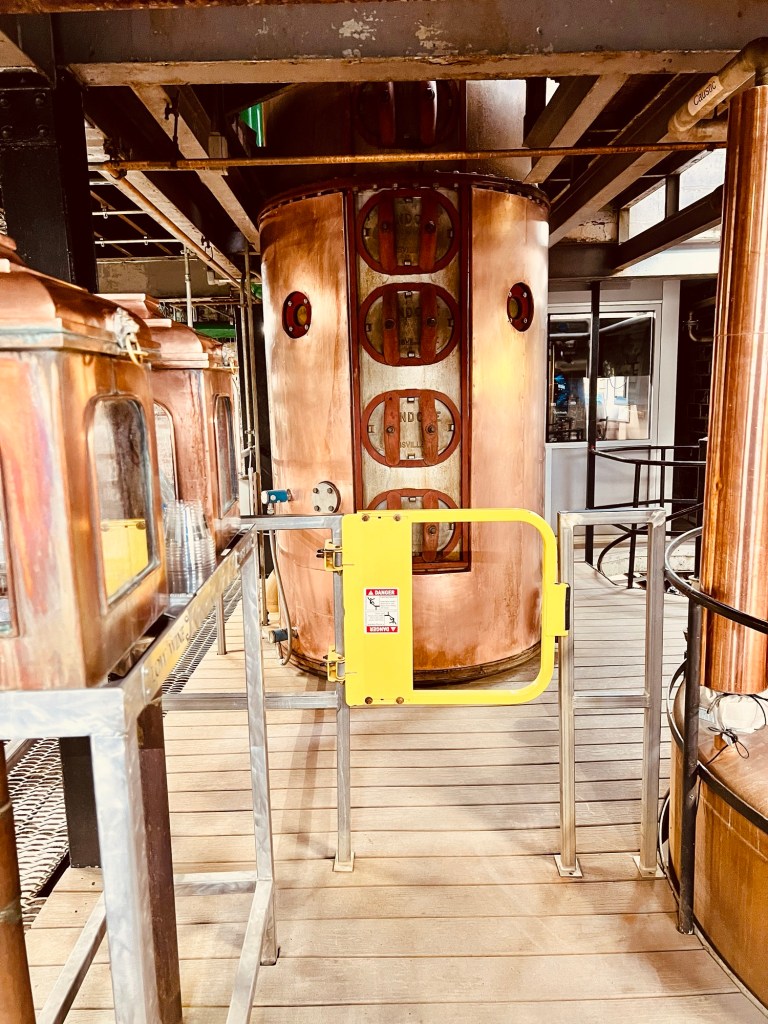
We had the last VIP tour of the day, and it was with none other than the amazing National Brand Ambassador, Caryn Wells. The tour was fantastic.  Caryn shared history with us along the way.  We got to drink the “high wine” off the still (just over 140 proof) and it was fantastic.

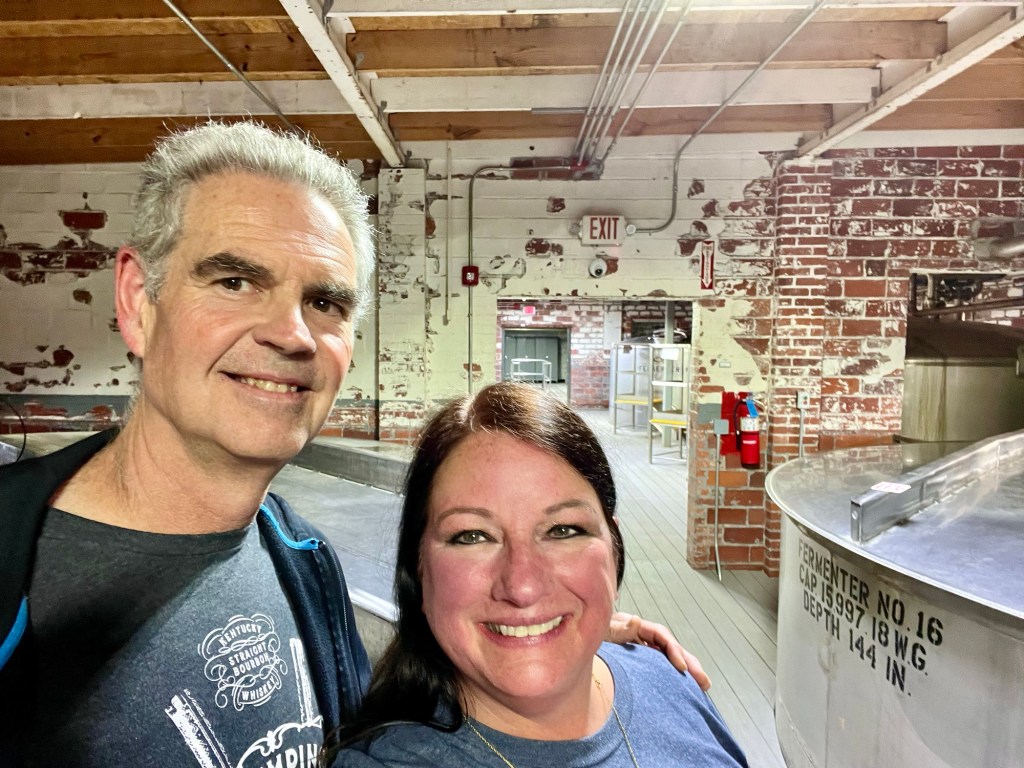
She shared a wonderful “full circle” story while we were in the fermentation room.  Originally, there were Cedar fermentation tanks in that room. However, they were sold by Charles Medley to Maker’s Mark back in the 90’s.  Ironically, Maker’s Mark Master Distiller at the time, Steve Nally, supervised their disassembly and reassembly.  For those who do not know, Steve is now the Master Distiller at Bardstown Bourbon Company – the parent company of Green River since July of 2022. Pro-tip: Caryn shared that if you visit Maker’s, look for the wood that is slightly slimmer than the others, that is from Green River.


We then went to Rickhouse B where all the single barrels are selected. It was there that we got to try the rye.  In addition, we were able to barrel thieve rye and bourbon.  Amazingly good and we were able to keep the Glencairn as a souvenir. We learned that they rye is a blend of 4-, 5-, and 6-year-old barrels.

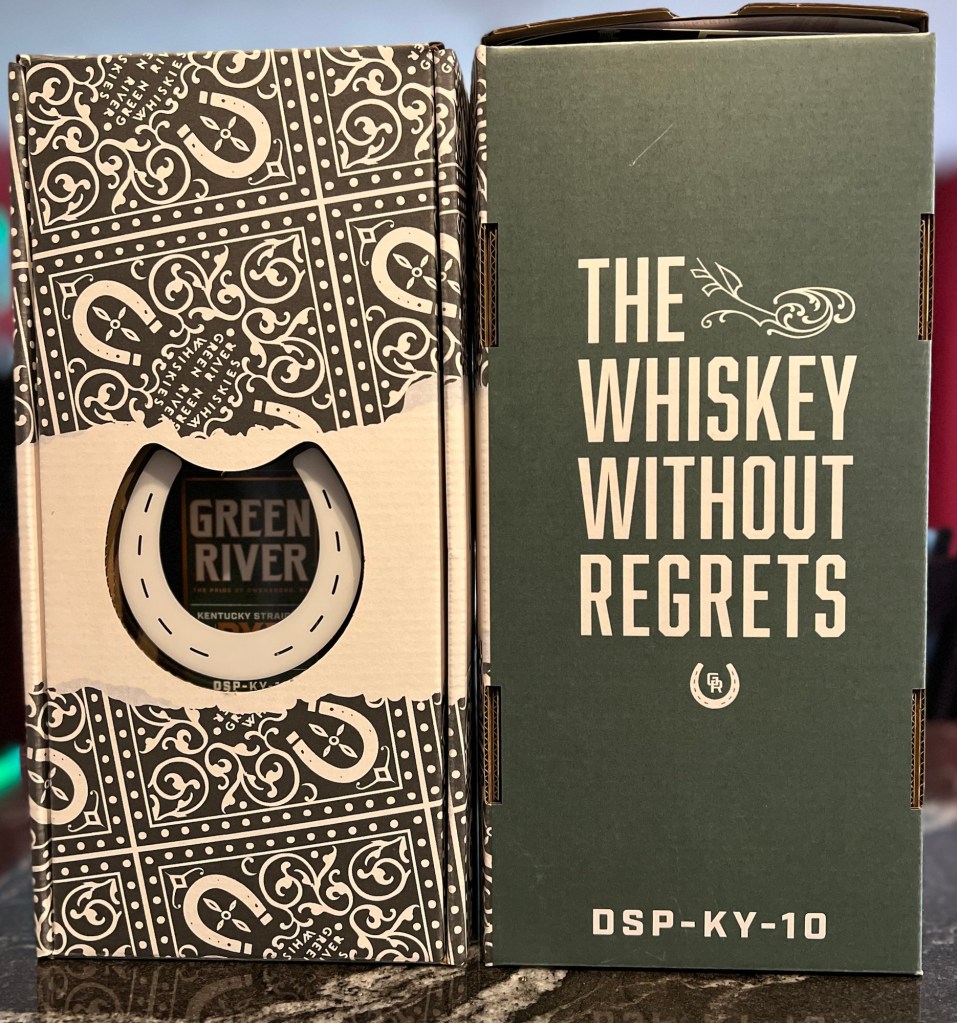
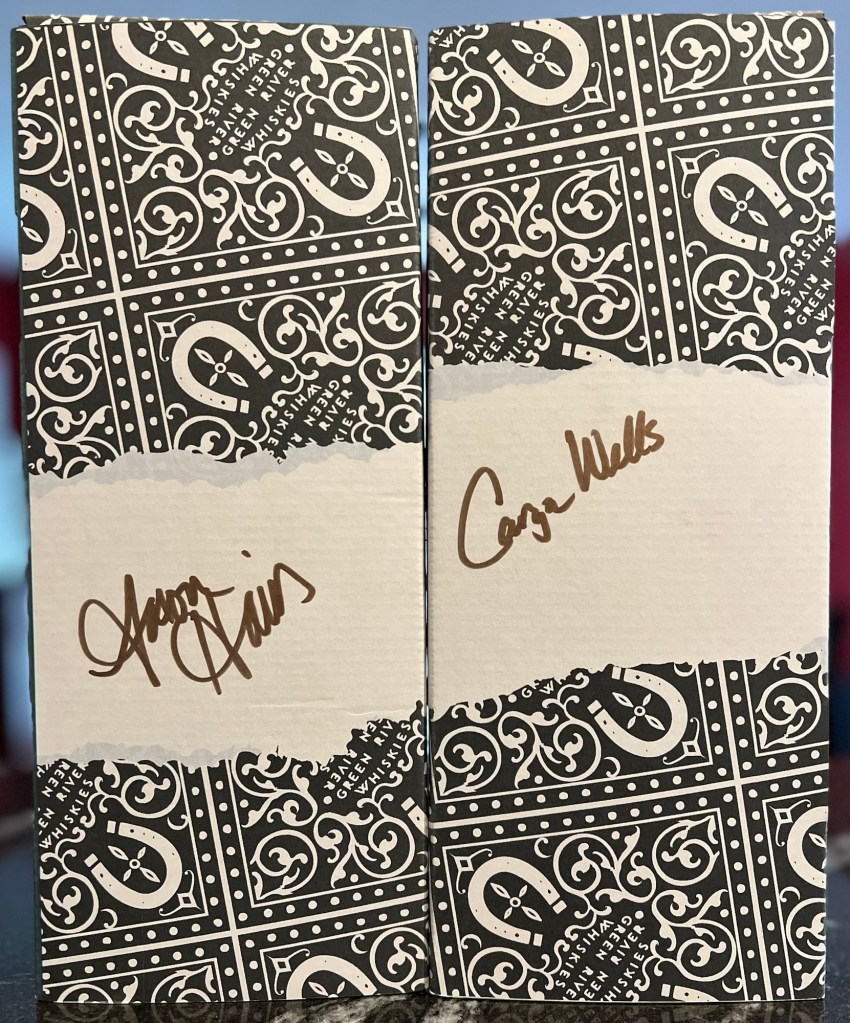
Back in the guest center we chatted and talked more about whiskey with Caryn and the other tour guests that we met. It was getting late, and they needed to close but first we had to each get our bottle of newly released Green River Rye Whiskey in commemorative packaging. The packaging was quite creative and both Caryn and Aaron, their Master Distiller, signed our boxes and bottles.

We had a truly wonderful evening and it was difficulty to say goodbye. Wayne and I look forward to our next visit at Green River Distilling.

Gift Shop


We have been here several times and always make a stop in their gift shop. We picked up another bottle of Green River Rye Whiskey and Wayne was able to get some very nice Green River socks and a package of their coffee. We then noticed that they had a few of the limited edition signed event prints and got one of those as well. We look forward to having it framed to hang in our bourbon room.


Commemorative Packaging for the Green River Rye Whiskey

Distillery Trail Statistics

Green River Distilling is the closest distillery to us and one of our favorite places to visit. This was our 7th visit and our 112th distillery experience. Our first visit was November 13, 2021 where Caryn Wells led us through a guided tasting and discussion about this history of the distillery.