July 2024 Little Book Chapter 8 Tasting

July 9, 2024
By Rebecca Herman McBrayer 
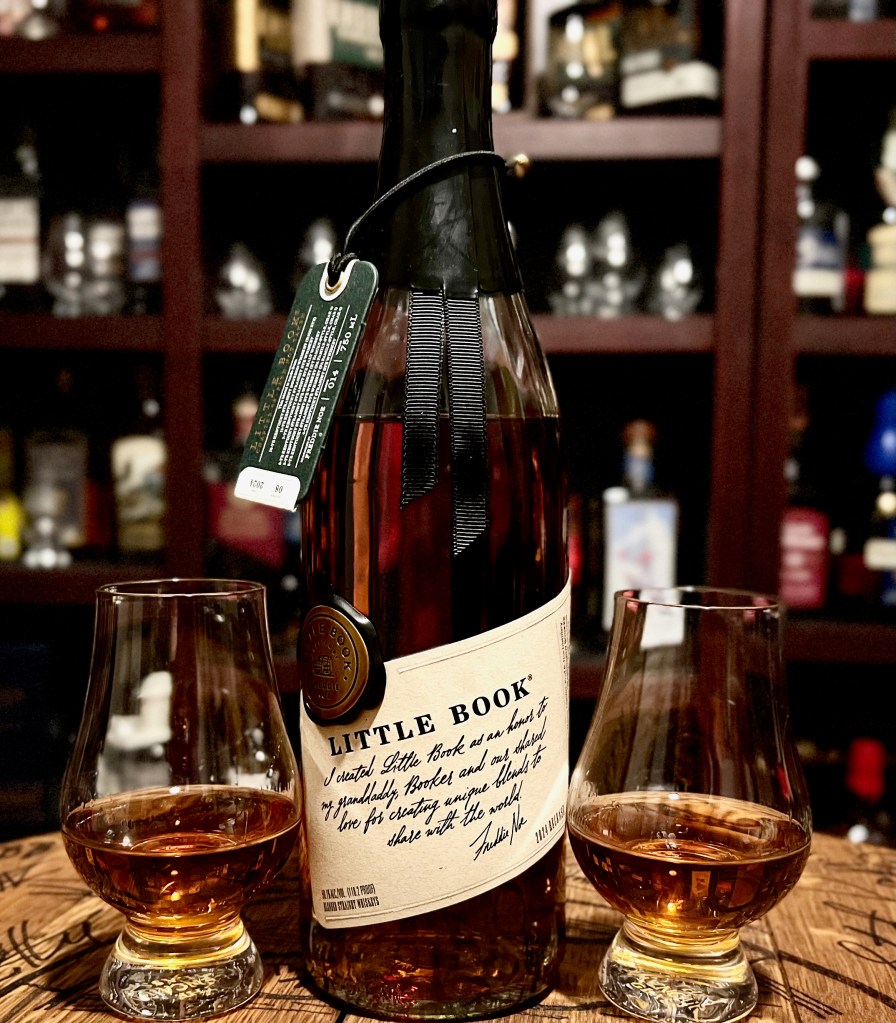
Wayne and I had been very curious about Freddie Noe’s Little Book Chapter 8: Path Not Taken. During our mid-June trip to Louisville, we had some extra time and decided to drive to Clermont to see if the James B Beam American Outpost had it. They did and we purchased one bottle. We have been traveling a bit since then and finally had an opportunity to take some time with a formal tasting of this expression.

From their website: Knowing that rye has roots extending to the beginning of American Whiskey and holds more than two centuries of heritage, you could say, “it’s been done.” But with this chapter, “Path Not Taken,” we explore the future of American Rye by blending a unique range of rye whiskies together and show you that rye still has plenty of stories left to tell.

Undisclosed blend of the following:
18yrs Kentucky Straight Bourbon Whiskey (High Rye)
11yrs Kentucky Straight Rye Whiskey
7yrs Kentucky Straight Rye Malt Whiskey
5yrs Kentucky Straight Rye Whiskey (KY Family-Style, Char 4)
5yrs Kentucky Straight Rye Whiskey (PA Family-Style, Char 1)
5yrs Kentucky Straight Rye Whiskey (PA Family-Style, Char 4)
4yrs Kentucky Straight Rye Whiskey

Please be sure to read our approach to Tasting Whiskey if you haven’t already.

Little Book Chapter 8: Path Not Taken
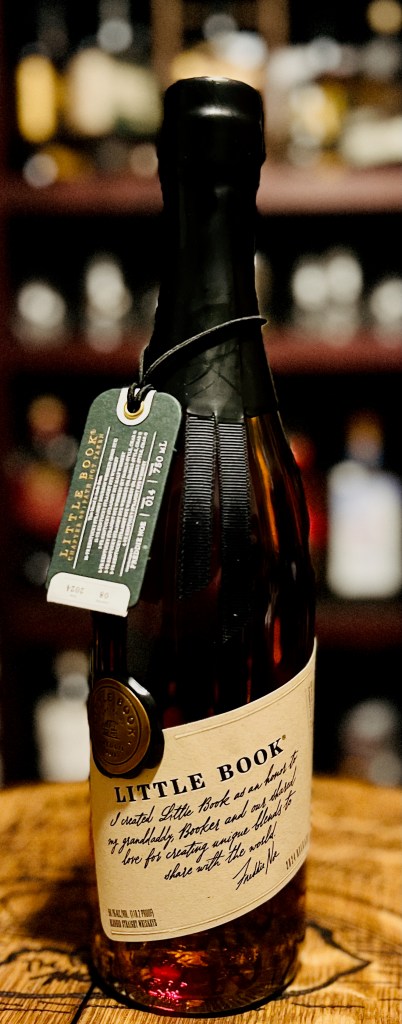
Mashbill – Blend of 7 (see above)
Age – NAS (blend of 4-18 years)
Proof – 118.1
Price Paid – $169.60 (with tax)

Appearance – Deep copper. Great legs.  

Aroma – Sweet rye bread, butterscotch, dill, honey. It is truly inviting.

Tasted Neat – Wow! There is so much going on! Like the nose, there is rye bread, butterscotch, honey and dill. There is the addition of floral notes, apricot and a hearty/yeasty dough. It has a lot of viscosity for a terrific mouthfeel.

Finish: Incredibly long and lingering in a most pleasant manner. There is white pepper, a lot of rye spice, apricot, and oak.  

Tasted with dried cranberry – This truly brings out the ryegrass. The other flavors have been somewhat muted but there is still a bit of sweetness from apricot on the back and toasted rye bread lingers on the finish.

Tasted with a pecan – That is much spicer than it was and not in a pleasant way. A lot of barrel char seems present and in a more bitter manner.

Tasted with dark chocolate – The tastiness of the rye bread returned but the apricot is still missing but a hint of butterscotch returned. The finish is greatly diminished from when it was tasted neat.

Discussion and Final Notes
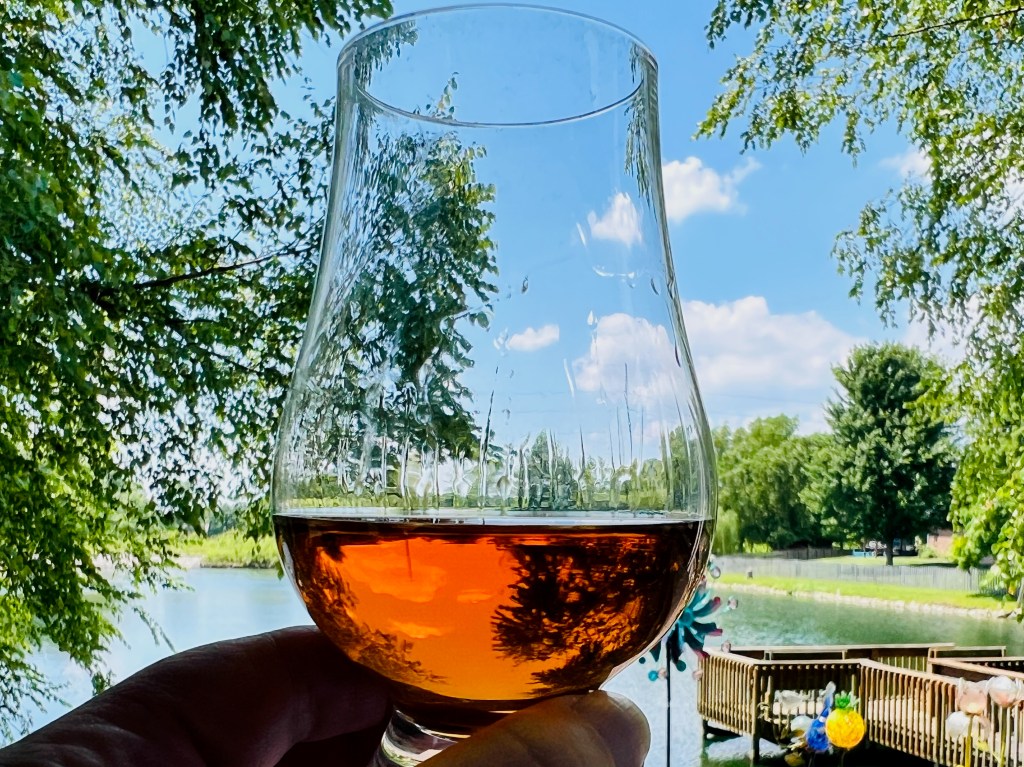
While not technically a Rye Whiskey (due to the bourbon inclusion), everything about this American Blended Straight Whiskey says, “Hey – look at me. Just taste me. You think I’m a Rye, don’t you?” From the aroma, to the taste, and with the finish … you would swear it is a Rye!

The Path Not Taken is incredibly complex at each stage. The blending of this by Freddie Noe was truly masterful. Wayne and I thoroughly enjoyed it. That said, it isn’t a multiple pour drink – perhaps due to the complexity, spice, or proof. The positive of that is that we plan to enjoy this bottle again and again, one pour at a time. We are thrilled to have it in our portfolio!

Based on how it tasted with the dried cranberry, pecan, and dark chocolate, it could be a challenge to pair successfully with a meal unless you have some particular expertise. For us, the cranberry was the best pairing and that might indicate that it would be terrific with appetizers such as a charcuterie plate or even with a light salad. For us, we will likely enjoy it most often as a pre-dinner drink.

Again, we enjoyed this very much. If you love Rye, please consider picking up a bottle when you see one as we do not believe you will be disappointed. Regardless of your preference for Rye, we highly recommend at least taking advantage of a pour, when available, at your favorite pub.

Cheers,
Rebecca & Wayne

Photos by Rebecca Herman McBrayer

Straight Whiskey – Distilled at <= 160 proof, barreled at <= 125 proof, aged in new, charred oak containers, bottled at >= 80 proof. Aged at least 2 years (and must have an age statement if less than 4).

Rye Whiskey Basic Requirements – Rye whiskey must be made from at least 51% rye. It must be distilled at 160 proof or less.  It then must be placed into a new, charred oak container at a proof of 125 or below. Straight rye whiskey is a subcategory of rye whiskey that has been aged for at least two years in new, charred oak barrels and doesn’t contain any additives. If aged less than four years, the label must include an age statement. For additional information on bourbon requirements, please read this post – Rye Whiskey.

NOTE: The spirit in this review was purchased by us. We were not compensated by the spirit producers for this review. This is simply our opinion based on what we tasted on this day. Please drink responsibly.
February 2024 Traveller Whiskey Tasting

02/27/24
By Rebecca Herman McBrayer

Please be sure to read our approach to Tasting Whiskey if you haven’t already. 

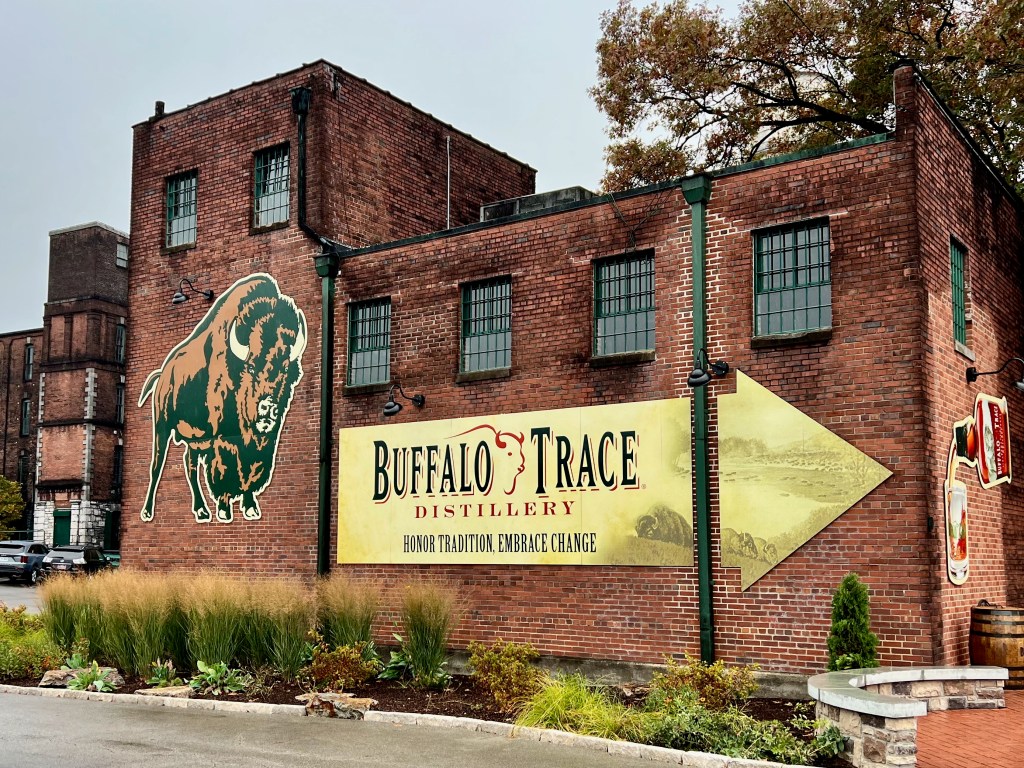
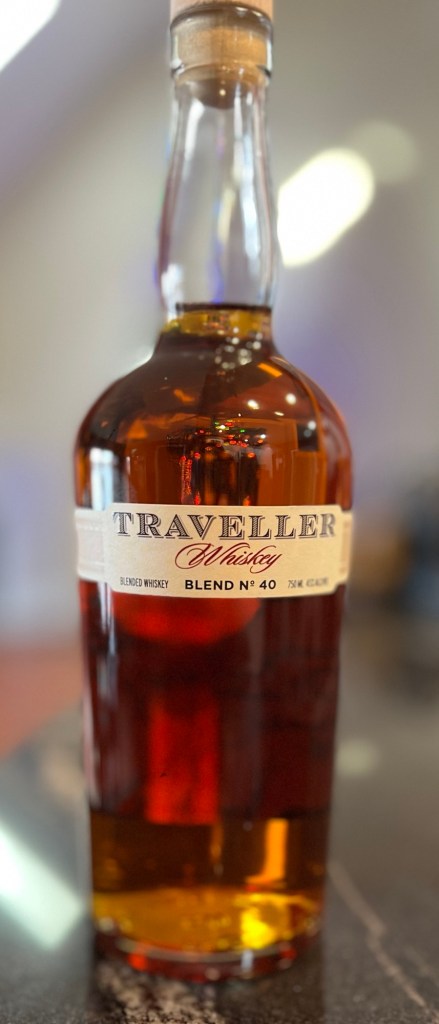
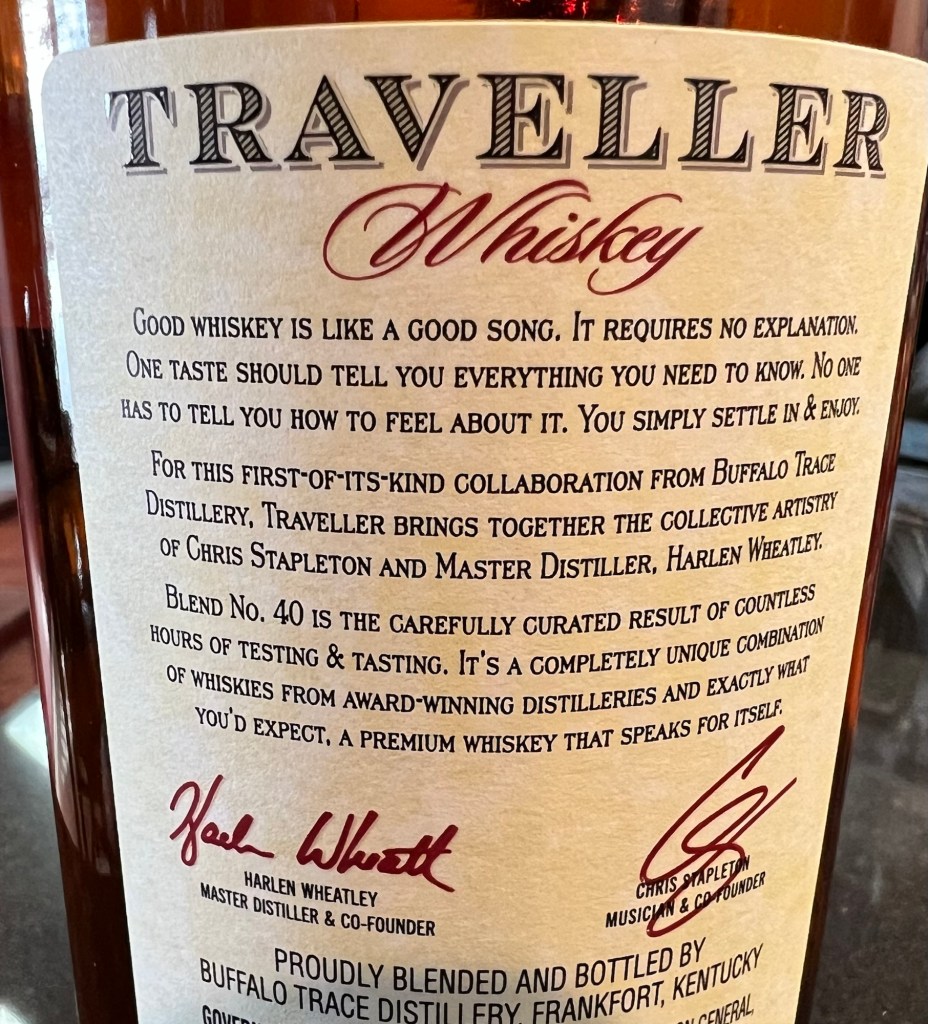
For this tasting, Wayne and I tasted the recent release from Buffalo Trace, Traveller Whiskey. From the Buffalo Trace site: For this first-of-its-kind collaboration from Buffalo Trace Distillery, Traveller brings together the collective artistry of 8X Grammy Award-Winning Artist Chris Stapleton and Buffalo Trace Distillery Master Distiller, Harlen Wheatley.

What is a Blended Whiskey? A Blended Whiskey is a mixture of different types of whiskeys, sometimes with other ingredients. It’s typically made by mixing one or more higher-quality straight or single malt whiskeys with less expensive spirits, neutral spirits, colorings, and flavorings. For example, a blended Scotch might be a combination of a barrel-aged malt whisky and some other grain whisky. In the US, blended whiskey is a combination of straight whiskies and neutral spirits containing at least 20 percent straight whiskey and bottled at not less than 80 proof. For additional information, read Blended Whiskey, part of the Sunday Spirit Notes.

Buffalo Trace Welcome Center

Traveller Whiskey Blend No. 40

Mashbill – Unknown a blended whiskey

Age – Unknown a blended whiskey

Blend – From the Buffalo Trace site: In pursuit of the finest possible whiskey, over 50 blends were sampled before making Blend No. 40 the chosen combination. Blend No. 40 is the carefully curated result of countless hours of testing & tasting and is exactly what you’d expect – a premium whiskey that speaks for itself. 

Proof – 90

Price Paid – $39.99

Color – golden

Aroma – very light, sweet such as honey or fruit, not distinct, doesn’t draw you in but also doesn’t push you away.

Tasted Neat –  somewhat of a creamy mouthfeel, like the nose, it is sweet with hints of maple, caramel, or some sort of dessert.

Tasted with dried cranberry –  sweetness again with nothing distinct or specific.

Tasted with a pecan –  brought out some complexity of oak and white pepper.

Tasted with dark chocolate – the creamy mouthfeel returned, but it is rather one note.

Discussion and Final Notes

In general, it is a rather nondescript whiskey that lacks complexity. However, with the marketing, availability, and price point, it has gained a lot of attention by those who might not typically drink whiskey or bourbon.

If you are seeking a sweet, creamy, lower proof whiskey at a good price, you should give Traveller a try. For this reason, it is also a great bottle for bourbon enthusiasts to keep on their shelf for friends who might not appreciate a more robust or complex pour of bourbon.

Cheers,
Rebecca & Wayne

Photos by Rebecca Herman McBrayer

NOTE: The whiskey in this review was purchased by us. We were not compensated by the spirit producer for this review. This is simply our opinion based on what we tasted on this day. Please drink responsibly.
Blended Whiskey

02/25/24
By Rebecca Herman McBrayer

Whiskey (generic) must be made from cereal grains, distilled below 190 proof, placed into an oak container, and bottled at a minimum of 80 proof.

A Blended Whiskey is a mixture of different types of whiskeys, sometimes with other ingredients. It’s typically made by mixing one or more higher-quality straight or single malt whiskeys with less expensive spirits, neutral spirits, colorings, and flavorings. For example, a blended Scotch might be a combination of a barrel-aged malt whisky and some other grain whisky. 

In the US, blended whiskey is a combination of straight whiskies and neutral spirits containing at least 20 percent straight whiskey and bottled at not less than 80 proof.

History and Pioneer

The art of blending whisky was pioneered by Andrew Usher in Edinburgh, Scotland, in the early 1860’s. It was discovered that blending whisky could create a lighter and sweeter whisky than the more common robust whiskies of that time.

Benefits of Blending Whiskey

First, it allows the distiller to produce a consistent flavor. When we open a bottle of Buffalo Trace, Four Roses, or Woodford, for example, we expect it to taste like the last bottle or drink that we had. The environment of the barrel, weather, placement in the rickhouse, etc. can affect the taste of the spirit in each barrel. The blending process allows a careful matching to the brand’s expected taste.

Another benefit is that blending can highlight the best qualities of each barrel. By combining barrels with specific characteristics, a distiller can achieve a higher quality end-product by identifying and blending the best qualities of each one. This can create a synergy for the flavor profile that is often better than any of the individual parts.

Sometimes the goal of blending could be to create a new and diverse flavor profile. By blending spirits derived from different grains, ranges of age, various storage and aging processes could produce an end-product that has unique and desirable flavor profile.

Also, it is not uncommon for young distilleries to used sourced whiskey. Sometimes this is because they are awaiting the aging process of the whiskey that they have produced. By blending various sources and ages, they can create a unique offering to match the flavor profile what they anticipate for their brand.

In addition, there could be another purposeful approach for using sourced whiskey for blending. Bardstown Bourbon Company is known for their Discovery Series and each series represents a very specific blend of sourced spirits. It might be a blend of different grained whiskey, from different distilleries, from different states and process requirements, different ages, the possibilities are endless.