First Visit to Cascade Hollow Distilling

April 4, 2024
By Rebecca Herman McBrayer
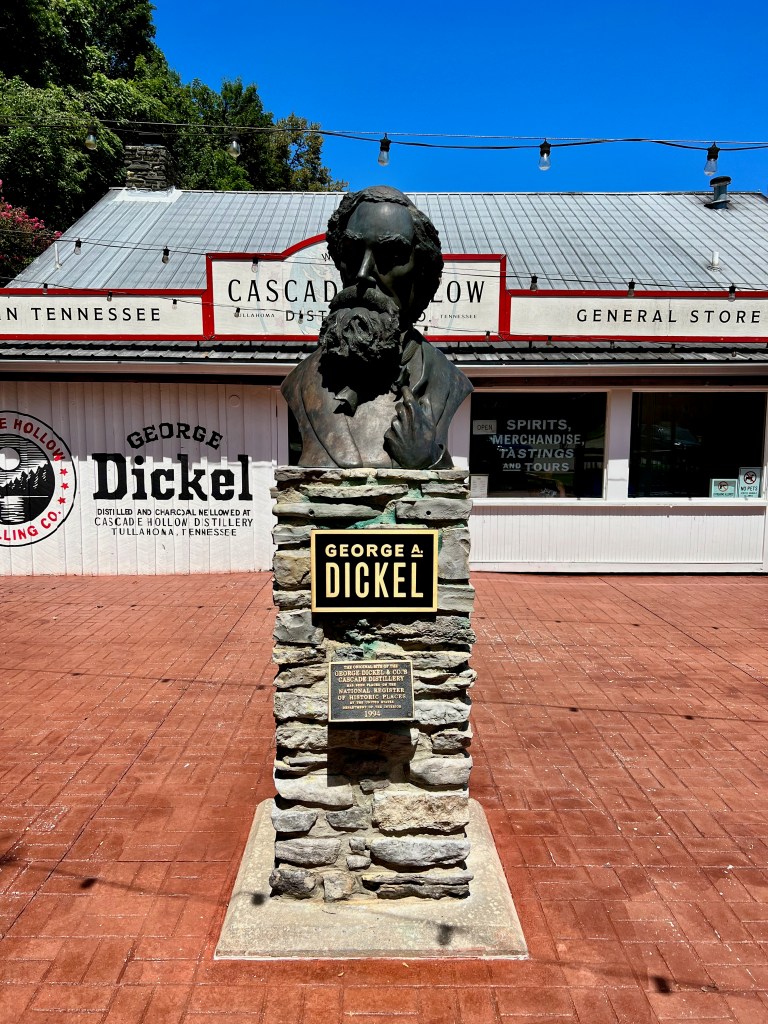


August 19, 2023, Wayne and I were in Tennessee for a family wedding. Of course, we decided that this was a great opportunity to visit a few Tennessee distilleries. This led us to Cascade Hollow Distilling – home of George Dickel Whisky – in Tullahoma, TN.


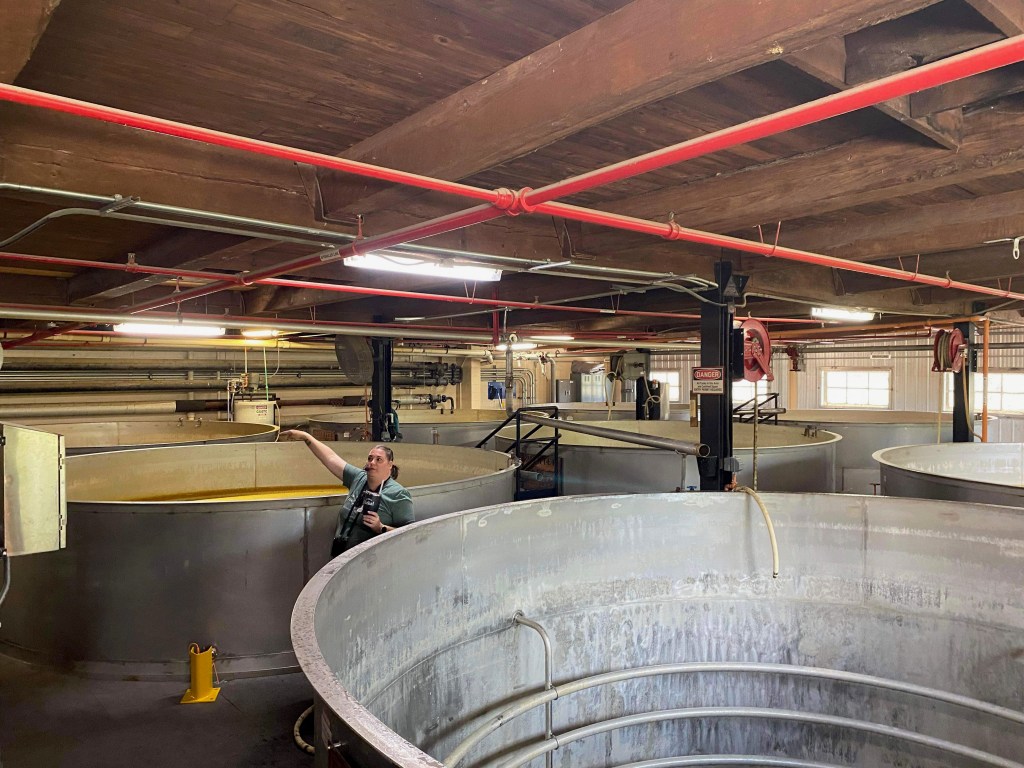
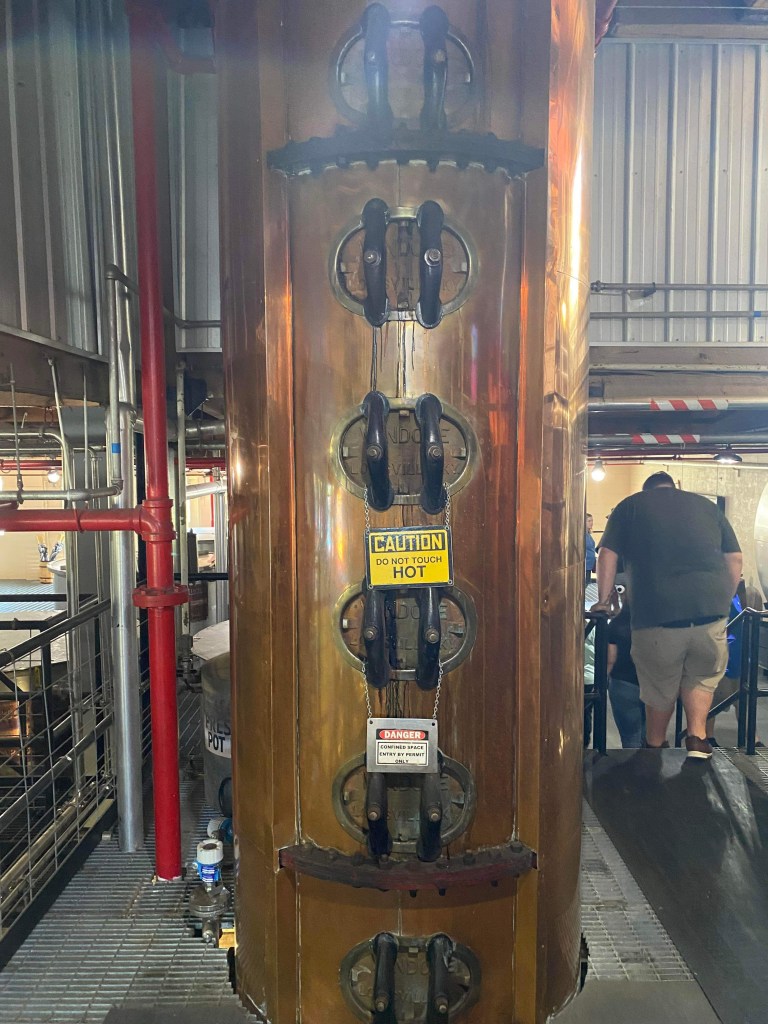
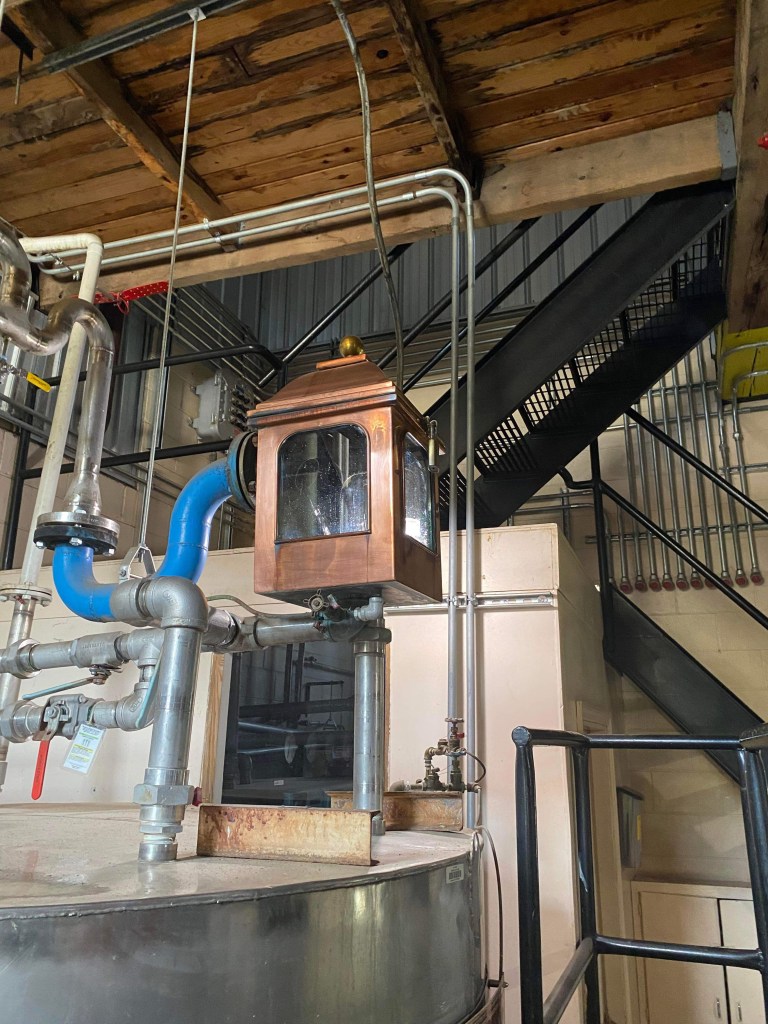
Our guide was very knowledgeable and energetic and that made the tour great. She started out by letting us know that we should keep our eyes open for wildlife, including copperhead snakes and minks. OK!

The tour was woven with stories of the history of George Dickel. It started initially in Nashville, TN but really took off when the Cascade Hollow Distillery opened in 1878 and George purchased a large share.
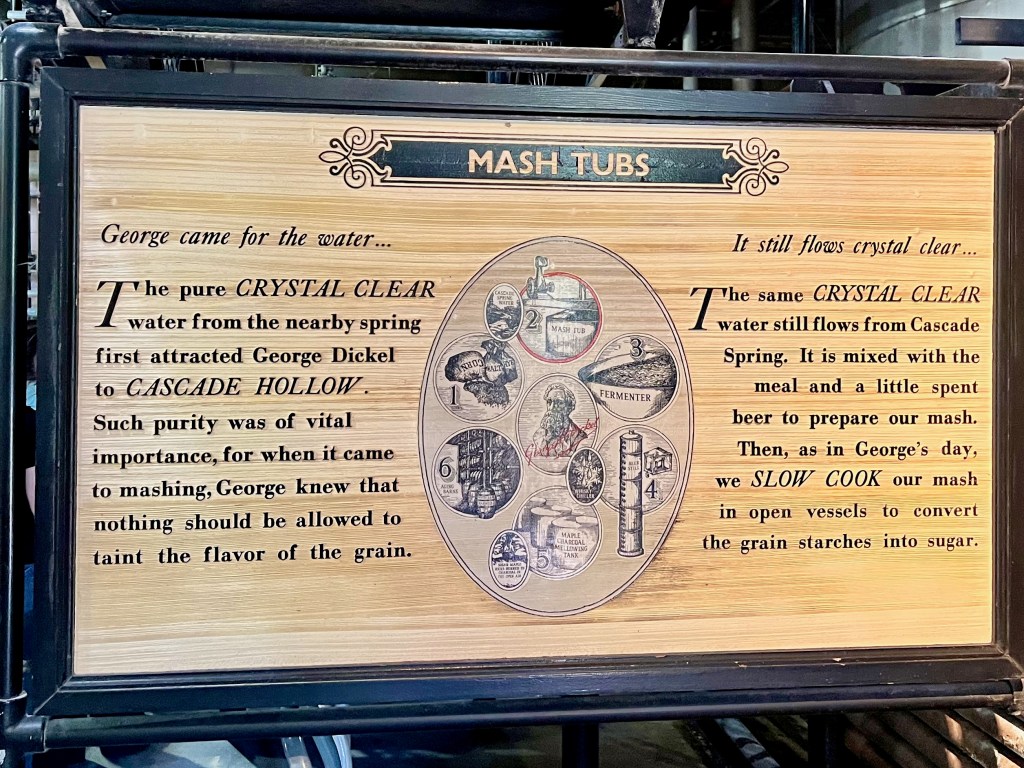
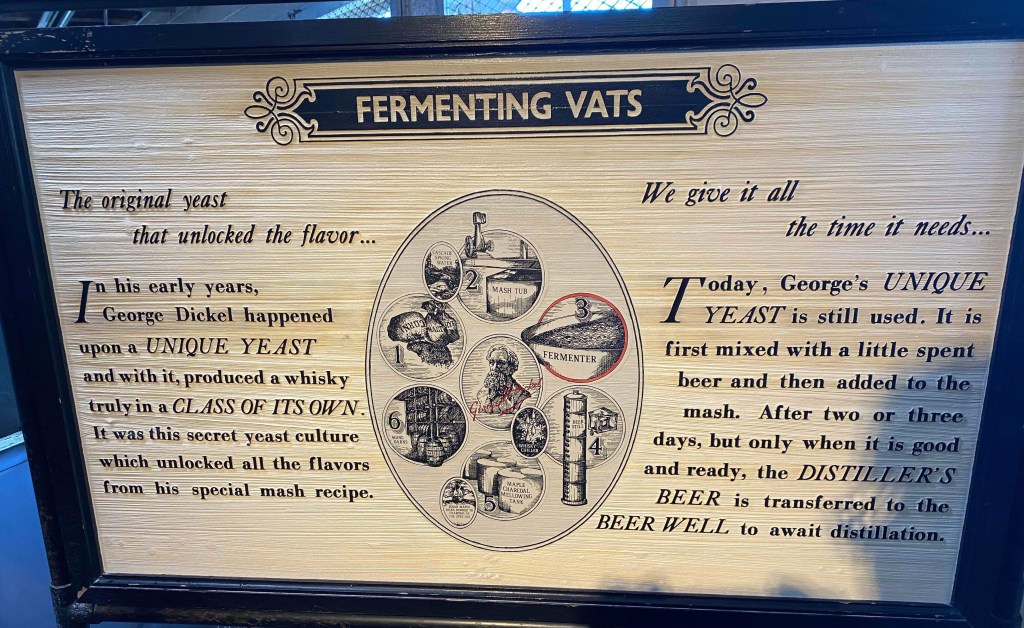
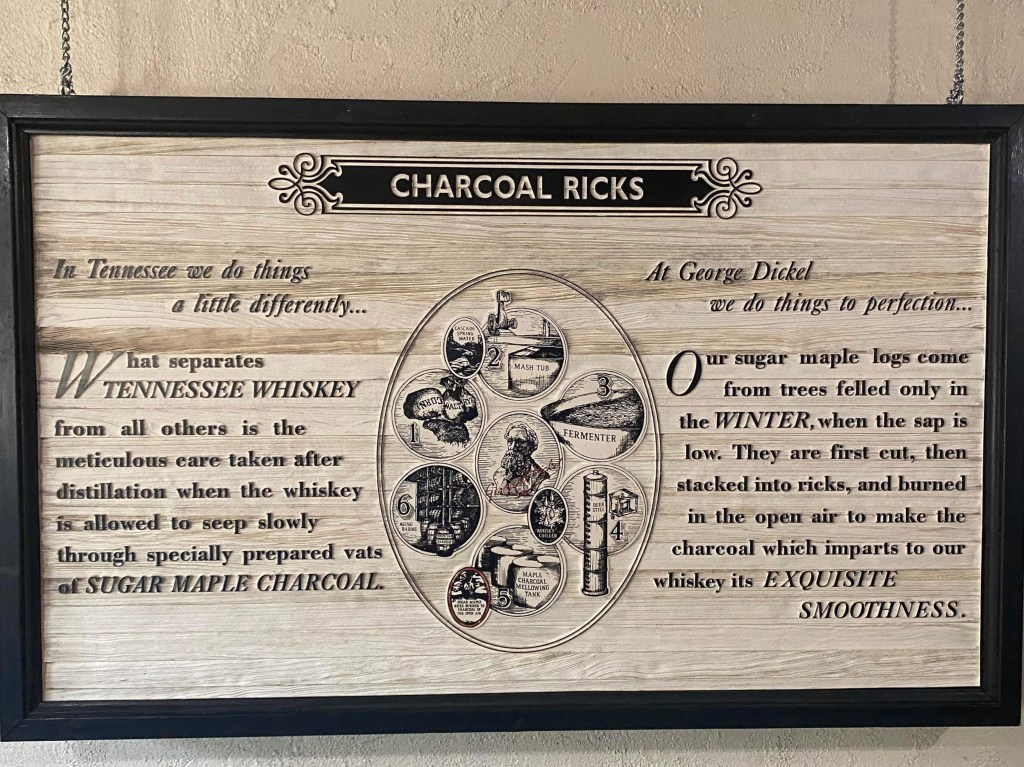
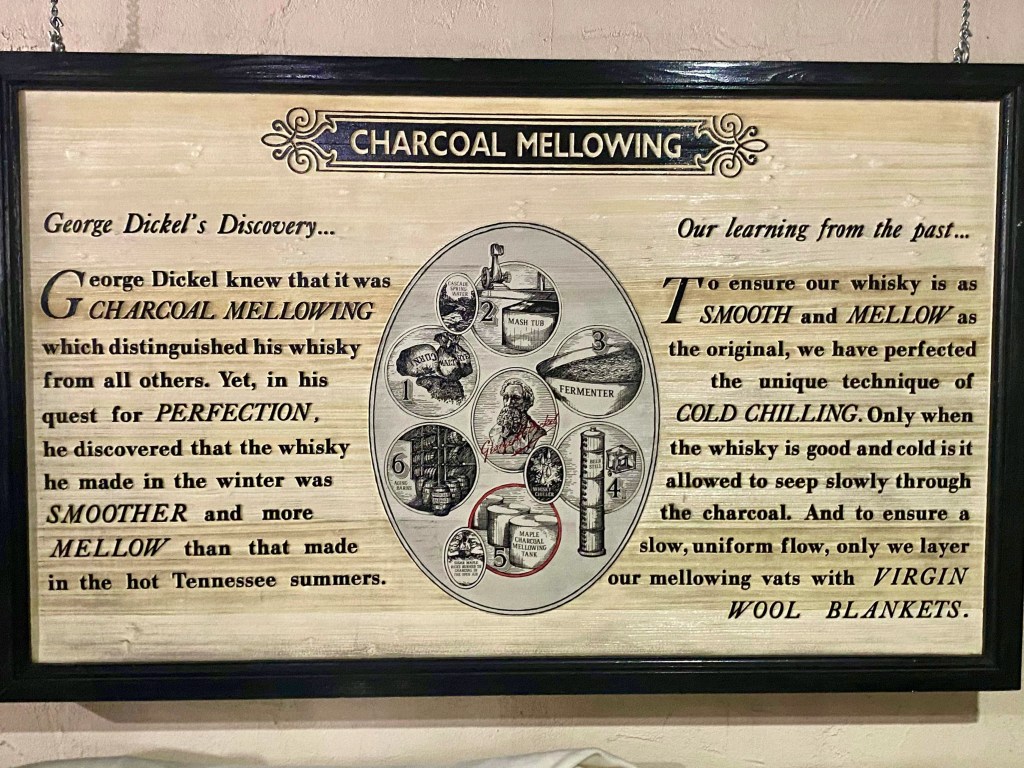
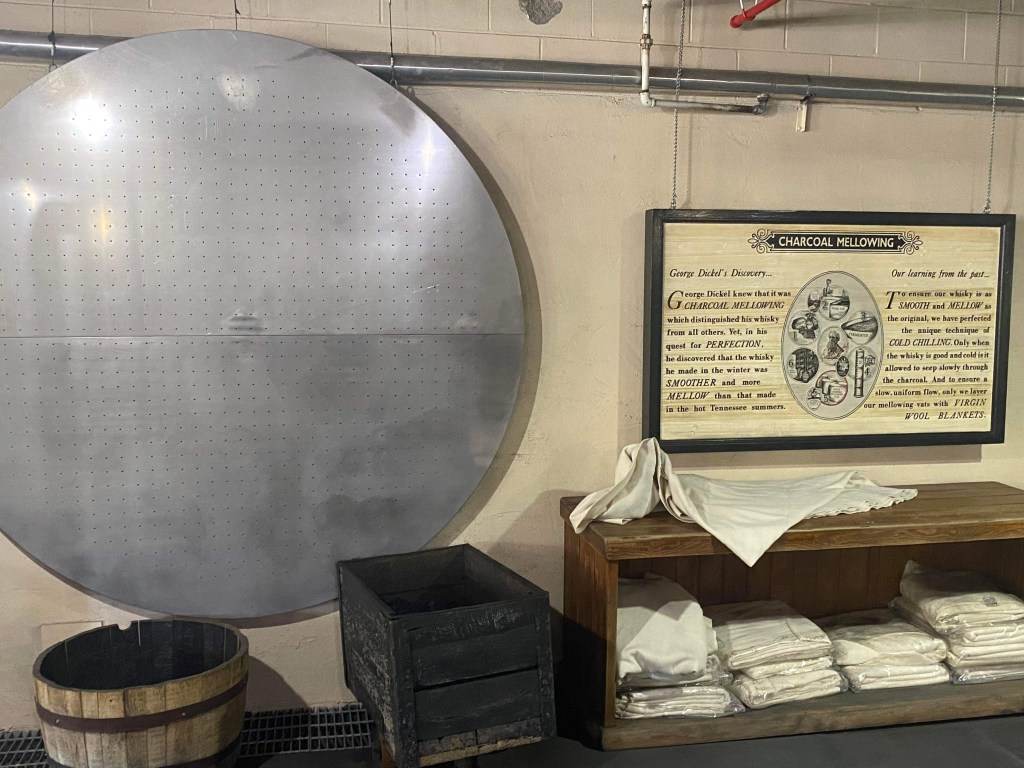
At Cascade Hollow, they have a specialized charcoal mellowing process. They cold chill the distillate to 40 degrees before starting the slow steep through the charcoal. Also interesting, their mellowing vats are layered with virgin wool blankets to achieve a slow, uniform flow. To learn more about the Tennessee Whiskey classification, please review this post.

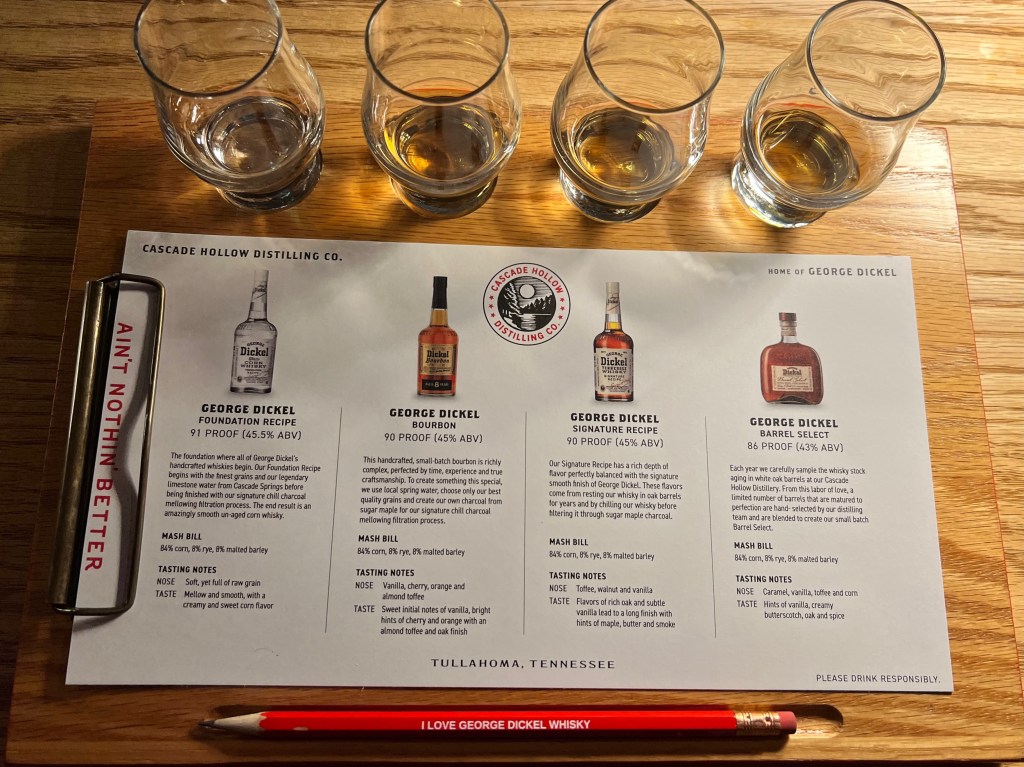
At the conclusion of the distillery tour, we returned to the “Post Office” and entered a somewhat hidden back room for our tasting.
Fun Facts

Dickel is one of the few American Whisky’s that doesn’t use the “e” in whiskey. George Dickel was a big fan of Scotch, and it does not use the “e” so George wanted to emulate that tradition. In addition to using the Lincoln County Method of maple charcoal filtration, Dickel also uses wool blankets as a secondary filtration.

Gift Shop

They have an extensive gift shop and a wonderful area to have a cocktail. However, we were on a tight schedule as we had a wedding later in the evening. So it was a quick shop to gather up our favorites such as pins, ornaments, a glencairn, and of course – some whisky!! Happy to get a couple of bottles that were signed by the Master Distiller, Nicole Austin.

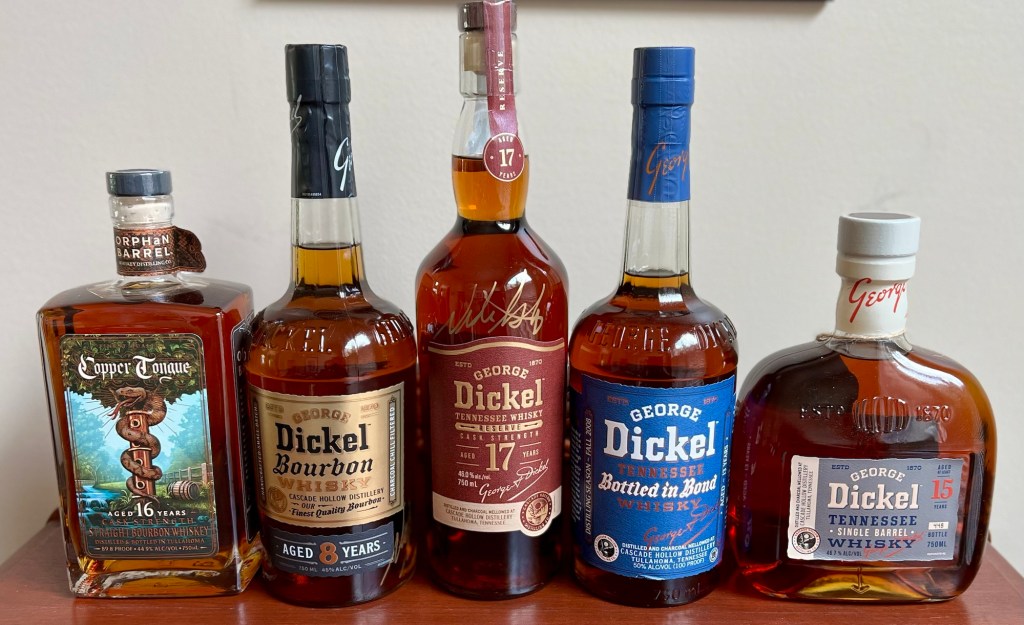
We did a formal tasting of the 15- and 17-year-old whiskys. You can read about that HERE.

Distillery Trail Statistics
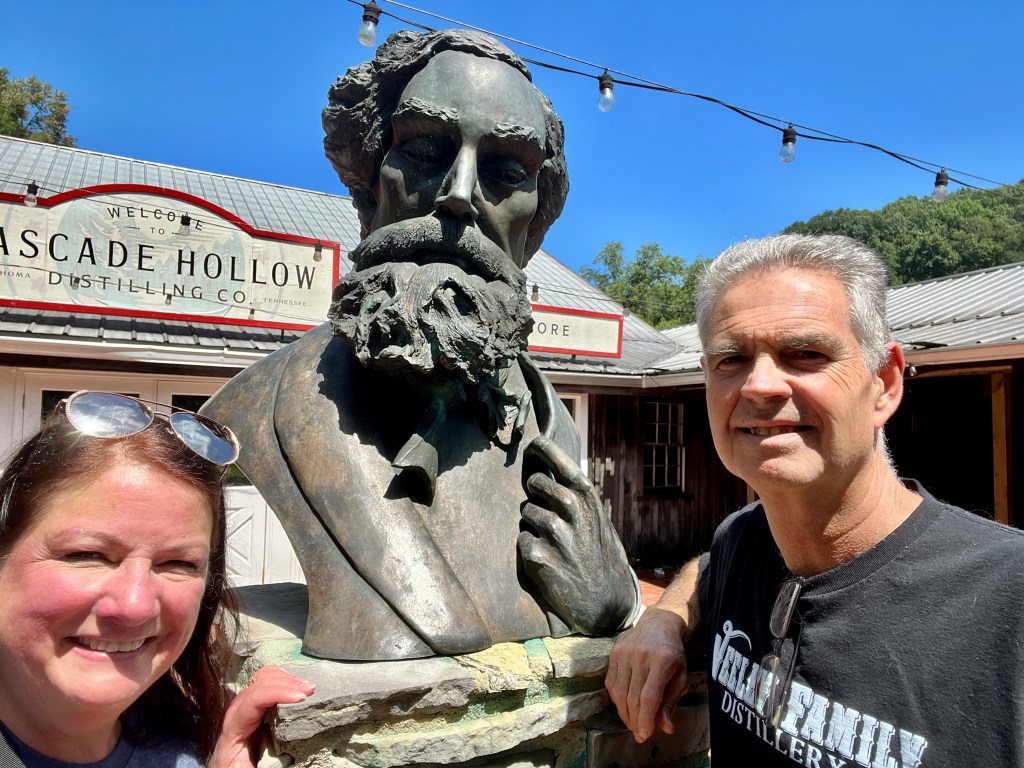
While it is not easy to get to, we recommend it as it is worth the effort to visit.

Cascade Hollow Distilling, in Tullahoma, TN, was our 3rd Tennessee Distillery, 52nd distillery, and 84th distillery visit or event.

In addition to this visit and a family wedding, we visited 2 other distilleries over the weekend – Uncle Nearest and Jack Daniels.
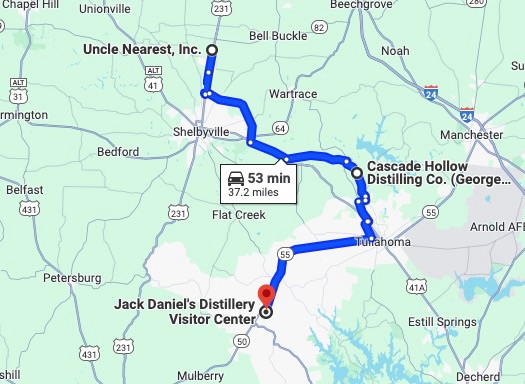
Pro Tip: Plan to visit other nearby distilleries. With advance planning, it is possible to create a terrific weekend trip with multiple distilleries on the Tennessee Whiskey Trail.

Happy Trails!
Rebecca
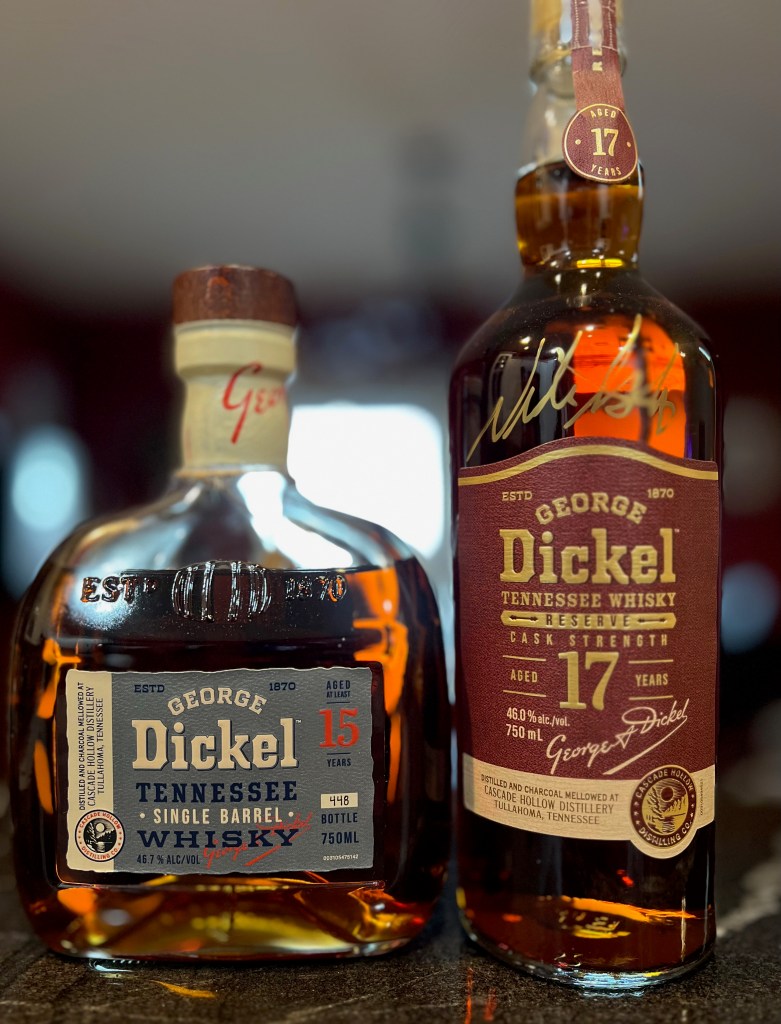
April 2024 George Dickel Tasting

04/02/24
By Rebecca Herman McBrayer 

Wayne and I recently selected two Dickel offerings for a formal tasting. We had the opportunity to visit Cascade Hollow Distilling last August and that is where we acquired these particular bottles. You can read about our visit here.

Selected for this Tasting

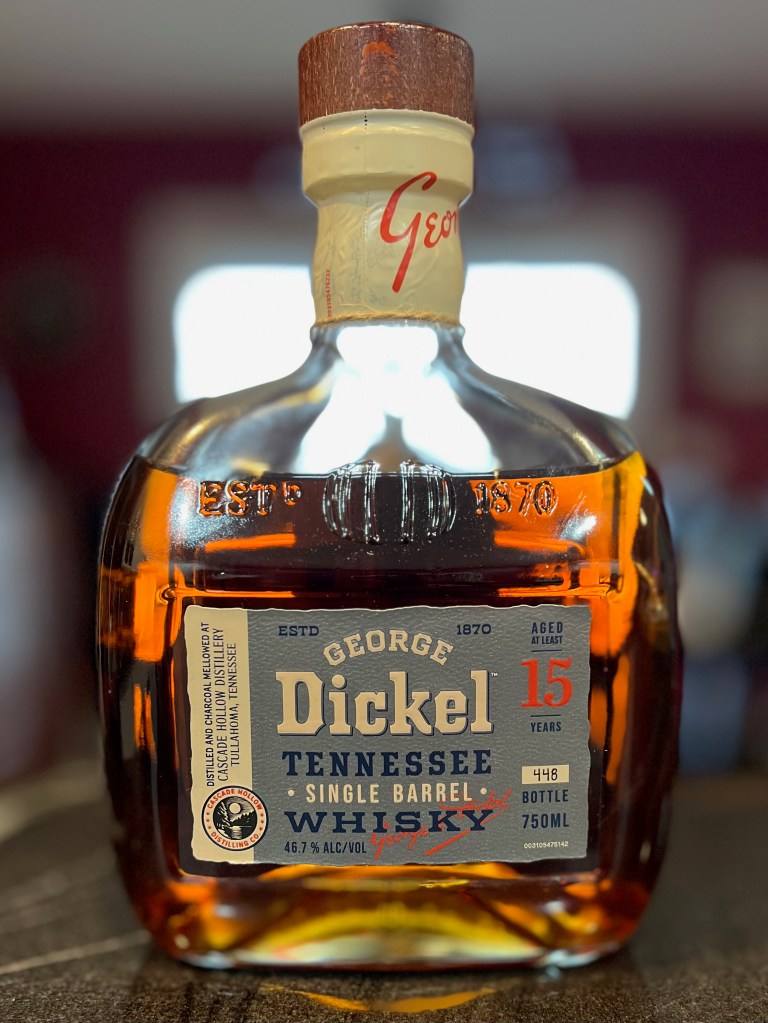
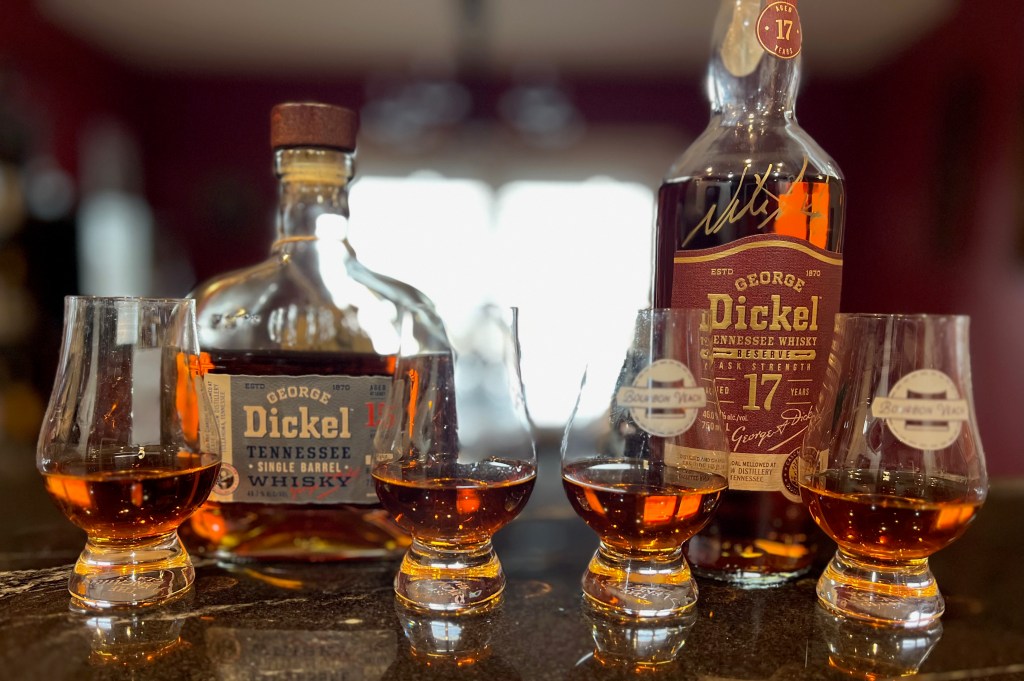
George Dickel 15-Year Single Barrel Tennessee Whisky and George Dickel 17-Year Cask Strength Reserve Tennessee Whisky. Please be sure to read our approach to Tasting Whiskey if you haven’t already.

George Dickel 15-Year Single Barrel Tennessee Whisky

Mashbill – 84% Corn, 8% Rye, 8% Malted Barley
Age – at least 15 years
Proof – 93.4
Other – Single Barrel
Price Paid – $80.00

Color – Dark copper

Aroma – Sweetness of caramel, brown sugar, vanilla, and cherry, with a nice oak, nutmeg, and light smokiness.

Taste –  Very mellow yet a full body. Sweetness of vanilla, toffee, berry, and cocoa. Finishes with nutmeg, a woodiness, a hint of leather, and a light spice.

Tasted with dried cranberry – The cranberry brought forward more smokiness but less sweetness. No real finish.

Tasted with a pecan – The pecan brought the sweetness back and the toffee and chocolate returned while the smokiness is lessened.

Tasted with dark chocolate – Now there are stronger baking spices and a Heath Bar effect with chocolate covered toffee.  

George Dickel 17-Year Cask Strength Reserve Tennessee Whisky

Mashbill – 84% Corn, 8% Rye, 8% Malted Barley
Age – 17 years
Proof – 92
Other – Cask Strength Reserve
Price Paid – $350.00

Color – Medium copper

Aroma – Caramel, vanilla, honey, fruit, leather, light smokiness.

Taste –  Toffee, vanilla, honey, sweet fruits, nutmeg, and dark chocolate, with smokiness and allspice on the finish.

Tasted with dried cranberry – The cranberry took some the sweetness away and muted all the flavors. Now there is basically no finish.

Tasted with a pecan – The pecan made it spicier but the toffee notes returned. A hint of white pepper on the finish.

Tasted with dark chocolate – The chocolate is interesting as it didn’t do much on the taste but the creaminess is very nice.

Discussion and Final Notes

Interestingly, there are many similarities between the two and we enjoyed each of them.
***15-year-old: Loved the sweetness of vanilla, toffee, berry, and cocoa. Finishes with nutmeg, a woodiness, a hint of leather, and a light spice.
***17-year-old: Really enjoyed the toffee, vanilla, honey, sweet fruits, nutmeg, and dark chocolate, with smokiness and allspice on the finish.

About 15 minutes after we concluded our tasting, our empty glasses were still in front of us. As we often like to do, we revisited the aroma of each empty glass.
***15-year-old: The smokiness is more apparent and what you notice first; however, then there is a lovely sweetness that shines through.
***17-year-old: The first note is toffee and chocolate and those aromas are very pronounced. In addition, there is a cherry-toasted-marshmallow aroma that is divine.

Our recommendation: If you have an opportunity to try either of these, please do so. The 15-year-old is easier to find in stores. Considering the tasting experience, availability, AND the price difference ($80 vs $350), we recommend the 15-year-old. It provides an exceptional pour of Tennessee Whiskey at a good value.

Cheers,
Rebecca

Photos by Rebecca Herman McBrayer

Tennessee Whiskey starts with the same requirements as Bourbon.  It must be made with a mashbill that contains at least 51% corn. It must be distilled at a maximum of 160 proof (80% ABV).  It then must be placed into a new, charred oak container at a maximum of 125 proof (62.5% ABV). In addition, it must be free from added substances (except water) and bottled at a minimum of 80 proof (40% ABV).

There are two additional requirements that make it unique. First, it must be made in the state of Tennessee.  Second, it must be filtered through maple charcoal prior to aging. The charcoal filtering is often accomplished using the Lincoln County Process.

For additional information, please read this post – Tennessee Whiskey.

NOTE: The whiskeys in this review were purchased by us. We were not compensated by the spirit producers for this review. This is simply our opinion based on what we tasted on this day. Please drink responsibly.

Tennessee Whiskey

03/31/24
By Rebecca Herman McBrayer

Many patrons walk into a bar and order a whiskey or a bourbon and might not understand the nuances that could make them different or the requirements for specific labeling. Instead, people are often brand loyal, try drinks that are on special, or perhaps order what friends and family members have always had around.

The popular song by Chris Stapleton – “Tennessee Whiskey” can get people singing together and raising a glass or two. How many people that know and love that song understand the requirements for a spirit to be labeled a Tennessee Whiskey? Let’s review the basics and perhaps it could help you win a local trivia contest one night!

Tennessee Whiskey starts with the same requirements as Bourbon.  It must be made with a mashbill that contains at least 51% corn. It must be distilled at a maximum of 160 proof (80% ABV).  It then must be placed into a new, charred oak container at a maximum of 125 proof (62.5% ABV). In addition, it must be free from added substances (except water) and bottled at a minimum of 80 proof (40% ABV).

There are two additional requirements that make it unique. First, it must be made in the state of Tennessee.  Second, it must be filtered through maple charcoal prior to aging. The charcoal filtering is often accomplished using the Lincoln County Process.

The traditional method of producing Tennessee Whiskey involves what is known as the Lincoln County Process or Charcoal Mellowing. The process is named after Lincoln County, Tennessee, where the Jack Daniel’s distillery was located when it was established.

The process involves filtering or steeping the freshly distilled spirit in charcoal chips before aging it in the new charred oak container. The charcoal acts as a natural filter, absorbing certain compounds from the spirit, which modifies the spirit’s character and has a significant influence on the flavor profile of the mature whiskey. The process is required by state law, but there is leeway for customization. 

The process can take 3–5 days, with newly-distilled whiskey trickling drop by drop through ten feet of densely packed sugar maple charcoal. The resulting charcoal is then run through a grinder to reduce it to consistent bean-size pellets, which are then packed into 10-foot vats. 

On the U.S. Federal level, the only recognized legislation regarding the Tennessee label is the North American Free Trade Agreement (NAFTA), which states that Tennessee whiskey is “a straight Bourbon Whiskey authorized to be produced only in the State of Tennessee.” This definition is also recognized in Canadian law, which states that Tennessee whiskey must be “a straight Bourbon Whiskey produced in the State of Tennessee.” None of these regulations requires the use of the Lincoln County filtering process (or any other filtering process).

The origin of the charcoal filtering requirements is directly connected to the state of Tennessee. On May 13, 2013, the Tennessee Governor, Bill Haslam, signed House Bill 1084, requiring maple charcoal filtering to be used for products produced in the state labeling themselves as “Tennessee whiskey” and including the existing requirements for bourbon.  Thus, this Tennessee law effectively gives a firm definition to Tennessee whiskey.

Tennessee whiskey is often described as a lighter version of bourbon. It has notes of toasted oak, caramel, and vanilla, as well as a hint of charcoal or burnt wood. The charcoal-filtering process mellows out the flavor, making it less bold and harsh. Its finish is often limited. The Lincoln County Process gives the whiskey more of a smoky flavor and it has less of a creamy mouthfeel.

While the number of Tennessee Whiskeys is growing, there are some brands that are more well-known and typically readily available.

Jack Daniels is the most popular Tennessee whiskey in the US, and the most recognizable. Ordering a Jack & Coke is something frequently heard in bars. Jack Daniels is owned by Kentucky-based Brown-Forman, who also owns such brands as Old Forester and Woodford Reserve.

George Dickel is also well-known and was established in 1878. Dickel is owned by London-based Diageo, who owns such brands as Bulleit and Crown Royal.

Chattanooga Whiskey has gained popularity and one of the fastest growing Tennessee brands is Uncle Nearest. The current list of distilleries on the Tennessee Whiskey Trail is 26!