American Single Malt Whiskey

May 12, 2024
By Rebecca Herman McBrayer

American single malt whiskey is a fast-growing category in the United States. According to a 2022 Forbes article, more than 100 distilleries were producing over 200 American single malt expressions. The numbers of distilleries in now over 130. This brief note explores some of the requirements for this spirit category.

American Single Malt Whiskey Commission (ASMWC)

The American Single Malt Whiskey Commission (ASMWC) was formed in 2016 to address the growing need for American-based producers to define the category—both domestically and internationally—in order to protect, educate, promote and ultimately grow it. The ASMWC has been instrumental in getting this spirit category an identity as well as proposed standards.

The ASMWC has a terrific Press Page if you have an interest in reading related articles.

American Single Malt Whiskey Requirements

July 29, 2022 – In response to requests and petitions, specifically from the ASMWC, the TTB proposed establishing a specific standard of identity for American single malt whisky. From the Federal Register, there was a notice of proposed rule making and the following summary:

“The Alcohol and Tobacco Tax and Trade Bureau (TTB) proposes to amend the regulations that set forth the standards of identity for distilled spirits to include “American single malt whisky” as a type of whisky that is a distinctive product of the United States.”

Under the proposal, to be labeled American single malt whisky, the product must be:

1) Distilled entirely at one U.S. distillery
2) Must be mashed, distilled, aged in the United States
3) Must be sourced from a fermented mash of 100% malted barley
4) Have a distillation proof of 160° or less
5) Stored in oak barrels not exceeding 700 liters. 

In addition, allowable coloring, flavoring, and blending materials would be permitted.    

I hope that this brief note brought clarification regarding American Single Malt Whiskey.
Rebecca

Canadian Whisky

04/14/24
By Rebecca Herman McBrayer

Canada produces more than 21 million cases of whisky each year. Popular brands in the US include Crown Royal, Black Velvet, and Canadian Club. This brief Spirit Note discusses Canadian Whisky requirements, mash bill, and production approaches. The taste profile and Canadian Whisky availability in the US is also reviewed.

Canadian Whisky Requirements

Production: It must be mashed, distilled, and aged entirely in Canada.

Grain: Despite its historical association with rye, Canadian whisky can be made from various cereal grains.

Aging: Whiskies must spend a minimum of three years in wooden barrels of 700 liters or less.

Alcohol content: They must contain at least 40% ABV.

Flavoring: Can contain caramel coloring or flavoring.

9.09% Rule: The 9.09% rule allows Canadian whisky producers to enhance their blends with up to 9.09% of non-whisky ingredients, provided they have been aged for two years in wood. This rule, stemming from a US tax incentive, has rarely been utilized. Despite criticism from competitors, most Canadian whisky remains pure, with the occasional addition of sherry instead of American spirits.

Unlike American bourbons, Canadian whiskies do not typically use a mash bill containing multiple grains, but they are often a blend of lighter triple-distilled grain spirits and a smaller proportion of richer “flavoring” spirits. The amount of rye used in the blend influences the spiciness of the whisky, with more rye resulting in more pronounced spice notes.

Canadian whiskies are usually made by blending aged whiskies that are produced from individually fermented and distilled grains. These various grains, such as corn, rye, and barley, impart unique flavors and characteristics to the final blend.

Two Common Production Streams

Canadian whisky production utilizes two distinct streams: base whiskey, distilled to high alcohol and matured in used barrels to highlight wood-derived flavors, and flavoring whiskey, distilled to low alcohol and matured in new or new and used barrels to emphasize grain-derived congeners. While some distilleries produce only one base whiskey, others create multiple variations. The combination of these streams creates the characteristic elegance of Canadian whisky.

Canadian whisky is characterized by its distinct flavors. It is typically lighter and sweeter than other whiskies, with notes of vanilla, cinnamon, nut, and fruit. These flavors are often complemented by hints of caramel or butterscotch, as well as spices. The higher distillation proofs and aging in used oak barrels contribute to its unique taste profile.

The top eight Canadian whisky producers (and their parent companies), which account for over 95% of production, are:

– Alberta Distillers/Beam Suntory
– Black Velvet/Heaven Hill
– Gimli & Valleyfield/Diageo
– Hiram Walker/Pernod Ricard
– Kittling Ridge/Campari Group
– Canadian Mist/Sazerac
– Highwood
– Valleyfield

Canada has experienced a surge in craft whisky production over the last decade, with the number of distilleries reaching nearly 300. These distilleries are experimenting with innovative styles that demonstrate the versatility and potential of Canadian whisky, offering a wider range of flavors and experiences for enthusiasts.

Canadian whisky, particularly Crown Royal, enjoys significant popularity in the US, with other brands such as Black Velvet, and Canadian Club.

Additional Canadian offerings include Confederation Oak Reserve, Pendleton, Caribou Crossing, Rare Perfection, and Alberta.

Crown Royal flavored profiles, such as apple, vanilla, and peach as well as limited edition salted caramel and blackberry are also very popular.

Many people might not realize that Fireball Cinnamon Whisky, owned by the Sazerac Company, is made with Canadian whisky.

I hope that this brief note brought clarification regarding Canadian Whisky.
Rebecca


Bourbon Grain Flavors

04/07/24
By Rebecca Herman McBrayer

As discussed in Bourbon Whiskey, there are some common tastes that are noted when tasting bourbon. For this Sunday Spirit Note, the focus is on contribution of the grains, the foundation of the spirit, to the taste of bourbon.

Corn

As part of the requirements, bourbon must be made from at least 51% corn. Corn imparts a sweet flavor profile to bourbon and contributes to bourbon’s rich body and creamy texture. Some of the tasting notes derived from corn could include:

– Vanilla
– Caramel
– Butterscotch
– Honey
– Brown butter
– Toffee
– Toasted marshmallows

Rye

Rye is a common grain used by many distillers. In general, it assists in adding a spicy flavor profile to the spirit. The percentage of rye used in the mash will influence the flavor produced. Rye bourbons are also described as aggressive and have a savory balance to the typically sweeter, corn-based elements of the bourbon. Some of the tasting notes derived from rye might include:

– Black pepper
– White pepper
– Rye bread
– Mint
– Herbal
– Anise

Wheat

In general, using wheat in the primary mashbill is not common. Some distillers create a wheated bourbon and omit the use of rye.  Others include wheat and rye to make a four-grain bourbon. The combinations are endless. In general, wheat doesn’t have a lot of flavors but can mellow the spirit and add a bread-like taste to it. Some of the tasting notes influenced from wheat use might include:

– Vanilla
– Honey
– Caramel
– Toasted oak
– Toffee
– Fruity
– Vanilla ice cream
– Bananas foster

Malted Barley

Nearly all bourbon has some percentage of malted barley because it assists with the fermentation process. Malting is a drying process that causes barley to produce enzymes that convert long-chain carbohydrates into simpler sugars that can be fermented by yeast into alcohol. In addition to that critical contribution, malted barley can give bourbon a warm, nutty, and smoky profile with hints of:

– Toast
– Toffee
– Cereal
– Cocoa

When you next taste bourbon and pick up various flavors, connect to its source and consider the contributions made by the various grains used in the mashbill.

There are many more sources of bourbon flavors. Most often, this includes, yeast selection, fermentation process, barrel selection and preparation (level of toast and char), entry proof into the barrel, the storage environment, and even decisions made for bottling. With so many variables, it is no wonder that there is such a wide range of bourbon flavors and why five people tasting from the same bottle may pick up different notes.

Happy Tasting!
Rebecca


Four Stages of Making Spirits

03/03/24
By Rebecca Herman McBrayer

Full disclosure – I am not even close to being an expert on making spirits. My minimal knowledge base has been gained through many distillery tours, watching videos, and reading books on the this topic. If you desire to make spirits, you will need a lot more information than provided in this basic overview.

While the process for making a spirit can be complex and varied, at its core, there are four basic stages: Mashing, Fermentation, Distillation, and Aging.

MASHING GRAINS

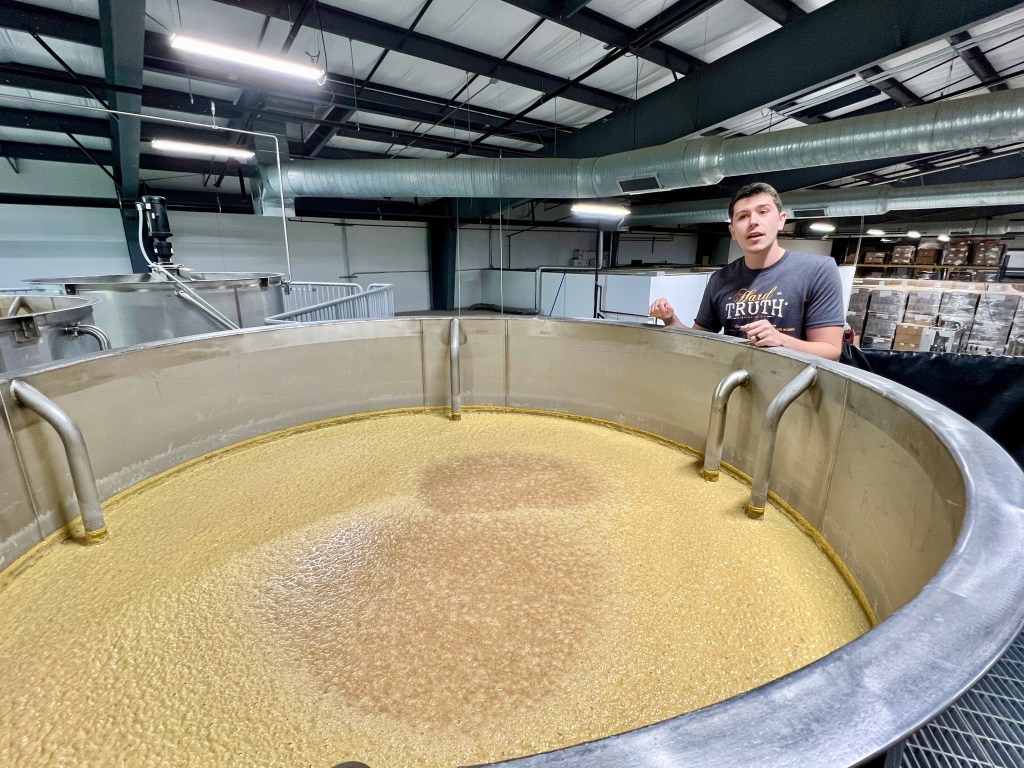
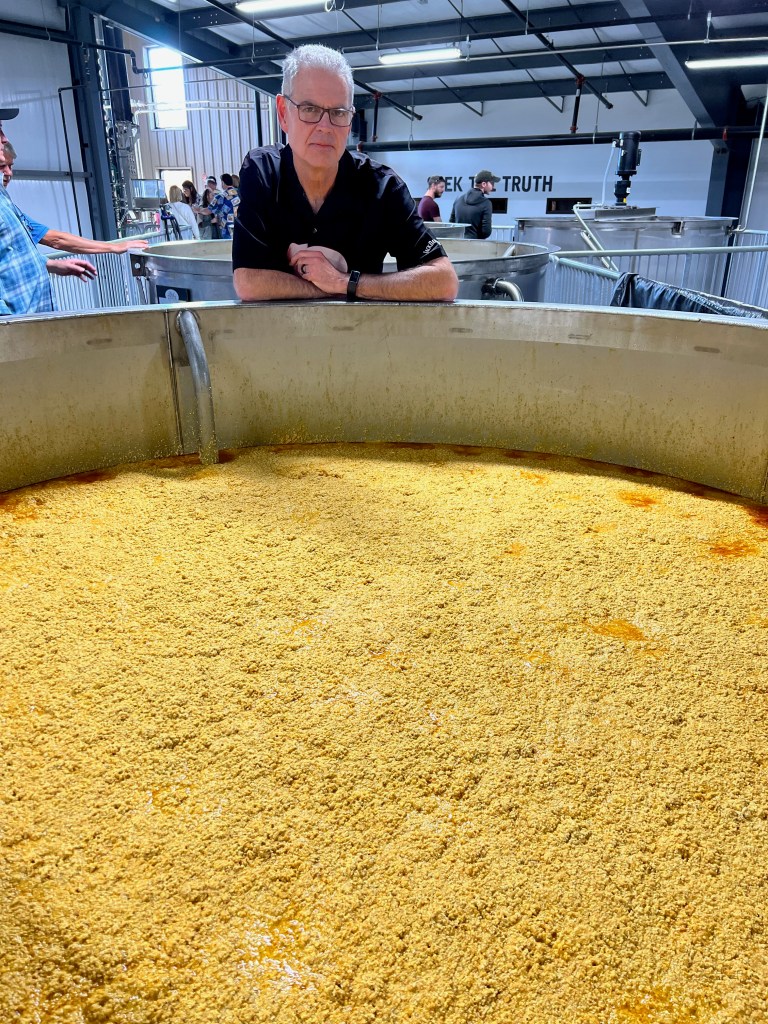
Mashing is the process of adding water to milled and/or malted grain, heating it, and activating enzymes in the grain to convert starches into fermentable sugars. All parts of this equation are important. You need a good water and that is typically considered water that is calcium-rich and iron-free. The temperature of the cooking process is critical because if too low or too high, the activation of the enzymes does not happen. When “just right” the mash becomes starchy and thick and looks a lot like oatmeal. Once cooled, it can be transferred to the fermentation stage.

Sour Mash versus Sweet Mash

Sour mash is a process in distillation that involves using material from an older batch to start fermenting a new batch of mash. It is very similar to the process of making sourdough bread with a starter. Using sour mash has the benefit of consistency between batches. It also reduces the possibility of unwanted bacterial growth.

Sweet mash is a process in distillation that does not use the sour mash as a starter for fermentation. Instead, only fresh yeast is used. Using sweet mash has the benefit of more control over specific ingredients and the ability to use lower temperatures for fermentation. However, it does require more maintenance and extreme cleanliness to avoid contamination.

FERMENTATION

The goal of fermentation is the creation of alcohol. The basic formula is:
Yeast + Sugar = Alcohol + Carbon Dioxide.

During the fermentation stage, yeast is added to the mash and it begins converting the sugars in the mash to alcohol and carbon dioxide. The fermentation stage typically requires three to five days but it could be longer as well. Ultimately, the product of fermentation is 8-18 percent alcohol by volume (ABV). The fermented mash is then ready for distillation.

SPIRIT DISTILLATION

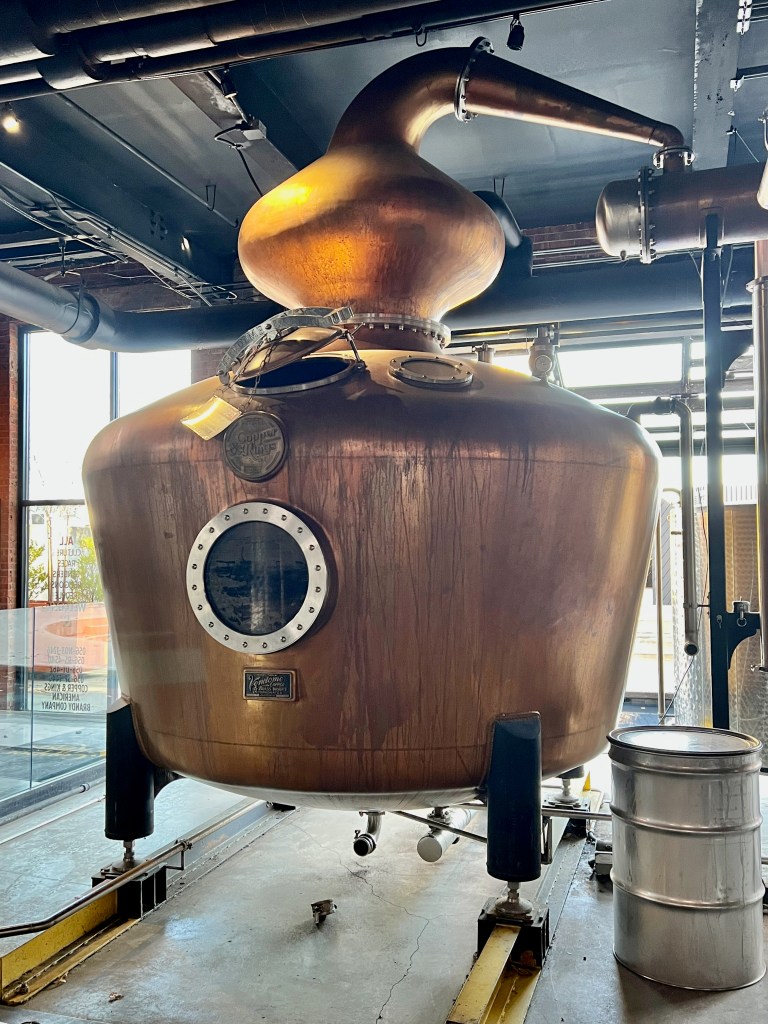
This is a Pot Still at Copper & Kings

In general, the purpose of distillation is to separate alcohol from water through evaporation and condensation. The fermented liquid is heated until the alcohol evaporates. The vapor is then cooled and condensed back into a liquid.  This process purifies and concentrates the alcohol.

In the spirits world, there are three primary classifications of stills in production:
1. Column stills provide a continuous process and are very efficient. This type of still is currently very common in the bourbon industry.
2. Pot stills are considered more traditional and are often used for smaller batches.  Some Distillers in the bourbon industry prefer a pot still because they appreciate the flexibility and control and believe they produce more flavorful spirits.
3. Hybrid stills, as the name implies, combine features of pot and column stills.

BARREL AGING

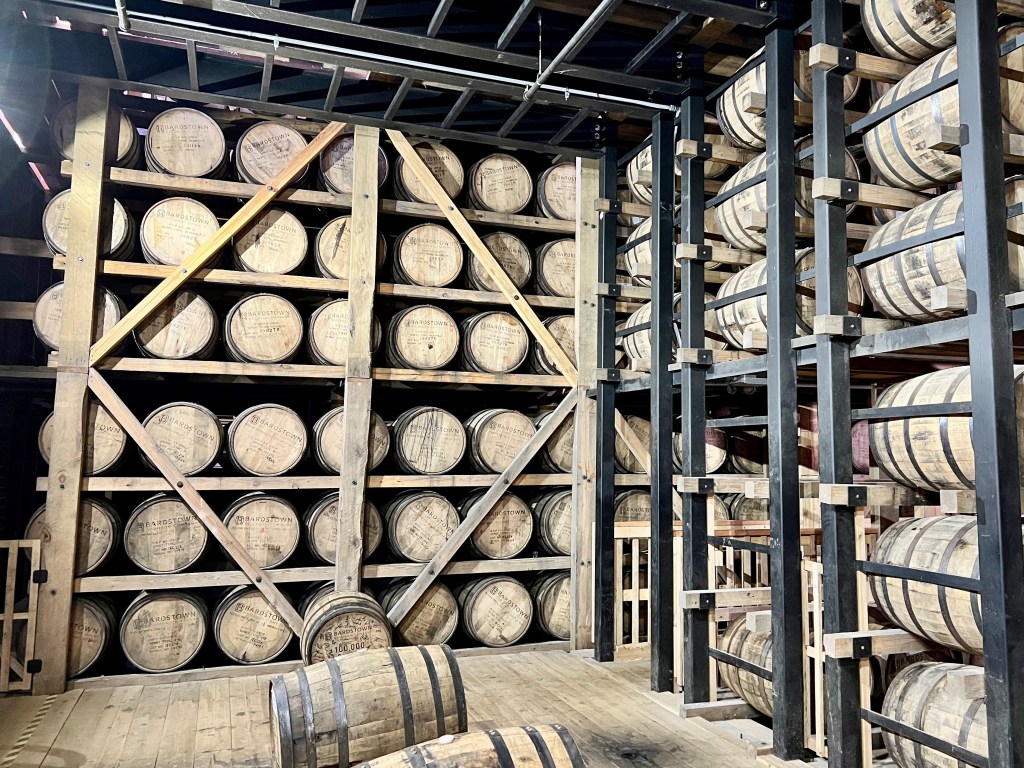
Barrel storage at Bardstown Bourbon Company

Barrel aging is an important step in the whiskey-making process. A transformation occurs when a clear spirit is placed into a barrel and interacts with the wood. As it evolves, the spirit gains color, aroma, flavor, and complexity. Whiskey could age in a barrel from two to twenty-five years.

For bourbon, a requirement is that it is stored in a new, charred oak barrel. The charring process opens the wood and prepares it to receive the spirit. Without being overly scientific, during a warm season, the liquid expands and is absorbed into the barrel. In a colder season, the liquid contracts and exits the wood while bringing the colors and flavors with it.

This relationship with the barrel creates the color we expect from bourbon.  Even more importantly, it brings forward flavors from the wood that interact with the flavor profile of the spirit. An amazing synergy occurs, and this is where the flavors of caramel, vanilla, toffee, butterscotch are derived. In addition, the char level of the barrel can contribute spice and smoke flavors.

Understanding when the spirit is “ready” or at its peak is an experience art form. Sometimes it is the Master Distiller that makes the determination. Some distilleries have specific roles such as Head of Maturation or Lead Taster. Other times there are routine samples drawn and explored by teams of people to narrow it down. It also depends on the specific requirements for labeling – does it need to be at least two years old, does it require at least four years, etc. A particular brand might have a very specific flavor profile that is being sought and it won’t be bottled until that is achieved.

I hope this very high-level overview of the process will bring you a greater appreciation of what is in that bottle that you enjoy so much and why there are so many nuances from brand to brand.

Cheers!