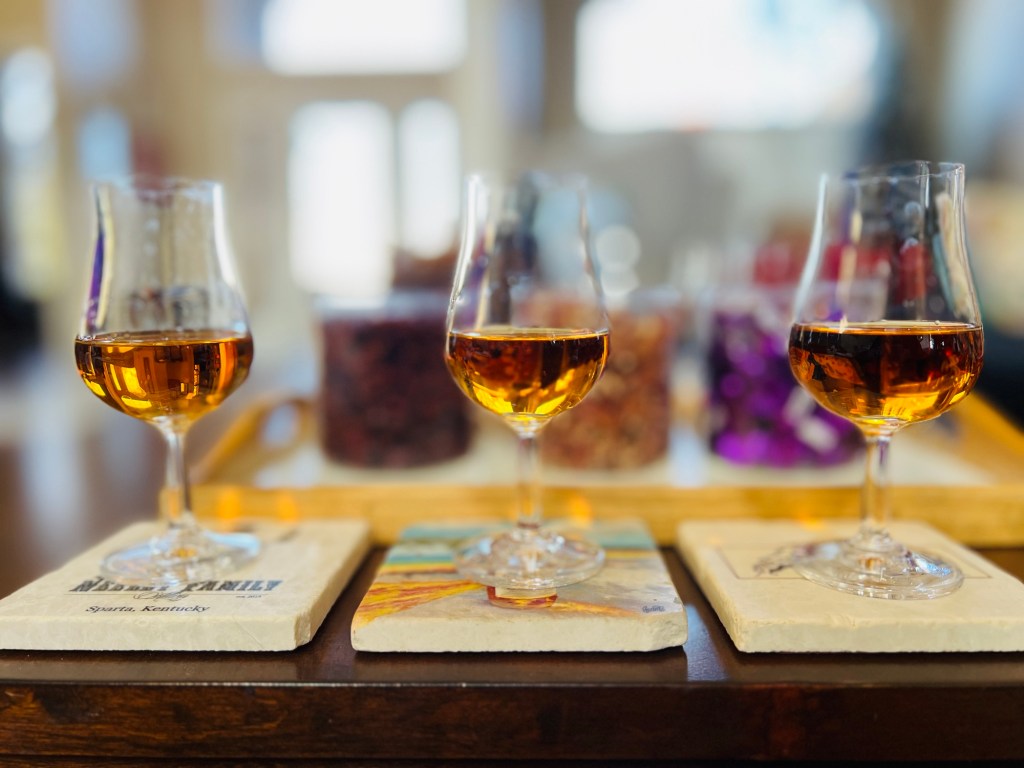
Tennessee Whiskey

03/31/24
By Rebecca Herman McBrayer

Many patrons walk into a bar and order a whiskey or a bourbon and might not understand the nuances that could make them different or the requirements for specific labeling. Instead, people are often brand loyal, try drinks that are on special, or perhaps order what friends and family members have always had around.

The popular song by Chris Stapleton – “Tennessee Whiskey” can get people singing together and raising a glass or two. How many people that know and love that song understand the requirements for a spirit to be labeled a Tennessee Whiskey? Let’s review the basics and perhaps it could help you win a local trivia contest one night!

Tennessee Whiskey starts with the same requirements as Bourbon.  It must be made with a mashbill that contains at least 51% corn. It must be distilled at a maximum of 160 proof (80% ABV).  It then must be placed into a new, charred oak container at a maximum of 125 proof (62.5% ABV). In addition, it must be free from added substances (except water) and bottled at a minimum of 80 proof (40% ABV).

There are two additional requirements that make it unique. First, it must be made in the state of Tennessee.  Second, it must be filtered through maple charcoal prior to aging. The charcoal filtering is often accomplished using the Lincoln County Process.

The traditional method of producing Tennessee Whiskey involves what is known as the Lincoln County Process or Charcoal Mellowing. The process is named after Lincoln County, Tennessee, where the Jack Daniel’s distillery was located when it was established.

The process involves filtering or steeping the freshly distilled spirit in charcoal chips before aging it in the new charred oak container. The charcoal acts as a natural filter, absorbing certain compounds from the spirit, which modifies the spirit’s character and has a significant influence on the flavor profile of the mature whiskey. The process is required by state law, but there is leeway for customization. 

The process can take 3–5 days, with newly-distilled whiskey trickling drop by drop through ten feet of densely packed sugar maple charcoal. The resulting charcoal is then run through a grinder to reduce it to consistent bean-size pellets, which are then packed into 10-foot vats. 

On the U.S. Federal level, the only recognized legislation regarding the Tennessee label is the North American Free Trade Agreement (NAFTA), which states that Tennessee whiskey is “a straight Bourbon Whiskey authorized to be produced only in the State of Tennessee.” This definition is also recognized in Canadian law, which states that Tennessee whiskey must be “a straight Bourbon Whiskey produced in the State of Tennessee.” None of these regulations requires the use of the Lincoln County filtering process (or any other filtering process).

The origin of the charcoal filtering requirements is directly connected to the state of Tennessee. On May 13, 2013, the Tennessee Governor, Bill Haslam, signed House Bill 1084, requiring maple charcoal filtering to be used for products produced in the state labeling themselves as “Tennessee whiskey” and including the existing requirements for bourbon.  Thus, this Tennessee law effectively gives a firm definition to Tennessee whiskey.

Tennessee whiskey is often described as a lighter version of bourbon. It has notes of toasted oak, caramel, and vanilla, as well as a hint of charcoal or burnt wood. The charcoal-filtering process mellows out the flavor, making it less bold and harsh. Its finish is often limited. The Lincoln County Process gives the whiskey more of a smoky flavor and it has less of a creamy mouthfeel.

While the number of Tennessee Whiskeys is growing, there are some brands that are more well-known and typically readily available.

Jack Daniels is the most popular Tennessee whiskey in the US, and the most recognizable. Ordering a Jack & Coke is something frequently heard in bars. Jack Daniels is owned by Kentucky-based Brown-Forman, who also owns such brands as Old Forester and Woodford Reserve.

George Dickel is also well-known and was established in 1878. Dickel is owned by London-based Diageo, who owns such brands as Bulleit and Crown Royal.

Chattanooga Whiskey has gained popularity and one of the fastest growing Tennessee brands is Uncle Nearest. The current list of distilleries on the Tennessee Whiskey Trail is 26!
March 2024 Holladay Distillery Tasting

03/26/24
By Rebecca Herman McBrayer 

Wayne and I became familiar with the Holladay Distillery and their bourbons while watching Mike Veach & Matt Kohorst tastings on the BourbonVeach YouTube channel. We first watched their tasting of the Soft Red Wheat and later the Rickhouse Proof. They each sounded amazing! We kept an eye out at our local liquor stores and have acquired three bottles over the last few months. We have also reviewed the Holladay Distillery website and now want to make time to visit there this summer! We hope you enjoy our tasting notes and want to give them a try as well.

Selected for this Tasting

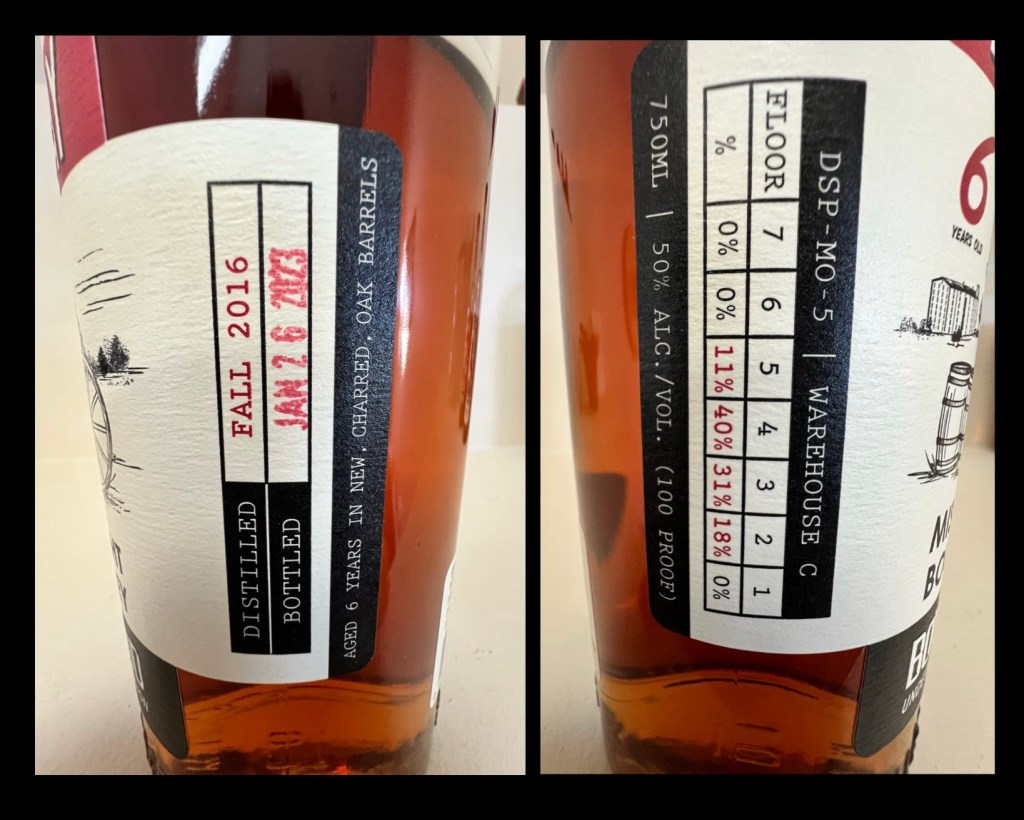
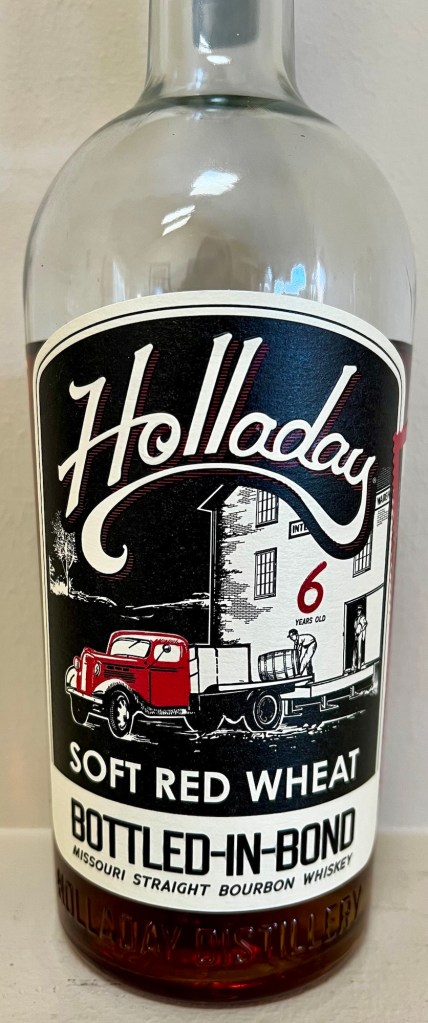
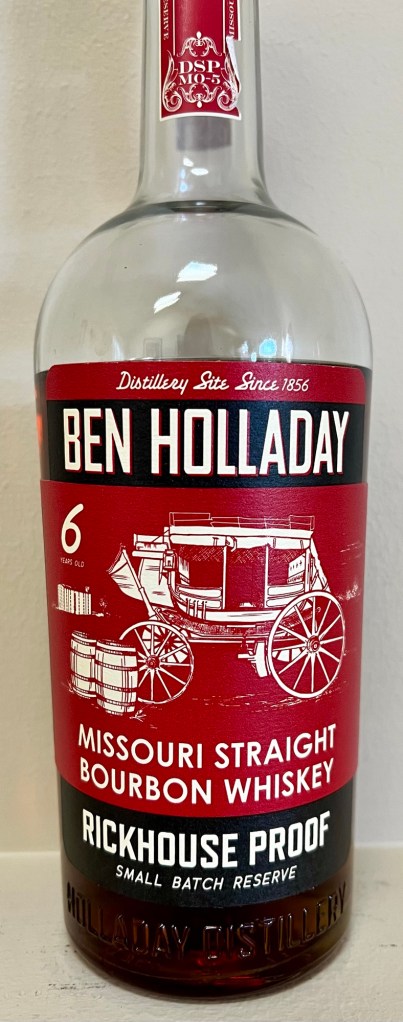
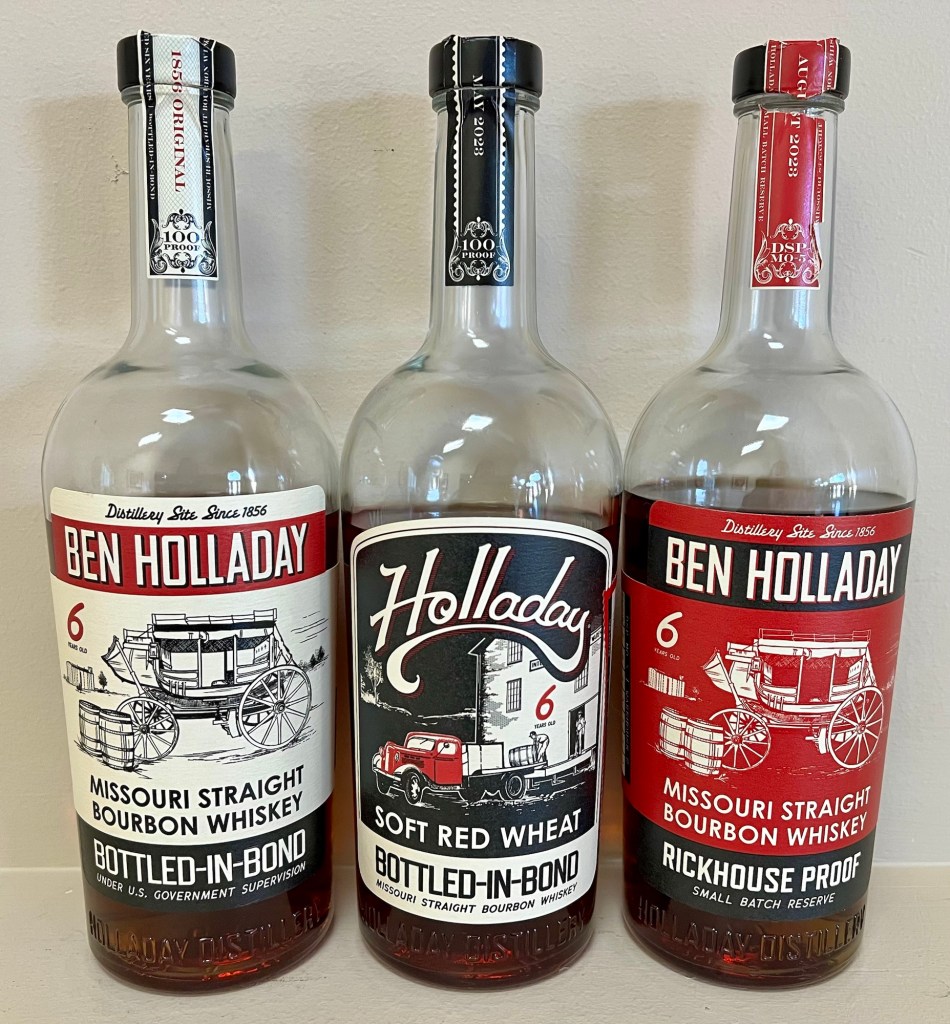
Ben Holladay Missouri Straight Bourbon Whiskey Bottled-in-Bond, Holladay Soft Red Wheat Bottled-in-Bond Missouri Straight Bourbon Whiskey, Ben Holladay Missouri Straight Bourbon Whiskey Rickhouse Proof Small Batch Reserve. Please be sure to read our approach to Tasting Whiskey if you haven’t already.

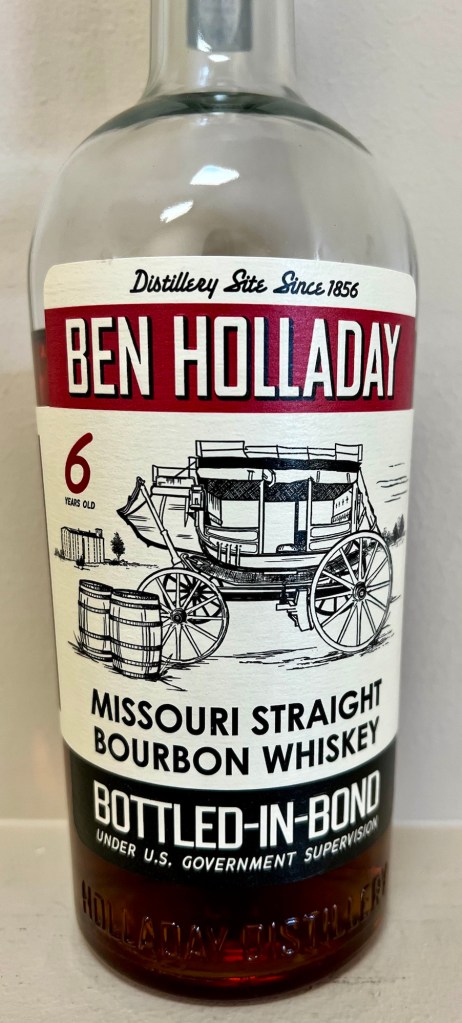
Ben Holladay Missouri Straight Bourbon Whiskey Bottled-in-Bond

Mashbill – 73% Corn, 15% Rye, 12% Malted Barley
Age – 6 years
Proof – 100
Other – Bottled in Bond
Price Paid – $69.99

Color – Medium amber

Aroma – Sweetness is the first thought, caramel, vanilla, fruity – perhaps a nice crisp apple.

Taste –  Very similar to the nose with one exception, it’s got baking spices on the finish. Sweet caramel, vanilla, and apple. Light cinnamon and a pleasant oak on the finish.

Tasted with dried cranberry – The baking spices became pronounced on the front and the oak is gone. Still very pleasant. It’s almost like being at Cracker Barrel when you order that little bowl of baked cinnamon apples as a side dish.

Tasted with a pecan – The oak is more pronounced and there is still a lite cinnamon on the back.

Tasted with dark chocolate – Beside the mouth feel being great, most of the sweet notes are gone and a strong hit of cinnamon.

Holladay Soft Red Wheat Bottled-in-Bond Missouri Straight Bourbon Whiskey


Mashbill – 73% Corn, 15% Wheat, 12% Malted Barley
Age – 6
Proof – 100
Other – Bottled in Bond
Price Paid – $64.99

Color – Medium amber. 

Aroma – The sweetness of that soft red wheat is coming through as well as red fruits, vanilla, and a pleasant woodiness.

Taste – Great mouth feel to match the viscosity/legs as demonstrated on the glass. Much like the nose, the soft red wheat is present with sweet caramel and creamy vanilla, a juicy red apple, a hint of cinnamon with a light yet long finish.

Tasted with dried cranberry – Less sweet, the cinnamon is hitting the mid-palate while the apple seems to be the finish. Not bad – but interesting.

Tasted with a pecan – The caramel and vanilla have returned but the fruit is muted and the baking spices are stronger.

Tasted with dark chocolate – There’s no sweetness or fruit and limited woodiness, but baking spices on the finish. Different yet still pleasant.

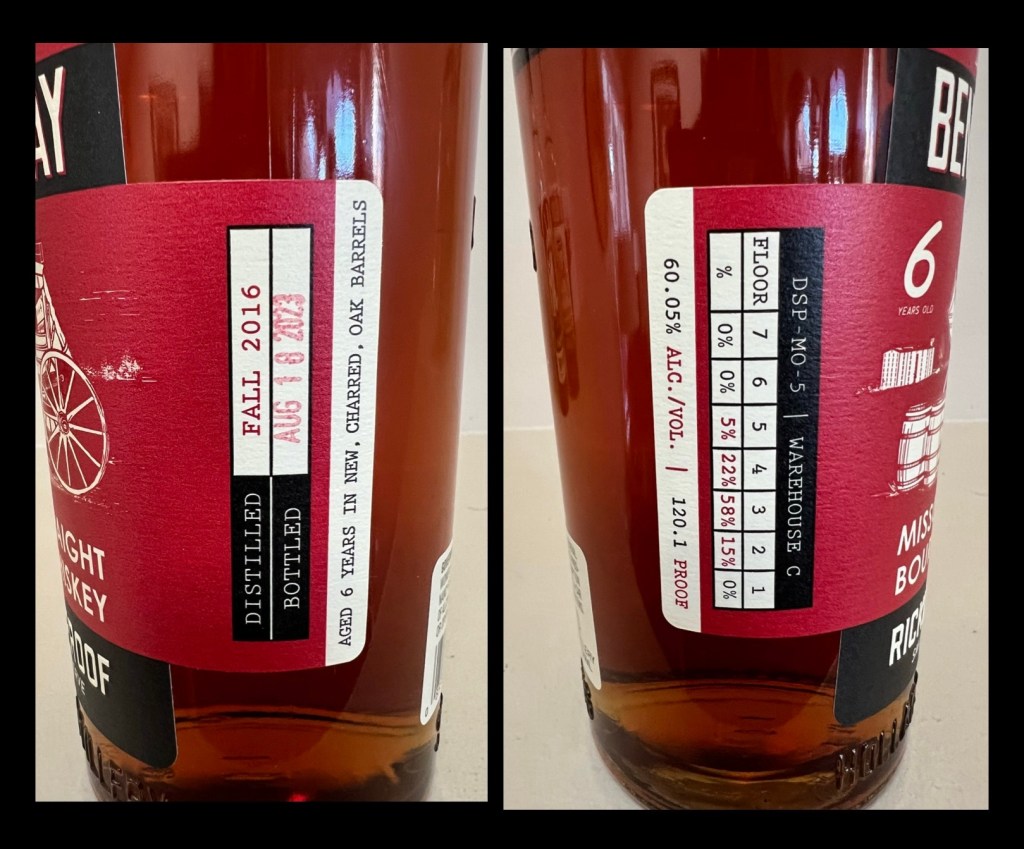
Ben Holladay Missouri Straight Bourbon Whiskey Rickhouse Proof Small Batch Reserve

Mashbill – 73% Corn, 15% Rye, 12% Malted Barley
Age – 6 years
Proof – 120.1
Other – Small Batch Reserve
Price Paid – $74.99

Color – Medium to dark amber .

Aroma – Brown sugar, cherry or perhaps another red fruit.

Taste – Caramel, French vanilla, butterscotch, cinnamon, and other baking spices. It is 120.1 proof but it doesn’t drink like we just did a 20-point jump.

Tasted with dried cranberry – Muted the sweetness and amplified the cinnamon. Perhaps a hint of cherry or apple.

Tasted with a pecan – Creamy, juicy apple, woodiness, and a lot more baking spices on the finish.

Tasted with dark chocolate – Again, very creamy with baking spices, apple, and chocolate. Almost like a chocolate cake with creamy vanilla icing and crumble of apples and cinnamon on top. It is very good with dark chocolate.

Discussion and Final Notes

One thing is for certain, when you taste each of these, you know they are family. While they are each quite distinct, they have some common aromas and tastes that remind you that they are related.

On the nose, each had a lovely sweetness – either caramel, vanilla, brown sugar, or red fruits. The Soft Red Wheat also included that particular grain and the Rickhouse Proof seemed to bring more of the barrel notes and brown sugar. All inviting!

On the palate, they were very true to their nose and that doesn’t always happen. All had terrific viscosity with a very soft and creamy mouth feel. The BIB leaned in with sweet caramel, vanilla, and apple. The Wheated BIB was a bit more pronounced with sweet caramel and creamy vanilla as well as a juicy red apple. The Rickhouse Proof had more pop with its proof and the sweetness leaned more toward french vanilla and butterscotch.

On the finish, all were soft and lingering. The BIB and Wheated BIB lingered with a hint of cinnamon an oak. The Rickhouse Proof had was stronger with the baking spices and woodiness.

Our recommendation: If you find these locally, certainly give at least one a try. Align your selection to what your palate most enjoys. If you can’t decide, get them all as they will be a great addition to your bourbon collection. For us, we now know that we want a back-up bottle of each one plus a visit to the distillery!

Cheers,
Rebecca

Photos by Rebecca Herman McBrayer

Basic requirements of bourbon: Made in the U.S, distilled at <= 160 proof, barreled at <= 125 proof, aged in new, charred oak containers, free from additives (except water), and bottled at >= 80 proof.

Missouri Bourbon or Missouri Bourbon Whiskey must meet all federal requirements for bourbon AND the 2019 laws to include Missouri on the label: must be mashed, fermented, distilled, aged, and bottled in the state of Missouri; aged in oak barrels manufactured in Missouri; and, as of January 1, 2020 – made with corn exclusively grown in Missouri.

Straight bourbon means it is aged at least 2 years (and must have an age statement if less than 4).

For additional information on bourbon requirements, please read this post – Bourbon Whiskey.

Bottled-in-Bond: must be produced in a single distillation season by a single distillery; must mature in a U.S. bonded warehouse for a minimum of four years; and the aged spirit must be bottled at 50% ABV (100 proof). For additional information on Bottled-in-Bond requirements, please read this post – Bottled in Bond.

NOTE: The bourbons in this review were purchased by us. We were not compensated by the spirit producers for this review. This is simply our opinion based on what we tasted on this day. Please drink responsibly.

Bottled in Bond

03/24/24
By Rebecca Herman McBrayer

If you drink whiskey, you have likely seen: Bottled in Bond, Bottled-in-Bond, or BIB on some bottles. In case you have ever wondered what this means or requires, we will dive into it a bit in this Sunday Spirit Note.

The Bottled in Bond Act of 1897 was a groundbreaking consumer protection law addressing widespread whiskey adulteration in the 19th century. Championed by Colonel Edmund Haynes Taylor Jr., the act standardized the designation of high-quality spirits, designated as “bottled-in-bond” if they met specific requirements.

Why Bottled in Bond was Needed – Rectifiers

In his book, Kentucky Bourbon Whiskey: An American Heritage, Michal Veach explains that rectifiers were individuals who purchased cheap whiskey and refined it to make it more palatable and appealing to the mass market. Initially, they relied on unaged spirits from farmer distillers, but eventually, they began using various additives to enhance the flavor and appearance of their product. These additives included burnt sugar for sweetness and color, prune and cherry juice for color and flavor, and even unusual ingredients such as creosote (a wood preservative) and cochineal (a red dye made from crushed insects) to achieve the desired characteristics. The resulting product, while not an authentic bourbon, was affordable, sweet, and easy to produce in a matter of hours rather than years, making it a popular choice for consumers seeking an affordable and flavorful whiskey option.

The Specific Requirements to be Bottled in Bond

The very first consumer protection passed by Congress was the Bottled in Bond Act of 1897 was a response to the widespread adulteration of American whiskey in the late 1800s. The act established a standardized designation for spirits based on quality and made the federal government the guarantor of a spirit’s authenticity. The act also provided a tax incentive for distilleries that ensured their spirits met specific requirements.

The act allows distillers to label aged spirits, mostly bourbon and rye, as bottled-in-bond if the product meets the following criteria:

  • The spirit must be produced in a single distillation season by a single distillery.
  • The spirit must mature in a U.S. bonded warehouse for a minimum of four years.
  • The aged spirit must be bottled at 50% ABV (100 proof).

The act also helps ensure proper accounting and the collection of tax that is due. The Bottled in Bond Act is one of the earliest examples of a consumer protection law. President Grover Cleveland signed the act into effect in 1897.

What it Means to Consumers Today

According to a publication by the American Distilling Institute, What the Bottled in Bond Act of 1897 Means Today, the “Bottled in Bond” label remains relevant due to its guarantee of authenticity and quality.  Consumers continue to rely on the label as a symbol of trustworthiness in an era where undisclosed sourcing is prevalent. Despite changes in regulations and the absence of government stamps, distillers still use the term for marketing purposes. The global threat of alcohol contamination underscores the continued need for safeguards like the Bottled in Bond label. International regulations require imported spirits to meet the same standards as domestic products, further enhancing the label’s credibility.

Ultimately, it ensures authenticity and quality, especially in an era of unknown sourcing.  Despite not being a requirement, the label has become a symbol of trust and quality for whiskey enthusiasts. It also protects against alcohol contamination.


March 2024 Glenns Creek Tasting

03/19/24
By Rebecca Herman McBrayer

David Meier with Wayne & Rebecca


Wayne and I visited Glenns Creek Distilling 02/23/24 and had a very informative and enjoyable visit with the owner and Master Distiller, David Meier. We selected three of their expressions to take home and they are the subject of our tasting notes for today.


Selected for this Tasting

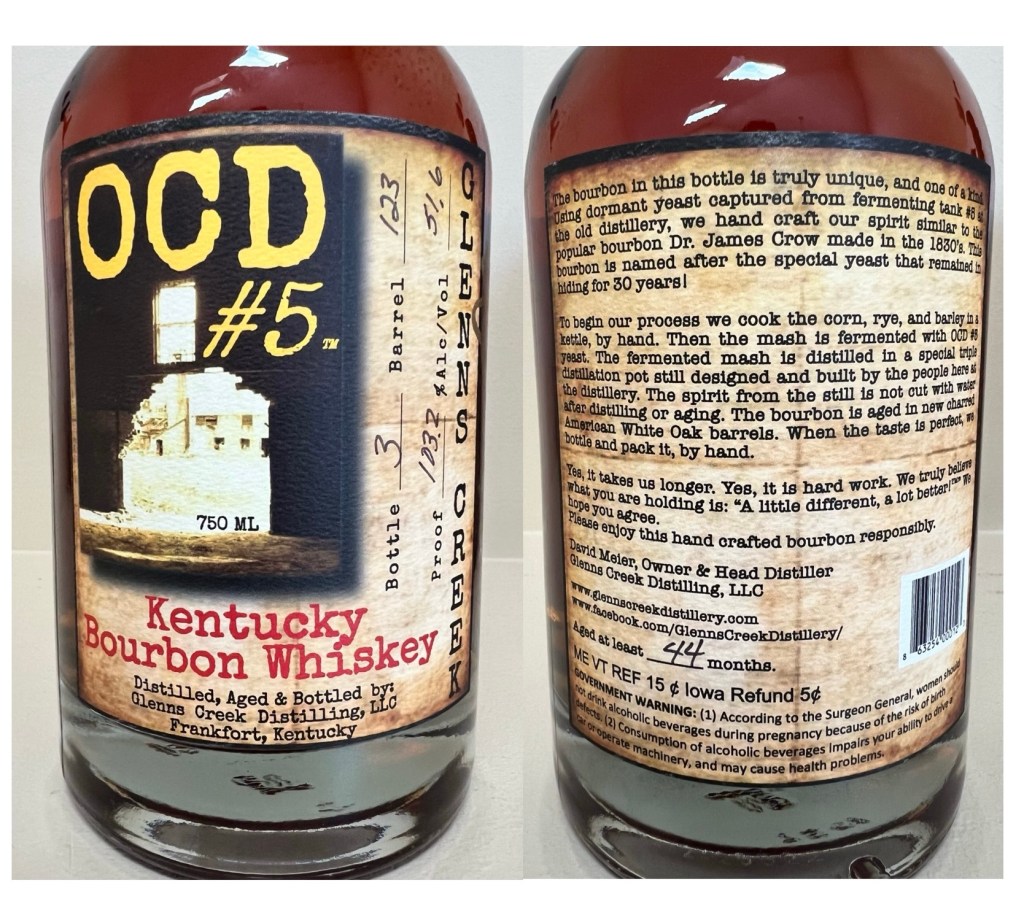
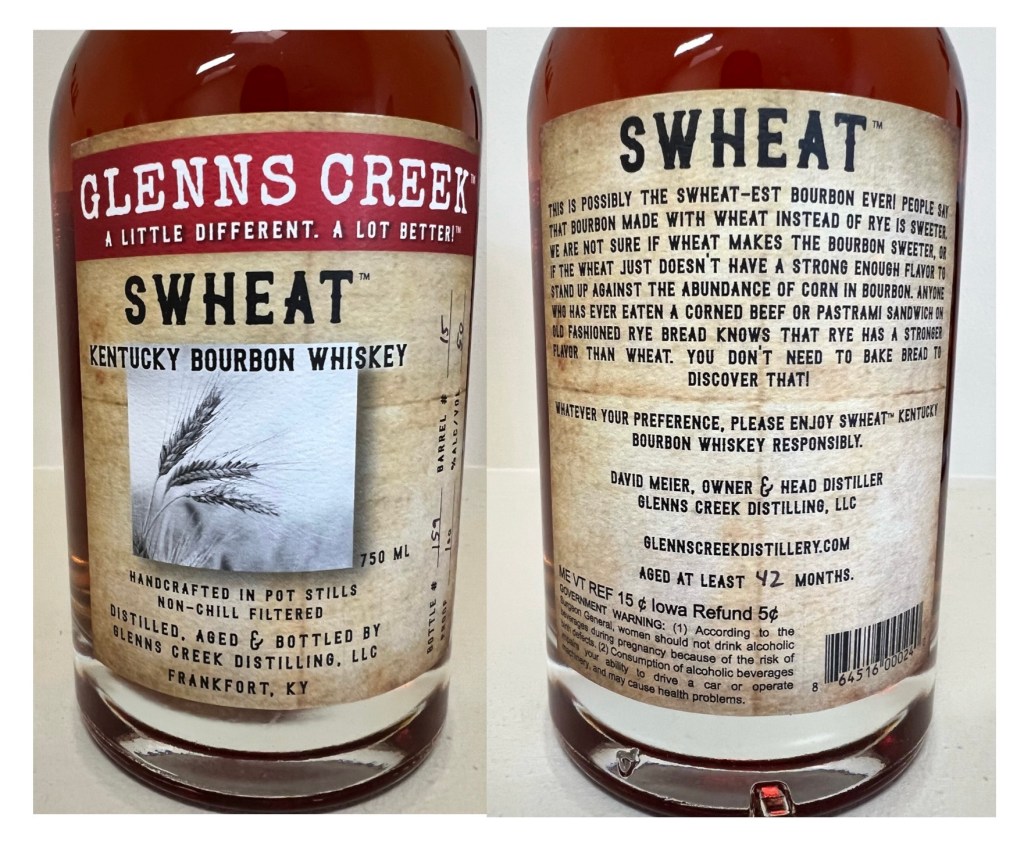
Glenns Creek OCD #5, SWHEAT, and Cafe Ole. Each is a Kentucky Bourbon Whiskey. Please be sure to read our approach to Tasting Whiskey if you haven’t already. 

Kentucky Bourbon Whiskey

What is Kentucky Bourbon Whiskey? Bourbon whiskey must be made in the USA from at least 51% corn. It must be distilled at 160 proof or less.  It then must be placed into a new, charred oak container at a proof of 125 or below. In addition, it must be free from added substances (except water) and bottled at a minimum of 80 proof. To add “Kentucky” to the label, it must be aged for at least one year in the state of Kentucky. For additional information, read Bourbon Whiskey, part of the Sunday Spirit Notes.

Glenns Creek OCD #5 Kentucky Bourbon Whiskey

Mashbill – Corn 85%, Rye 10%, Barley Malt 5%

Age – 44 months

Proof – 103.2

Price Paid – $70.00

Color – Medium Amber

Aroma – Cherry and corn are dominate with vanilla and baking spices as well.

Taste –  Corn, cherry, vanilla, with light baking spices. It has a lot of viscosity and that which is demonstrated about the legs on the glass as well. The finish is a pleasant warm hug.

Tasted with dried cranberry – A bit less corn but the cherry, vanilla, and baking spices remained.

Tasted with a pecan – Many of the earlier flavors seem to have been muted and replaced with a woodiness, light fruit, cinnamon and a white pepper finish.

Tasted with dark chocolate – Turned up the volume on the baking spices and it has a longer finish that lingers with chocolate.

Notes – Very nice, a lot of complexity. 

Glenns Creek SWEAT Kentucky Bourbon Whiskey


Mashbill – Corn 85%, Wheat 10%, Barley Malt 5%

Age – 42 months

Proof – 100

Price Paid – $68.00

Color – Light Amber

Aroma – Many sweet notes including corn, caramel, and cherry.

Taste –  Corn, the nuttiness of marzipan, and cinnamon on the finish.

Tasted with dried cranberry – Removed the corn and other flavor nuances and replaced it with stronger baking spices and light pepper.

Tasted with a pecan – Corn, woodiness, and caramel. Similar to a tub of buttered popcorn that has caramel and chocolate drizzled over it.

Tasted with dark chocolate – Baking spices, a hint of corn at the beginning.

Notes: Enjoyable. Corn forward so it somewhat loses the common wheat flavors. 

Glenns Creek Cafe Ole Kentucky Bourbon Whiskey


Mashbill – Corn 85%, Rye 10%, Roasted Barley Malt 5%

Age – 56 months

Proof – 105.8

Price Paid – $68.00

Color – Darker Amber

Aroma – Coffee, chocolate, rich caramel, butterscotch … like you walked into an amazing coffee shop.

Taste –  Coffee, chocolate, a fantastic mocha.

Tasted with dried cranberry – Not appealing as it removes the terrific mocha notes and brings out more of a cherry cough syrup.

Tasted with a pecan – Back to chocolate and coffee with a bit of woodiness.

Tasted with dark chocolate – Chocolate but lost the coffee. Instead, there is cherry, baking spices, and a white pepper finish.  

Notes: This would be an awesome after dinner drink. You could add it to a nice cup of coffee and top it off with whipped cream.

Final Notes and Discussion

While they are all very good and recommended, our personal preference order would be: Cafe Ole, OCD #5, and SWEAT. The first two are somewhat of a toss up but the Cafe Ole edged to the front due to its uniqueness.

The SWEAT is a very nice bourbon. Since it is so corn forward, the wheat takes a bit of a back seat. Love it as a bourbon but it wouldn’t rank high for us in the specific wheated bourbon category.

OCD #5 is terrific. Good level of complexity, excellent flavor profile, very enjoyable.

The Cafe Ole is phenomenal. It is complex with the coffee mocha nuances. It would make a great alternative for an after dinner drink if you didn’t want to have coffee, brandy, or even dessert after dinner. A neat pour of this would be fantastic.

Cheers,
Rebecca

Photos by Rebecca Herman McBrayer

NOTE: The bourbons in this review were purchased by us. We were not compensated by the spirit producer for this review. This is simply our opinion based on what we tasted on this day. Please drink responsibly.

March 2024 Old Fitzgerald 1976 Decanter Tasting

March 17, 2024
By Rebecca Herman McBrayer

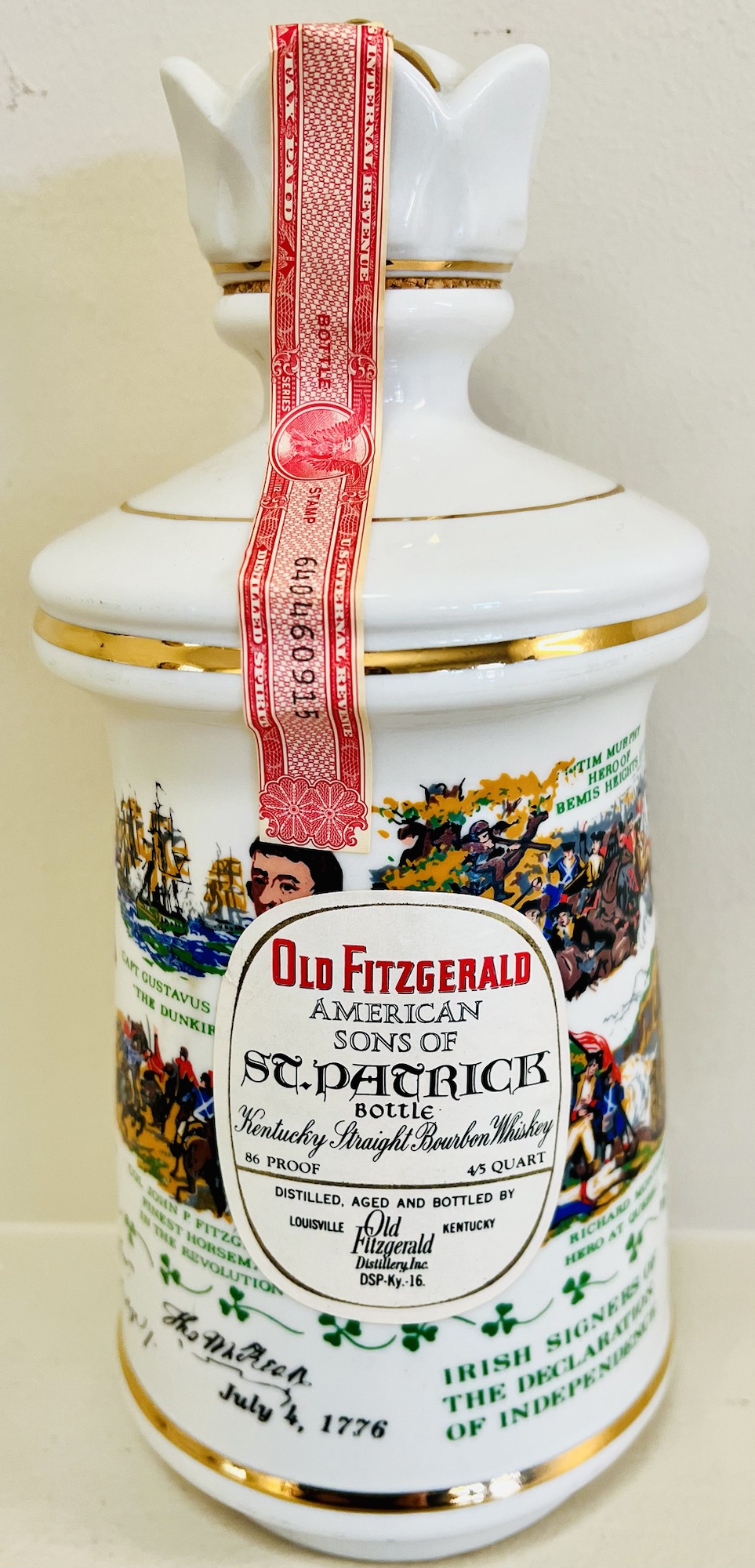
Wayne and I were married March 17, 2020. Yesterday, Wayne surprised me with an early anniversary gift. It was an unopened bicentennial decanter of Old Fitzgerald. It had remained in a clear plastic carton and the bottle is pristine!

He shared that he spotted this bootle during our visit to Northern Kentucky and the Revival Vintage Bottle Shop in late January. He later contacted Brad Bonds and made the purchase.

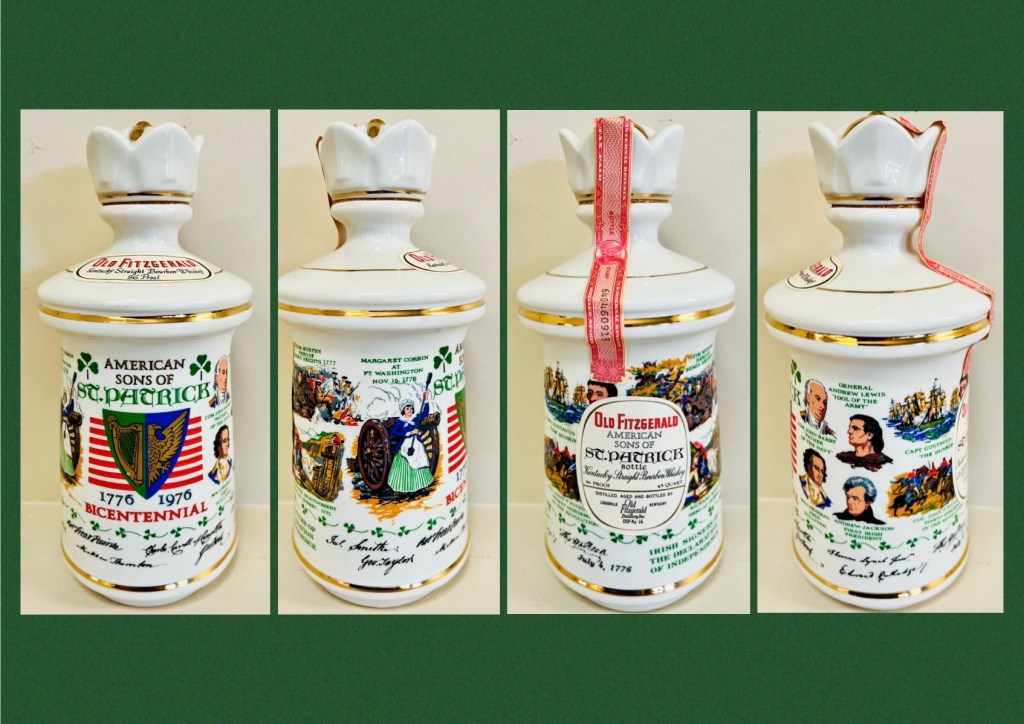
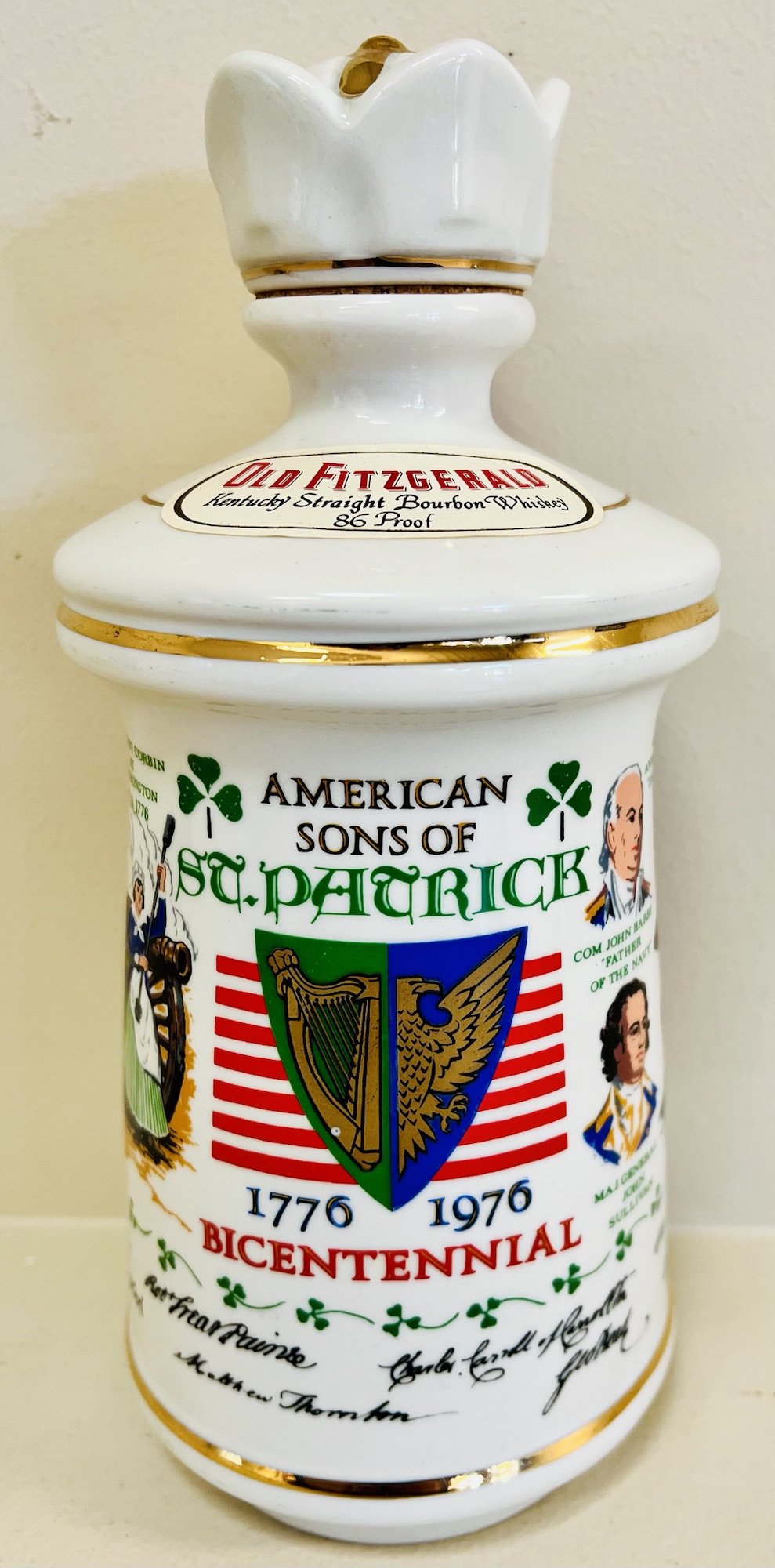
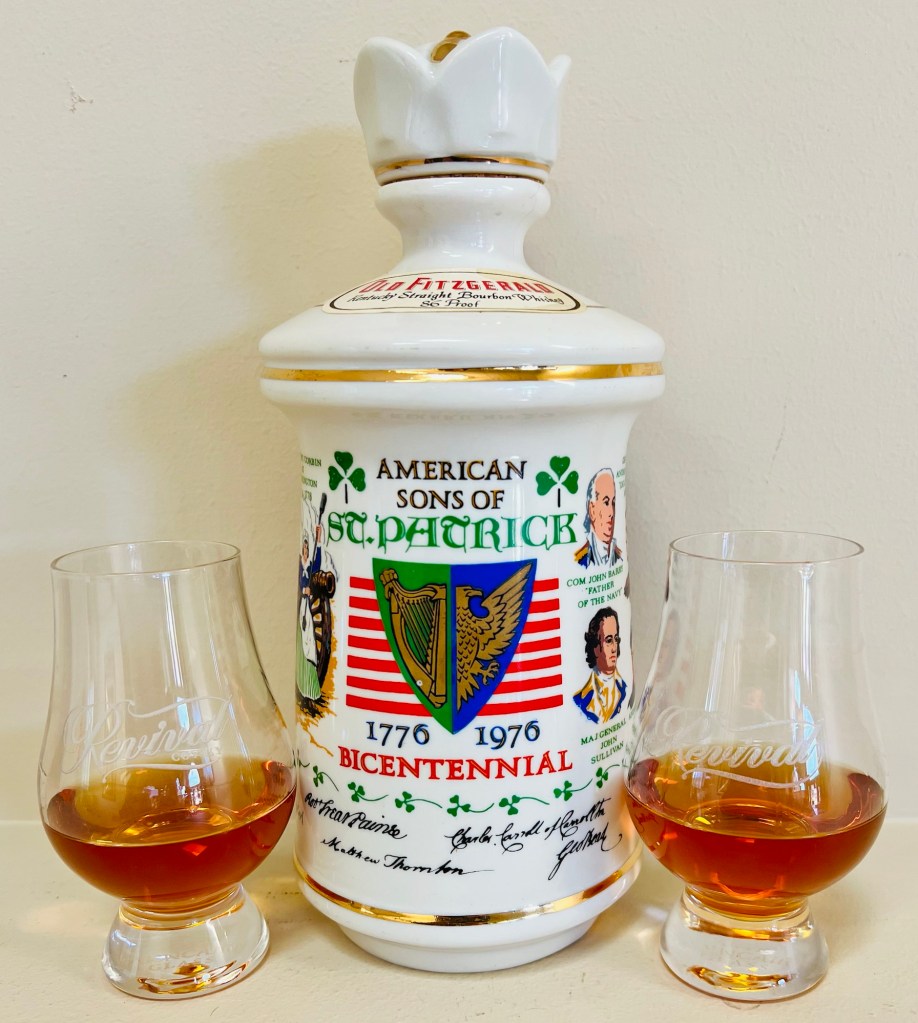
About the Bottle: 1976 Old Fitzgerald American Sons of St. Patrick Bicentennial

The 1976 Old Fitzgerald American Sons of St. Patrick Bicentennial is a ceramic decanter that celebrates the 1976 American Sons of St. Patrick Bicentennial. The decanter is made of genuine porcelain by Fitzgerald Distillery, Inc. and is about 9 1/8 inches tall. The decanter is part of the Old Fitzgerald Kentucky Straight Bourbon Whiskey Bicentennial bottling series and contains whiskey distilled at Stitzel-Weller.

Images on the decanter include: Com. John Barry, “Father of the Navy;” Maj. General John Sullivan; General Andrew Lewis, “Idol of the Army;” Andrew Jackson, First Irish President; Gustavus Conyngham, “The Dunkirk Pirate;” Col. John P. Fitzgerald, Finest Horseman in the Revolution; Tim Murphy, Hero of Bemis Heights 1777; Richard Montgomery, Hero at Quebec 1775; and Margaret Corbin at Ft. Washington, Nov 15, 1776.

Opening a Vintage Bottle

Opening a vintage bottle always requires care; however, even with the utmost care, corks can be brittle and break. This happened with this bottle on first touch of the ceramic lid.

Following what we had observed previously, I carefully placed toothpicks around the edge of the cork and carefully used a knife to loosen it. Unfortunately, I should have stuck the toothpicks in further as the cork broke off.

From this point, the main option was to allow the cork to fall into the bottle. We then strained it into a large glass a bit at a time to ensure removal of cork. An additional strain into a decanter was the final step.

The bourbon was clear, cork-free, and ready to drink!

Please be sure to read our approach to Tasting Whiskey if you haven’t already. 

Tasting Notes: Old Fitzgerald American Sons of St. Patrick Decanter

Mashbill – The researched mashbill for Old Fitzgerald Prime in the early 1970s was 70% Corn, 20% Wheat, and 10% Malted Barley.

Age – According to bourbon historian, Michael Veach, Old Fitz Prime was typically a blend of 4-8 year-old-whiskey with mostly 6-year-old.

Distilled – If this whiskey was bottled around 1976, and the dominate age was 6 years, it was likely distilled and barreled around 1970.

Proof – 86

Color – Deep golden to light amber.

Aroma – Caramel, apples, brown sugar, and vanilla.

Tasted Neat – Like a cinnamon candy apple that you get at the fair with a hint of leather and a very long and pleasant finish.

Tasted with dried cranberry –  Leather, tobacco, and a hint of apple.

Tasted with a pecan –  Apple, chocolate, baking spices, and tobacco.

Tasted with dark chocolate – Baking spices, apple, with light pepper on the finish.  

Additional note – About an hour after we finished the tasting, our empty glasses remained in front of us. The aroma from the glass carried a strong nose of tobacco and nothing else. It was fascinating.

Discussion and Final Notes

Tasting from a dusty bottle is always a unique experience. You quickly learn that what was made then may not taste like it does today. We have never owned a bottle of Old Fitzgerald but have had the opportunity to taste it. As wonderful as it is today, there is something about tasting history that brings it to a new level.

If you have the opportunity to taste Old Fitzgerald from this era, we highly recommend it. And if you do, let us know what you thought.

A huge thank you to our friend and bourbon historian, Michael Veach, who identified the bourbon as Old Fitzgerald Prime and the historical age of this bourbon at time of bottling.


If you are ever in the Northern Kentucky or Cincinnati area, please make plans to stop by and visit Revival Vintage Bottle Shop. It is an experience like none other.

When you first enter, you aren’t sure where to looks because you are surrounded by amazing dusty bottles that represent the history of spirits. They have great specials each day to taste these amazing dusty bottles.

If you decide you would like to take one home, Brad Bonds will guide you toward a great decision!

Cheers,
Rebecca & Wayne

Photos by Rebecca Herman McBrayer

This bottle contains Kentucky Straight Bourbon Whiskey. Such whiskeys have all the requirements of bourbon: Made in the U.S, distilled at <= 160 proof, barreled at <= 125 proof, aged in new, charred oak containers, bottled at >= 80 proof. Straight bourbon means it is aged at least 2 years (and must have an age statement if less than 4). In addition, to be Kentucky Straight Bourbon, it has the additional requirement that it must be produced and aged at least 1 year in the state of Kentucky. For additional information, read Bourbon Whiskey, part of the Sunday Spirit Notes.

NOTE: The bourbon in this review was purchased by us. We were not compensated by the spirit producer for this review. This is simply our opinion based on what we tasted on this day. Please drink responsibly.

March 2024 Irish Whiskey Tasting

03/14/24
By Rebecca Herman McBrayer

Please be sure to read our approach to Tasting Whiskey if you haven’t already. 

Irish whiskey is made from a high grain mash of barley, wheat, and corn. The exact quantities of each grain depend on the type of whiskey. The most common primary grain is barley.  The barley and be malted, un-malted, or a combination of each.

The Irish Whiskey Act of 1980 defines the basic requirements for Irish whiskey. The act protects Irish whiskey by statute law and provides regulations and labeling for the spirit. The requirements include: produced and aged in Ireland; made from cereal grains that are fermented with yeast; distilled no higher than 94.8% ABV (proof of 189.6); aged in wooden casks for a minimum of three years; free of added substances with the exception of water and caramel coloring; bottled at a minimum ABV of 40% (proof of 80). For more information, please read Irish Whiskey.

Irish Whiskey for this Tasting

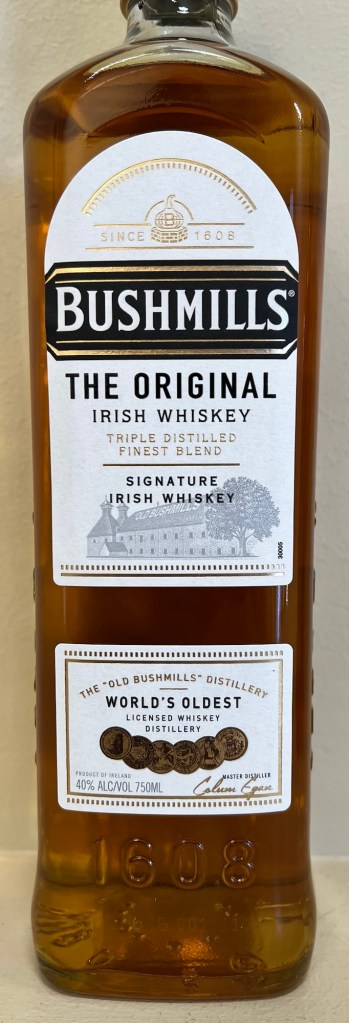
For this tasting, we selected expressions from Bushmills, Tullamore DEW, Jameson, Ha’Penny, and Redbreast.

Bushmills


Type – Malt Irish Whiskey; Made in pot stills at one distillery with only water and malted barley.
Distillation – Triple Distilled
Proof – 80
Age – Minimum of 3 years in seasoned bourbon barrels and oloroso sherry casks
Price Paid – $24.98

Color – light gold
Aroma – light citrus, apples, cinnamon
Taste – a hint of tea, citrus, vanilla, melon, honey, Granny Smith apple, with cinnamon on the finish
Tasted with dried cranberry – added a pepper flavor as well as allspice.
Tasted with a pecan – chocolate really came forward and the spice is gone.
Tasted with dark chocolate – creamy, buttery, caramel.

Tullamore DEW


Type – Blended Irish Whiskey; made from three styles of Irish whiskey, including grain, malt, and pot still. 
Distillation – Triple Distilled
Proof – 80
Age – Non-age statement (NAS); aged in Oloroso Sherry and old bourbon oak casks
Price Paid – $24.98

Color – light gold
Aroma – grains, sweetness such as toffee and fruit
Taste – citrus, spice, vanilla, honey, earthy
Tasted with dried cranberry – slight fruitiness comes through and there is a berry and orange flavor as well.
Tasted with a pecan – citrus and a slight white pepper on the back
Tasted with dark chocolate – did not add anything to the flavor and seemed to mute it quite a bit.

Jameson

Type – Blended Irish Whiskey; the whiskey is a blend from both column and pot stills.
Distillation – Triple Distilled
Proof – 80
Age – Non-age statement (NAS)
Price Paid – $28.98
Color – light gold

Aroma – tea, floral, light spice, herbs
Taste – citrus – perhaps grapefruit, herbal, light spices, somewhat floral.
Tasted with dried cranberry – a pop of citrus came through with some pepper on the finish.
Tasted with a pecan – citrus again but the pepper is gone.
Tasted with dark chocolate – not much difference except there is white pepper on the finish.

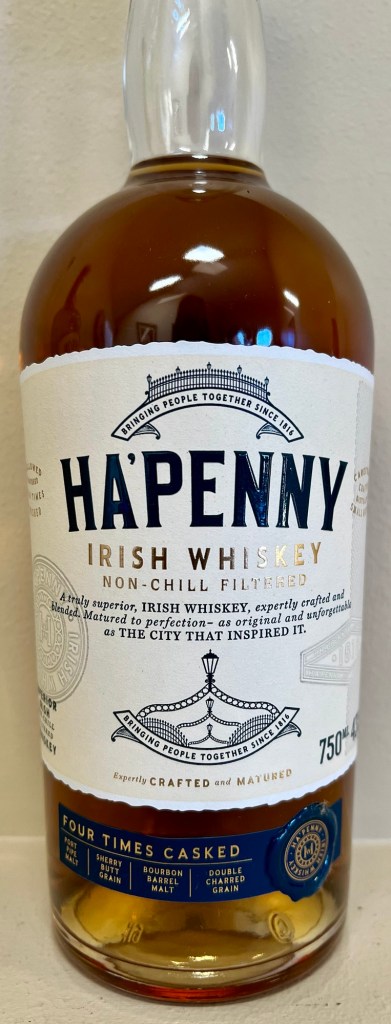
Ha’Penny

Type – Unsure
Proof – 86
Age – Non-age statement (NAS) blend of 4–10-year-old whiskies from four types of barrels… Bourbon, Port, Sherry and Double Charred. 
Price Paid – $54.99

Color – light gold
Aroma – honey, chocolate, dates, vanilla
Taste – grain, dates, clove, berries, chocolate, cinnamon.
Tasted with dried cranberry – a lot of citrus with the cranberry.
Tasted with a pecan – chocolate, similar to a chocolate covered orange.
Tasted with dark chocolate – no change, did not enhance or detract.

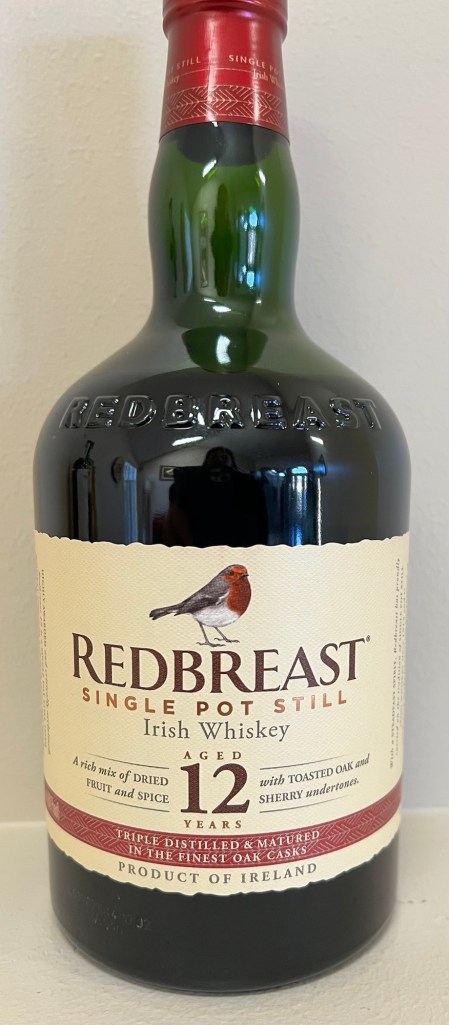
Redbreast 12 Year

Type – Pot Still Irish Whiskey; Denotes it was made from malted and un-malted barley and distilled only in a pot still.
Distillation – Triple Distilled
Proof – 80
Age – 12 years
Price Paid – $73.99

Color – light gold
Aroma – brown sugar, herbal, light spice, fruit
Taste – tea, citrus, maybe lemon tea, fruit, spicy notes, some toasted flavors.
Tasted with dried cranberry – not a lot of change but somewhat of a bubbly mouth fee.
Tasted with a pecan – adds a note of chocolate.
Tasted with dark chocolate – almost added the zest of a lemon or orange.

Discussion and Final Notes

**Bushmills: Clean, crisp, citrus, easy to drink, readily available, only $25.
**Tulamore: Nice, citrus, spice, vanilla, honey, earthy, easy to drink, readily available, only $25.
**Jameson: Good, grapefruit, herbal, light spices, somewhat floral, easy to drink, readily available, under $30.
**Ha’Penny: Very good, grain, dates, clove, berries, chocolate, cinnamon, smooth to drink, haven’t seen it in bars or prevalent in liquor stores (we acquired it on our Town Branch Distillery visit), a bit higher price point at $55.
**Redbreast: Excellent, tea, citrus, maybe lemon tea, fruit, spicy notes, some toasted flavors, very pleasant drink, readily available, highest price point at $74 but it is a 12-year-old.

Recommendations
All of these are good pours of Irish Whiskey. If you just want to shoot a few on St. Patty’s Day, we recommend going with any of the lower priced items. If you want to drink it neat and seek to acquire more of a taste for Irish Whiskey, Red Breast 12-year-old was the standout for this particular lineup.

Cheers,
Rebecca

Photos by Rebecca Herman McBrayer

NOTE: The whiskeys in this review were purchased by us. We were not compensated by the spirit producers for this review. This is simply our opinion based on what we tasted on this day. Please drink responsibly.

Irish Whiskey

03/10/24
By Rebecca Herman McBrayer

Irish whiskey is made from a high grain mash of barley, wheat, and corn. The exact quantities of each grain depend on the type of whiskey. The most common primary grain is barley.  The barley and be malted, un-malted, or a combination of each.

Basic Requirements for Irish Whiskey

The Irish Whiskey Act of 1980 defines the basic requirements for Irish whiskey. The act protects Irish whiskey by statute law and provides regulations and labeling for the spirit. The requirements include:
– Produced and aged in Ireland.
– Made from cereal grains that are fermented with yeast.
– Distilled no higher than 94.8% ABV (proof of 189.6).
– Aged in wooden casks for a minimum of three years.
– Free of added substances with the exception of water and caramel coloring.
– Bottled at a minimum ABV of 40% (proof of 80).

Types of Irish Whiskey

Malt Irish Whiskey: Made in pot stills at one distillery with only water and malted barley. Example – Bushmills 10-year-old, 80 proof.

Pot Still Irish Whiskey: Denotes it was made from malted and un-malted barley and distilled only in a pot still. Example – Redbreast 12-year-old, 80 proof.

Grain Irish Whiskey: It was made from un-malted grains in a column still. Example – Teeling Single Grain, 92 proof.

Blended Irish Whiskey: Indicates the whiskey is a blend from both column and pot stills. Example – Jameson, 80 proof.

Irish Whiskey Taste Profile

Irish Whiskey has a distinct flavor profile that can be described as light, fruity, and floral, with common notes of cereal grains, vanilla, caramel, and oak.

Single Malt Irish Whiskey often has a fruity profile with notes of apple, pear, and citrus, and a subtle nuttiness and hint of vanilla. Those made of 100% malted barley-based blends are smooth, sweet, and malty. 

Blended Irish Whiskey is generally smooth, with notes of caramel, vanilla, light spice, and a hint of oak. 

Like other spirits, the flavor profile can depend on where it was produced, how it was aged, and brand desires for its signature taste profile.


With St. Patrick’s Day around the corner, many will be sipping and toasting with an Irish Whiskey. I hope that this basic overview will help you to enjoy it all the more!

Cheers!

March 2024 Hard Truth Sweet Mash Tasting

03/05/24
By Rebecca Herman McBrayer

Please be sure to read our approach to Tasting Whiskey if you haven’t already. 

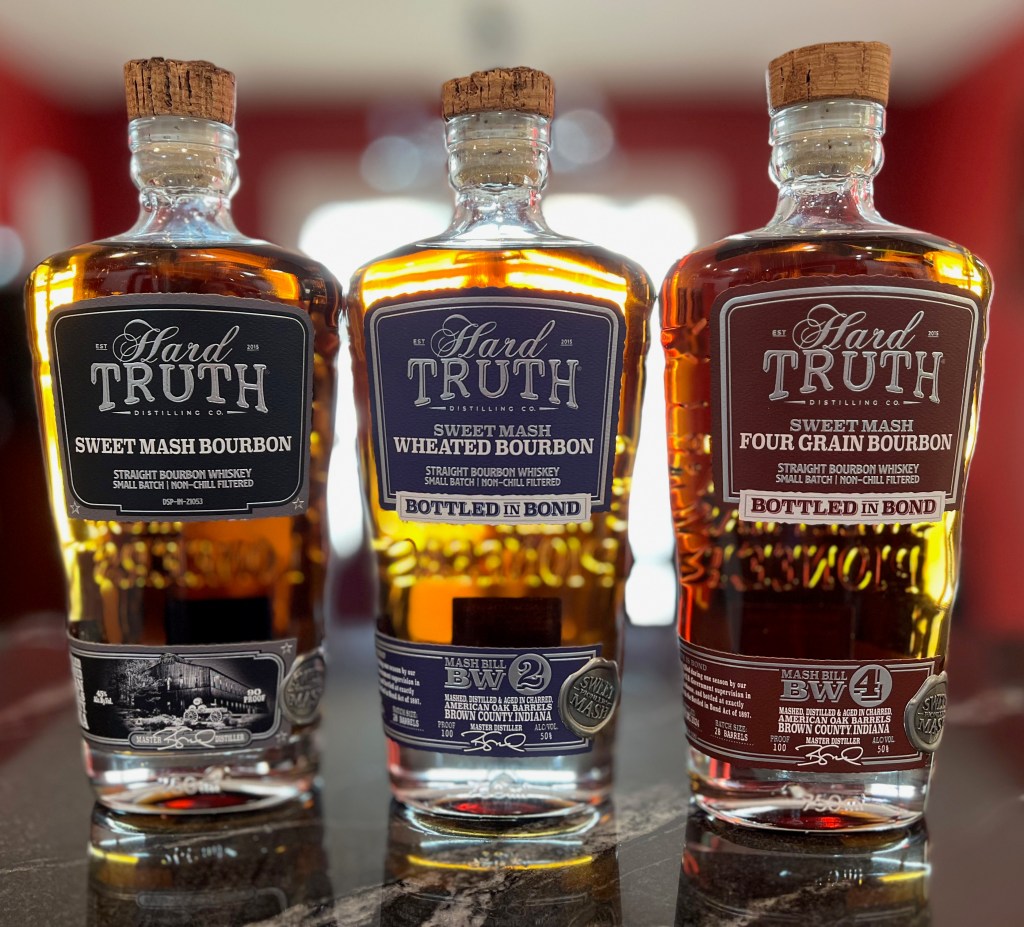
With the long-awaited release of Hard Truth’s Sweet Mash Bourbons, Wayne and I were anxious to get the bottles locally and sit down to do a formal tasting.

Basic requirements of bourbon: Made in the U.S, distilled at <= 160 proof, barreled at <= 125 proof, aged in new, charred oak containers, free from additives (except water), and bottled at >= 80 proof. Straight bourbon means it is aged at least 2 years (and must have an age statement if less than 4). For additional information on bourbon requirements, please read this post – Bourbon Whiskey.

These selections are also labeled as Sweet Mash. Sweet mash is a process in distillation that does not use the sour mash as a starter for fermentation. Instead, only fresh yeast is used. Using sweet mash has the benefit of more control over specific ingredients and the ability to use lower temperatures for fermentation. However, it does require more maintenance and extreme cleanliness to avoid contamination. For more information, please read this post – Four Stages of Making Spirits.

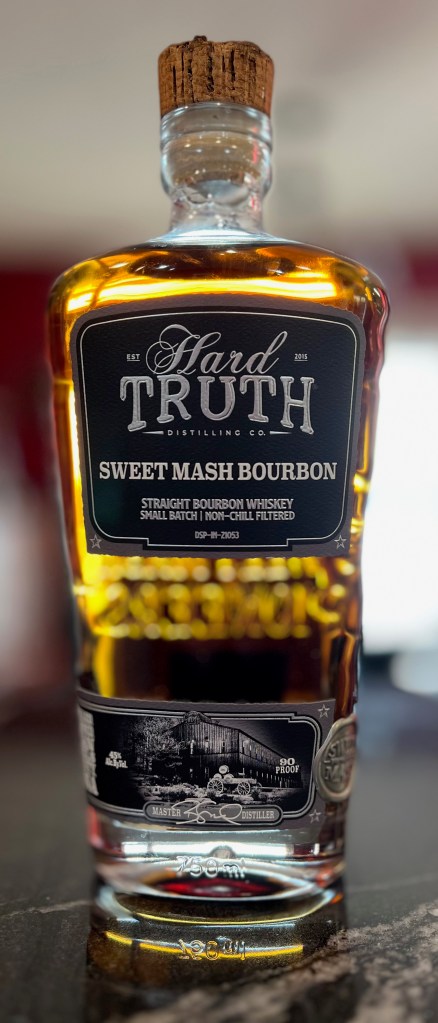
Hard Truth Sweet Mash Bourbon

Mashbill – 73% Corn, 19% Rye, 8% Malted Barley
Age – At least 4 years old
Proof – 90
Specifics – Sweet Mash, Straight Bourbon Whiskey, Small Batch, Non-Chill Filtered
Price Paid – $44.99

Color – medium copper

Aroma – sweetness of caramel and vanilla with a hint of nutmeg and perhaps a fruit such as apple or berry.

Taste –  less sweetness that on the nose but a very light hint of caramel; has a black pepper finish.

Tasted with dried cranberry – the berry and red apple from the nose is coming forward with the cranberry, the finish is greatly softened but still carries a note of pepper.

Tasted with a pecan – this brought the pepper forward, but it is more of a white pepper and a nice sweetness from caramel is present.

Tasted with dark chocolate – caramel and chocolate are strong as well as some baking spices and hints of oak.

Notes: A very good 90 proof bourbon for under $45.

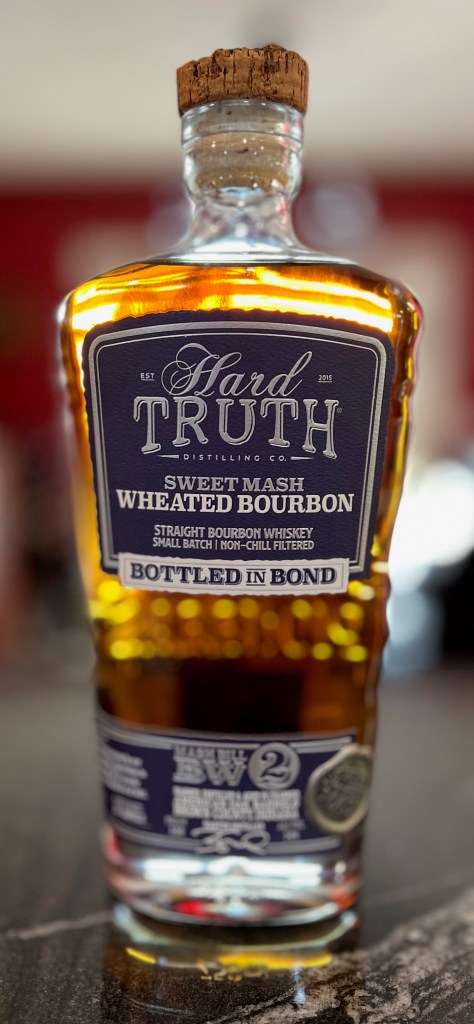
Hard Truth Sweet Mash Wheated Bourbon – Bottled in Bond


Mashbill – 69% Corn, 19% Wheat, 12% Malted Barley
Age – At least 4 years old
Proof – 100
Specifics – Sweet Mash, Wheated Bourbon, Straight Bourbon Whiskey, Small Batch, Non-Chill Filtered, Bottled in Bond
Price Paid – $54.99

Color – medium copper

Aroma – the sweetness of the wheat really comes through as well as honey and light baking spices, it is very inviting, much like a muffin right fresh from the oven and you can’t wait to taste it.

Taste – sweet wheat and honey, much like the nose, and a very nice finish of cinnamon and perhaps another baking spice.

Tasted with dried cranberry – brought forward a strong black pepper and the lovely wheat sweetness has faded.

Tasted with a pecan – a sweet caramel comes forward and the wheat is present, the finish is more of a light white pepper.

Tasted with dark chocolate – baking spices are really forward but not on the finish, the sweetness seems to have disappeared.

Notes: This is a fine wheated bourbon in the $50 price range. This is something that we will want to keep on our bourbon shelf.

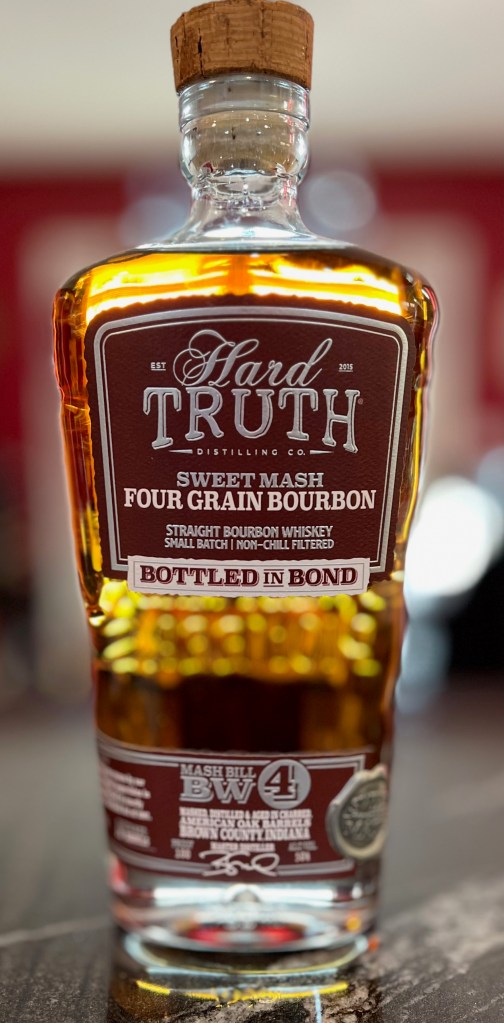
Hard Truth Sweet Mash Four Grain Bourbon – Bottled in Bond

Mashbill – 78% Corn, 9% Rye, 9% Wheat, 4% Malted Barley
Age – At least 4 years old
Proof – 100
Specifics – Sweet Mash, Four Grain Bourbon, Straight Bourbon Whiskey, Small Batch, Non-Chill Filtered, Bottled in Bond
Price Paid – $59.99

Color – medium copper

Aroma – quite different from the other two, notes of sweet cherries. Interesting that there is 78% corn yet it isn’t on the nose.

Taste – cherry, baking spices, and a minimal finish, perhaps like a cinnamon wheat cereal, not as much grain as anticipated in a four grain bourbon.

Tasted with dried cranberry – brings the wheat forward, really warm and inviting.

Tasted with a pecan – now it has the sweetness of caramel and a cinnamon baking spice with a light finish.

Tasted with dark chocolate – very similar as with the pecan … light caramel and cinnamon.

Notes: It is a nice pour of a four grain although not what we were expecting. While equal percentages (9%) in the mashbill, the wheat is a bit more prevalent than the rye. It drinks much more like a “regular” bourbon than a four grain. Perhaps the 9% rye and 9% wheat are not enough of those grains to make a significant difference.

Comparison and Ranking

Aroma
  Wayne: Wheated, Four Grain, Bourbon
  Rebecca: Four Grain, Wheated, Bourbon
Taste
  Wayne: Wheated, Four Grain, Bourbon
  Rebecca: Wheated, Four Grain, Bourbon
Overall
  Wayne: Wheated, Four Grain, Bourbon
  Rebecca: Wheated, Four Grain, Bourbon

Discussion – Each of the new Sour Mash offerings from Hard Truth is very good and at a reasonable price point. The Sour Mash Bourbon is good and good value for the money. The Sour Mash Four Grain Bourbon offers a different taste profile even though the grains do not stand out like we have experienced in other four grains. That said, due to the price point and taste profile, we would certainly recommend it. If we could only buy one, it would be the Sour Mash Wheated.

We have loved Hard Truth Ryes for a few years and it is wonderful to see them release these new Sour Mash Bourbon varieties with a very approachable price point.

Cheers,
Rebecca

Photos by Rebecca Herman McBrayer

NOTE: The bourbons in this review were purchased by us. We were not compensated by the spirit producers for this review. This is simply our opinion based on what we tasted on this day. Please drink responsibly.

February 2024 Traveller Whiskey Tasting

02/27/24
By Rebecca Herman McBrayer

Please be sure to read our approach to Tasting Whiskey if you haven’t already. 

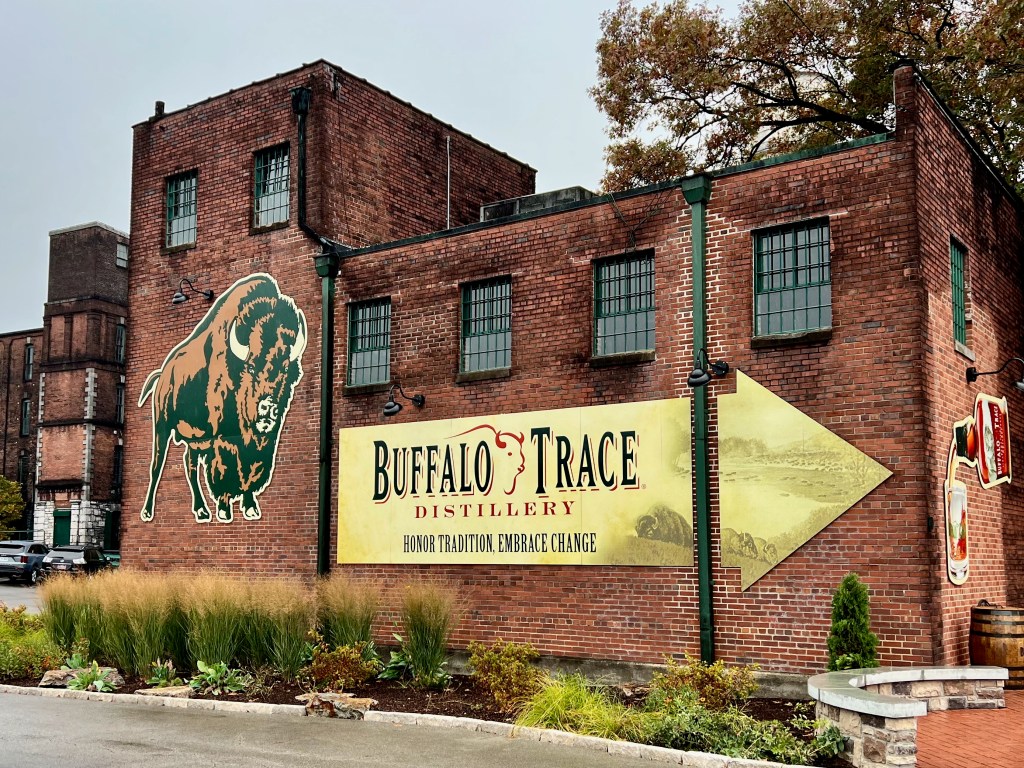
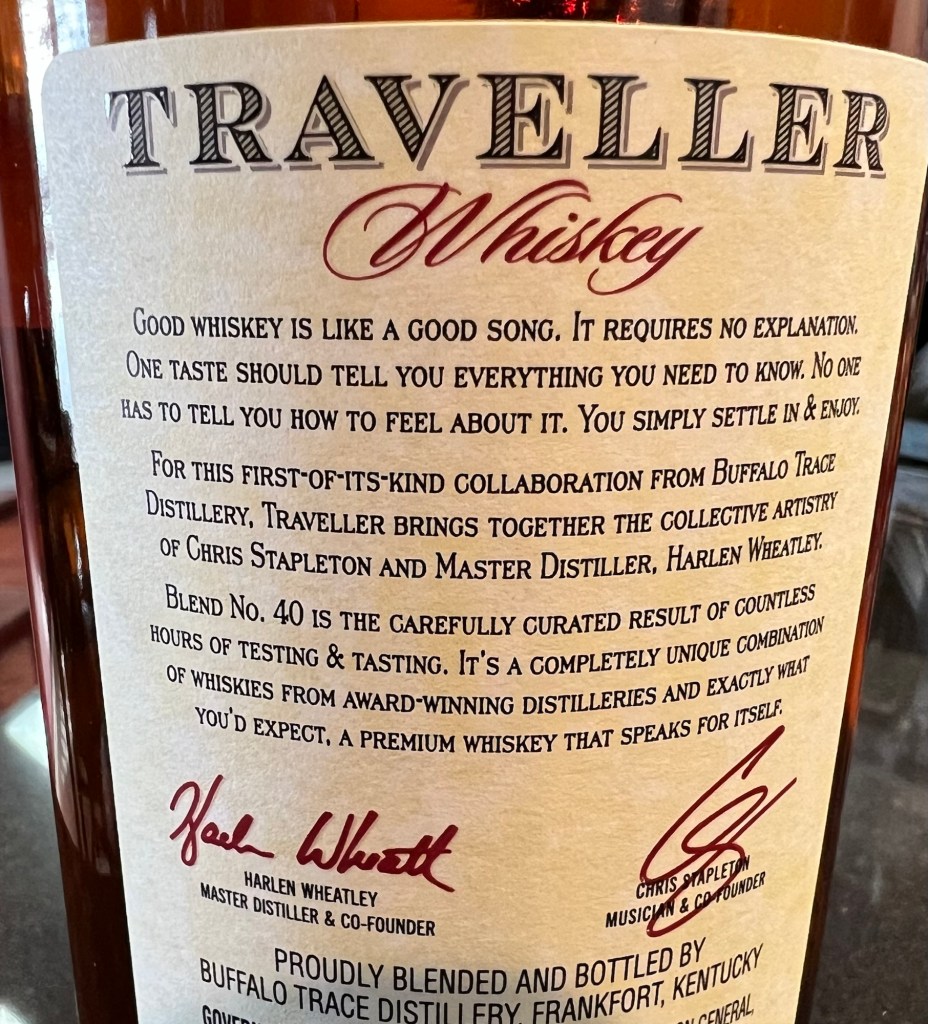
For this tasting, Wayne and I tasted the recent release from Buffalo Trace, Traveller Whiskey. From the Buffalo Trace site: For this first-of-its-kind collaboration from Buffalo Trace Distillery, Traveller brings together the collective artistry of 8X Grammy Award-Winning Artist Chris Stapleton and Buffalo Trace Distillery Master Distiller, Harlen Wheatley.

What is a Blended Whiskey? A Blended Whiskey is a mixture of different types of whiskeys, sometimes with other ingredients. It’s typically made by mixing one or more higher-quality straight or single malt whiskeys with less expensive spirits, neutral spirits, colorings, and flavorings. For example, a blended Scotch might be a combination of a barrel-aged malt whisky and some other grain whisky. In the US, blended whiskey is a combination of straight whiskies and neutral spirits containing at least 20 percent straight whiskey and bottled at not less than 80 proof. For additional information, read Blended Whiskey, part of the Sunday Spirit Notes.

Buffalo Trace Welcome Center

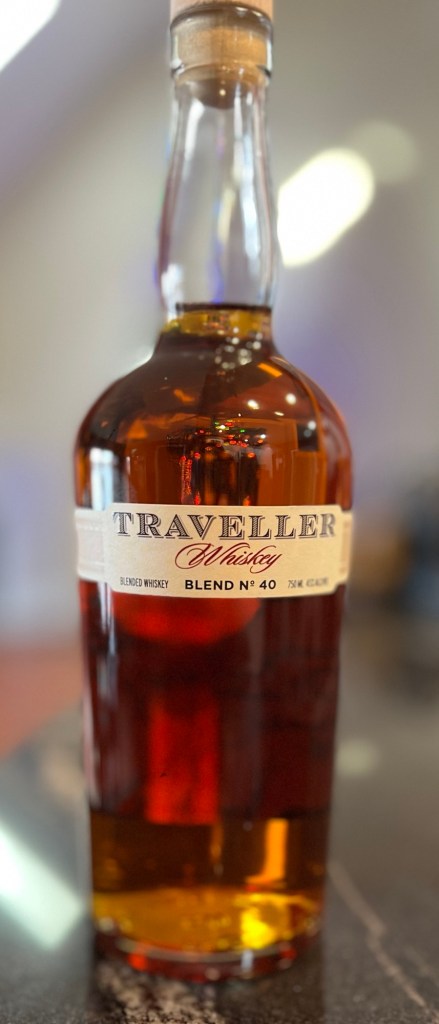
Traveller Whiskey Blend No. 40

Mashbill – Unknown a blended whiskey

Age – Unknown a blended whiskey

Blend – From the Buffalo Trace site: In pursuit of the finest possible whiskey, over 50 blends were sampled before making Blend No. 40 the chosen combination. Blend No. 40 is the carefully curated result of countless hours of testing & tasting and is exactly what you’d expect – a premium whiskey that speaks for itself. 

Proof – 90

Price Paid – $39.99

Color – golden

Aroma – very light, sweet such as honey or fruit, not distinct, doesn’t draw you in but also doesn’t push you away.

Tasted Neat –  somewhat of a creamy mouthfeel, like the nose, it is sweet with hints of maple, caramel, or some sort of dessert.

Tasted with dried cranberry –  sweetness again with nothing distinct or specific.

Tasted with a pecan –  brought out some complexity of oak and white pepper.

Tasted with dark chocolate – the creamy mouthfeel returned, but it is rather one note.

Discussion and Final Notes

In general, it is a rather nondescript whiskey that lacks complexity. However, with the marketing, availability, and price point, it has gained a lot of attention by those who might not typically drink whiskey or bourbon.

If you are seeking a sweet, creamy, lower proof whiskey at a good price, you should give Traveller a try. For this reason, it is also a great bottle for bourbon enthusiasts to keep on their shelf for friends who might not appreciate a more robust or complex pour of bourbon.

Cheers,
Rebecca & Wayne

Photos by Rebecca Herman McBrayer

NOTE: The whiskey in this review was purchased by us. We were not compensated by the spirit producer for this review. This is simply our opinion based on what we tasted on this day. Please drink responsibly.

Blended Whiskey

02/25/24
By Rebecca Herman McBrayer

Whiskey (generic) must be made from cereal grains, distilled below 190 proof, placed into an oak container, and bottled at a minimum of 80 proof.

A Blended Whiskey is a mixture of different types of whiskeys, sometimes with other ingredients. It’s typically made by mixing one or more higher-quality straight or single malt whiskeys with less expensive spirits, neutral spirits, colorings, and flavorings. For example, a blended Scotch might be a combination of a barrel-aged malt whisky and some other grain whisky. 

In the US, blended whiskey is a combination of straight whiskies and neutral spirits containing at least 20 percent straight whiskey and bottled at not less than 80 proof.

History and Pioneer

The art of blending whisky was pioneered by Andrew Usher in Edinburgh, Scotland, in the early 1860’s. It was discovered that blending whisky could create a lighter and sweeter whisky than the more common robust whiskies of that time.

Benefits of Blending Whiskey

First, it allows the distiller to produce a consistent flavor. When we open a bottle of Buffalo Trace, Four Roses, or Woodford, for example, we expect it to taste like the last bottle or drink that we had. The environment of the barrel, weather, placement in the rickhouse, etc. can affect the taste of the spirit in each barrel. The blending process allows a careful matching to the brand’s expected taste.

Another benefit is that blending can highlight the best qualities of each barrel. By combining barrels with specific characteristics, a distiller can achieve a higher quality end-product by identifying and blending the best qualities of each one. This can create a synergy for the flavor profile that is often better than any of the individual parts.

Sometimes the goal of blending could be to create a new and diverse flavor profile. By blending spirits derived from different grains, ranges of age, various storage and aging processes could produce an end-product that has unique and desirable flavor profile.

Also, it is not uncommon for young distilleries to used sourced whiskey. Sometimes this is because they are awaiting the aging process of the whiskey that they have produced. By blending various sources and ages, they can create a unique offering to match the flavor profile what they anticipate for their brand.

In addition, there could be another purposeful approach for using sourced whiskey for blending. Bardstown Bourbon Company is known for their Discovery Series and each series represents a very specific blend of sourced spirits. It might be a blend of different grained whiskey, from different distilleries, from different states and process requirements, different ages, the possibilities are endless.