June 19, 2024
By Rebecca Herman McBrayer
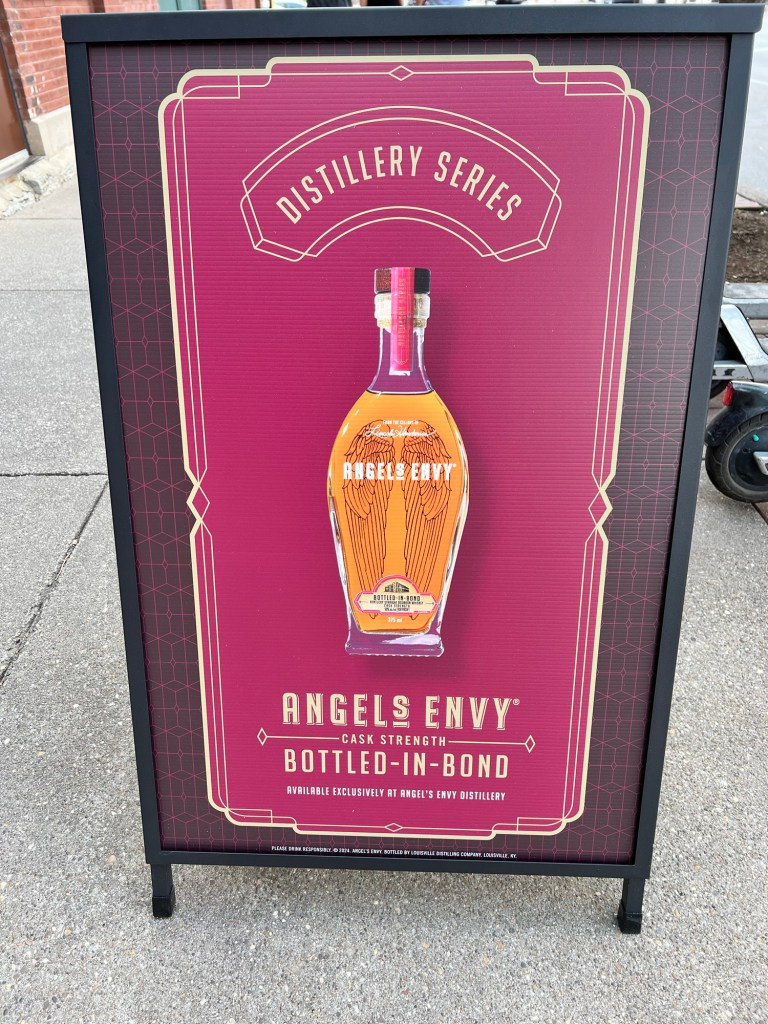
For this tasting, Wayne and I tasted the latest release from Angel’s Envy – their Cask Strength Bottled-in-Bond Bourbon. We purchased this bottle when at the distillery on National Bourbon Day. Our first thoughts were – what? wait? cask strength? bottled in bond? – how the heck??? After researching and locating the press release, their process for achieving this were revealed.
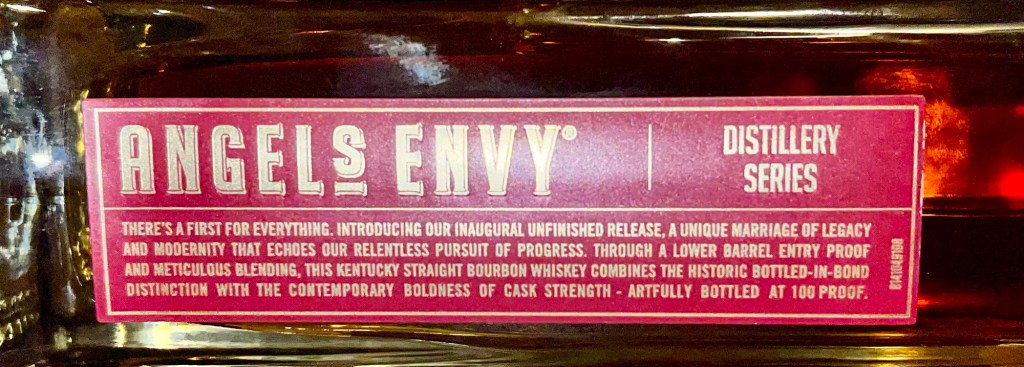
From Angel’s Envy Press Release: Master Distiller Owen Martin explained how they achieved a cask strength bottled at 100 proof. In the spring of 2018, before he was with the distillery, the team placed barrels filled with lower entry proof whiskey (103 proof) in a cooler warehouse. “Instead of withdrawing them at 100 proof, we let them mature further to prioritize flavor,” he said. “We drew the barrels at 98 to 99 proof and blended 27 low-proof barrels with two high-proof barrels from the same season to reach exactly 100 proof, creating Cask Strength Bottled-In-Bond.”
Not only is this their first Bottled-in-Bond, it is also their first unfinished spirit!
Please be sure to read our approach to Tasting Whiskey if you haven’t already.
Angel’s Envy Cask Strength Bottled-in-Bond Bourbon
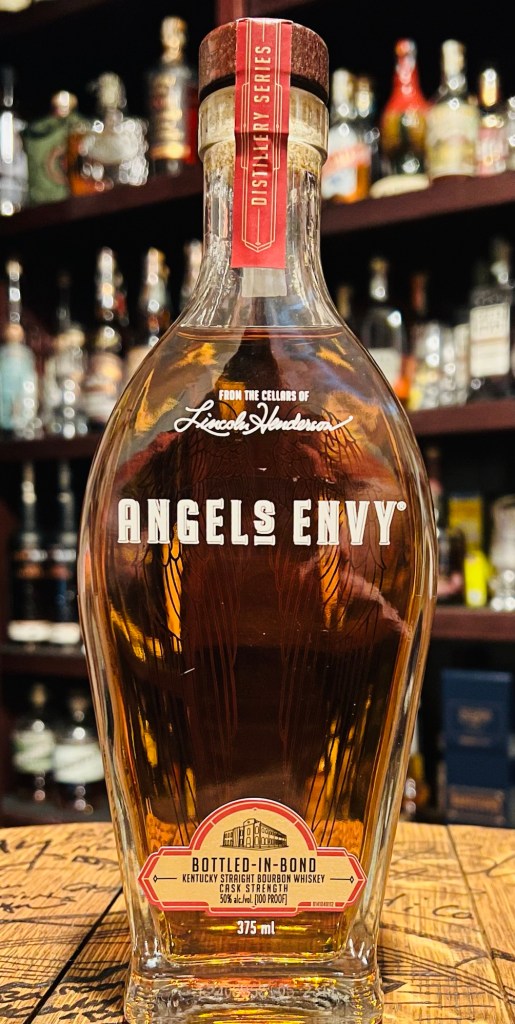
Mashbill – 72% Corn, 18% Rye, and 10% Malted Barley
Barrel Entry Proof – 103
Age – NAS but reported at nearly 6 years (barreled in 2018)
Proof – 100
Price Paid – $54.99 (375 ml bottle)
Other – Cask Strength blending of 29 barrels
Appearance – Honey copper with great legs.
Aroma – Light and inviting. Warm brown sugar, vanilla cream pie, honey, candied pecans, and a hint of a fruit.
Tasted Neat – Toasted brown sugar with hints of fruit, honey, and marshmallow. A light finish with nutmeg and caramelized brown sugar that makes you want another sip.
Tasted with dried cranberry – Very different taste profile. The brown sugar is absent and a tartness came forward with a fruitiness, such as a ripe green apple. This also added cinnamon to the finish.
Tasted with a pecan – The oak from the barrel came forward and the pecan also brings a dark cocoa taste with some caramel … like a dark chocolate turtle. There is a lot of cinnamon and oak on the finish.
Tasted with dark chocolate – Creamy chocolate caramel with a hint of cocoa and warm barrel notes. The finish is warm and pleasant with a nutmeg finish.
Discussion and Final Notes
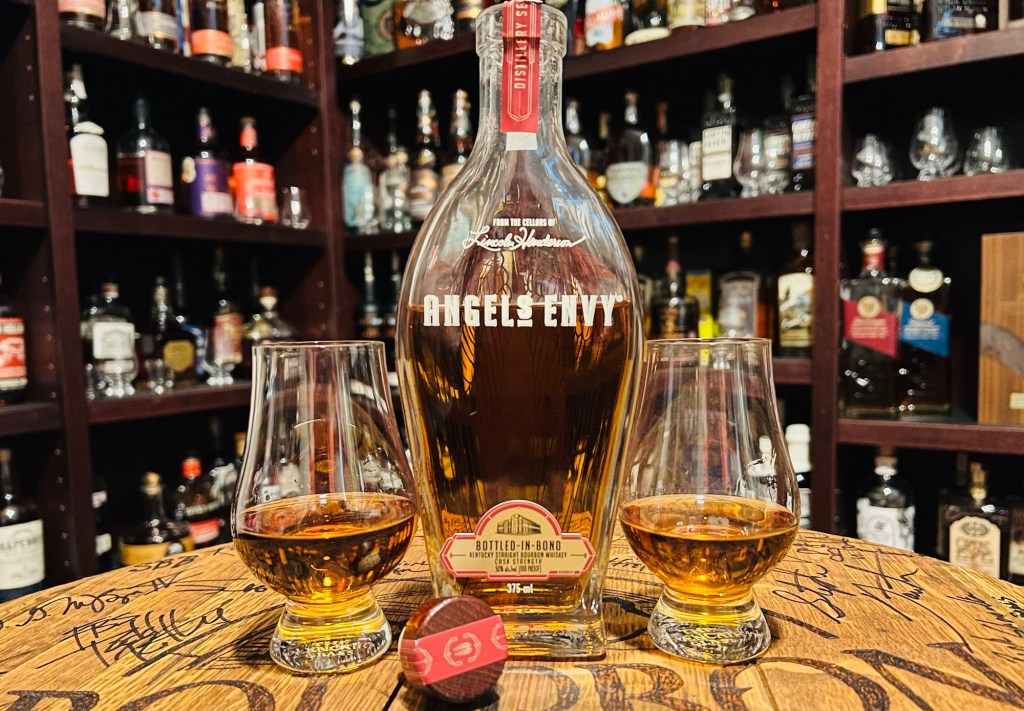
This is a terrific bourbon and an outstanding bottled-in-bond. It is light, sweet, rich and complex. It takes you on a journey for your senses and memories as so many playful notes appear. Congrats to Angel’s Envy and Master Distiller, Owen Martin for this unique expression. To create your first non-finished bourbon as a bottled-in-bond AND cask strength is truly innovative. This has raised the bar for us when it comes to a bottled-in-bond experience.
Cheers,
Rebecca & Wayne
Photos by Rebecca Herman McBrayer
Kentucky Straight Bourbon Whiskey Requirements
Kentucky Straight Bourbon Whiskey: Such whiskeys have all the requirements of bourbon: Made in the U.S, distilled at <= 160 proof, barreled at <= 125 proof, aged in new, charred oak containers, bottled at >= 80 proof. Straight bourbon means it is aged at least 2 years (and must have an age statement if less than 4). In addition, to be Kentucky Straight Bourbon, it has the additional requirement that it must be produced and aged at least 1 year in the state of Kentucky. For additional information on bourbon requirements, please read this post – Bourbon Whiskey.
Bottled-in-Bond: Must be produced in a single distillation season by a single distillery; must mature in a U.S. bonded warehouse for a minimum of four years; and the aged spirit must be bottled at 50% ABV (100 proof). For additional information on Bottled-in-Bond requirements, please read this post – Bottled in Bond.
NOTE: The bourbon in this review was purchased by us. We were not compensated by the spirit producer for this review. This is simply our opinion based on what we tasted on this day. Please drink responsibly.

 Your Bourbon Journey